
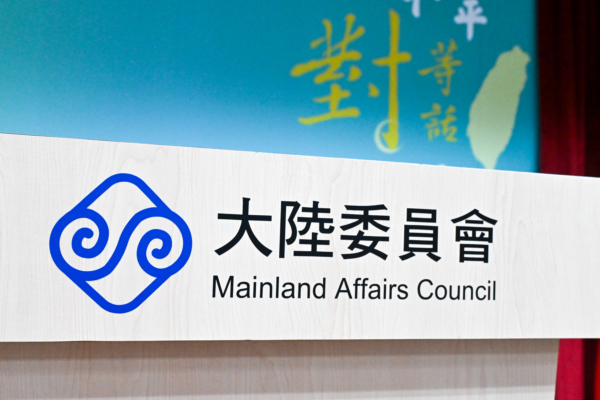
The Mainland Affairs Council of the Republic of China (Taiwan) announced the results of a survey today, revealing that the majority of Taiwanese people oppose the political propositions and gray zone intrusions from the Chinese Communist Party (CCP), support maintaining the status quo, and reject unification with the CCP.
According to the Mainland Affairs Council, the survey results show that over 80% of the people do not support the CCP’s “One Country, Two Systems” proposal (81.2%); nearly 70% support Taiwan maintaining the status quo and refuse unification with the CCP (68.9%). Almost 84% of the respondents support the government’s stance on “broadly maintaining the status quo” (83.6%) and believe that Taiwan’s future should be determined by the 23 million people of Taiwan (83.9%), indicating a long-term stable trend in these figures.
Moreover, the Council stated that 70.5% of the respondents view the CCP’s dispatch of coast guard ships to patrol the waters off the eastern coast of Taiwan as “malicious”; and in response to the recent attack on former Japanese politician Taro Kono in Taiwan, 76.4% support the government amending laws to increase penalties for violent crimes committed by foreigners in Taiwan.
The Council emphasized that in the face of ongoing gray zone intrusions by the CCP against Taiwan and attempts to sow social unrest through cross-border suppression, the mainstream public opinion in Taiwan opposes the “One Country, Two Systems” model and refuses unification with the CCP.
The Council stated that the government will continue to implement the “Four Pillars of Peace Action Plan”, “17 Response Strategies to National Security and United Front Threats”, and “Defending Democratic Taiwan’s National Security Action Plan” to strengthen self-defense and resilience, and safeguard national sovereignty and the democratic freedom line of Taiwan. The “Four Pillars of Peace Action Plan” include firmly strengthening national defense capabilities, promoting national defense awareness among the public, enhancing economic resilience, promoting international economic and trade relations, and collaboration with the international community to uphold deterrence and maintain peace and stability in the Taiwan Strait.
The Council also urged the CCP to pragmatically acknowledge the objective fact that the Republic of China and the People’s Republic of China are not subordinate to each other and to engage in communication and dialogue with the democratically elected legitimate government of the Republic of China without any preconditions to resolve political differences.
The survey commissioned by the Mainland Affairs Council was conducted by the Election Study Center of National Chengchi University from August 13 to 17, 2026, through telephone interviews with Taiwanese adults aged 20 and above. The survey collected 1,086 effective samples with a confidence level of 95% and a sampling error of ±2.97%.