
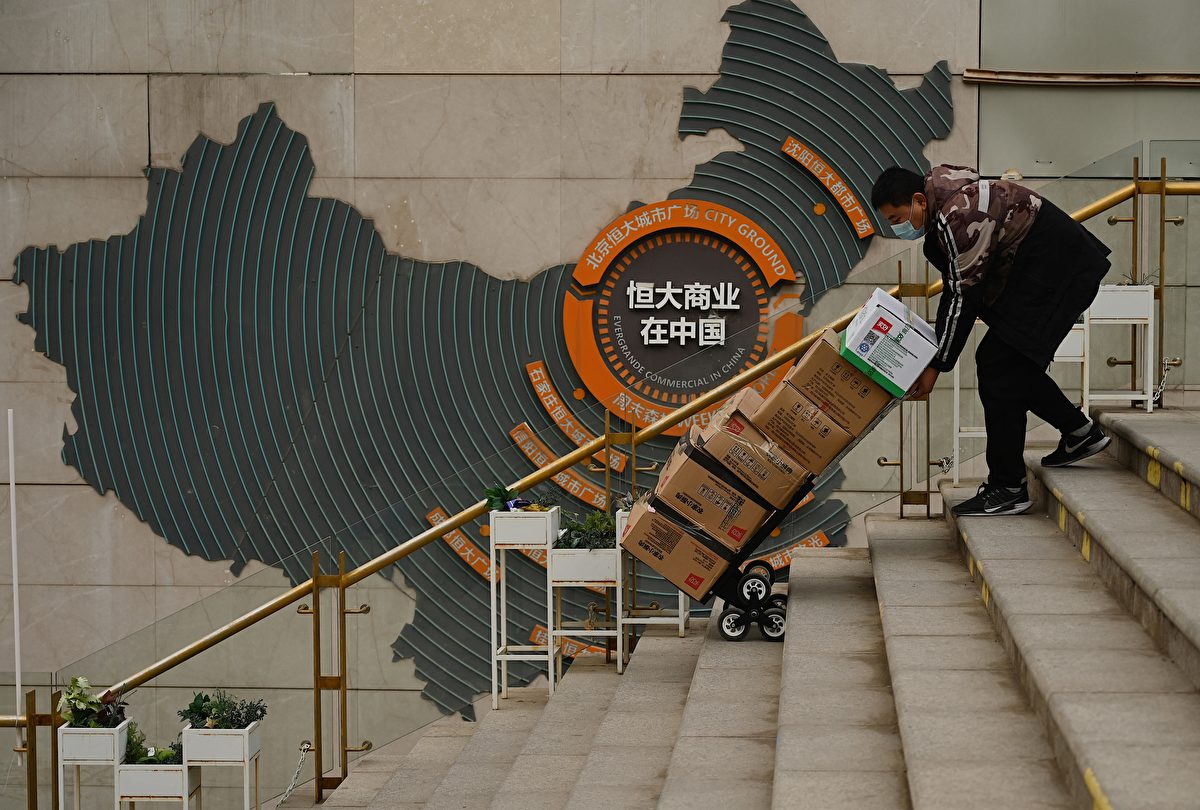
On August 20, the founder of the once mighty Chinese Evergrande Group, Xu Jiaying, was sentenced to life imprisonment and had all his personal assets confiscated, marking the culmination of the case. How did Xu Jiaying’s massive Evergrande empire collapse? Let’s take a look back.
Xu Jiaying was sentenced to life imprisonment with all his personal assets confiscated on August 20. Evergrande Group and Evergrande Real Estate were each fined 88.2 billion RMB and 70 billion RMB, respectively. In other Evergrande cases, 56 individuals including Zhen Litao, Ke Peng, Xu Zhijian, Xu Tenghe, Xu Jiaying’s eldest and second sons, were sentenced to fixed-term imprisonment, fined, or had their assets confiscated, while the illegal gains will continue to be pursued.
Evergrande Group was once one of the most representative enterprises in China’s rapidly growing real estate industry. By the end of 2009, its total assets were only 63.07 billion RMB. By 2013, its contracted sales exceeded one trillion RMB, and its assets had rapidly expanded to 348.1 billion RMB.
In 2016, Evergrande entered the Fortune Global 500 for the first time, and Xu Jiaying became the richest man in Asia in 2017 with an estimated fortune of 42.5 billion USD. “High leverage, high turnover” became the core model of Evergrande’s rapid business empire expansion.
From being Asia’s richest man in 2017 to having all his assets confiscated and being sentenced to life imprisonment now, Xu Jiaying’s journey signifies the complete end of Evergrande, once jokingly referred to as the “number one real estate company in the universe.”
The root cause of Evergrande’s crisis lies in long-term high leverage expansion, with a peak interest-bearing debt exceeding 800 billion RMB, a total debt peak of about 2.4 trillion RMB, compounded by money burning in diversified businesses and financial fraud.
The real trigger was the tightening of financing due to the “Three Red Lines” policy in 2020, leading to a gradual depletion of liquidity.
In 2020: Crisis Emerging
August: The Chinese regulatory authorities introduced the “Three Red Lines” policy (excluding pre-sale funds, asset-liability ratio ≤70%, net debt ratio ≤100%, and cash to short-term debt ratio ≥1). Evergrande hit all three red lines, leading to a tightening of financing channels. Evergrande pleaded with the Guangdong provincial government for support in major asset restructuring, shell listing with “Shenzhen Real Estate”, citing possible cash shortages.
September: Online rumors circulated about Evergrande submitting a report to the Guangdong government, later claimed to be fabricated by Evergrande, causing market concerns over its interest-bearing debt scale, then exceeding 800 billion RMB.
November: Evergrande terminated its Shenzhen shell listing plan. Evergrande Properties raised around 1.8 billion USD in its Hong Kong IPO.
2021: Liquidity Crisis Erupts
June: Evergrande publicly admitted for the first time that its commercial paper was overdue, with suppliers beginning to reveal non-payment. Evergrande worked to reduce debt, with interest-bearing debt reduced from around 716.5 billion RMB to about 570 billion RMB, meeting the net debt ratio indicator under China’s property industry’s “Three Red Lines” regulatory requirements, transitioning the ratio from “red” to “green.”
August: Projects in various locations halted due to arrears of construction funds. The central bank and the China Banking and Insurance Regulatory Commission summoned Evergrande executives to urge debt risk resolution and stability maintenance. Xu Jiaying stepped down as Chairman of Evergrande Real Estate.
September: Evergrande’s wealth management products faced payment crises, with around 34 billion RMB remaining unpaid, involving over 100,000 investors, leading to rights protection incidents at its headquarters. Evergrande missed the payment of two offshore bonds totaling around 131 million USD (with a 30-day grace period). Stock prices plummeted, causing a substantial market capitalization evaporation.
December 3: Evergrande Group announced its inability to fulfill around 260 million USD in debt guarantee obligations, constituting a material default. The Guangdong provincial government summoned Xu Jiaying and dispatched a workgroup to Evergrande Real Estate to advance risk disposal. Rating agencies subsequently announced restrictive or selective defaults.
2022: Trading Suspension, Asset Seizures, and Delivering Keys to Buyers
March: Due to the failure to timely disclose audited performance and the forced deduction of around 13.4 billion RMB from Evergrande Properties’ bank deposits, trading of China Evergrande, Evergrande Auto, and Evergrande Properties’ stocks was suspended.
Second half of the year: Xu Jiaying’s mortgaged assets in Hong Kong, including his luxury mansion in The Peak, were taken over by banks. Evergrande tried to resume work on some projects, claiming to have resumed construction on hundreds of pre-sale projects, but overall sales and cash flow continued to deteriorate.
2023: Massive Losses Revealed, Investigation Launched, Xu Jiaying Arrested
January-February: Due to significant discrepancies in Evergrande’s 2021 accounts, auditing firm PwC resigned. An independent investigation found that Evergrande executives diverted property company secured loans for other purposes.
July: Evergrande released its annual report, disclosing around 476 billion RMB in net losses for 2021 and about 105.9 billion RMB for 2022 (having a profit of around 8.1 billion RMB in 2020), with total debt reaching around 2.4 trillion RMB.
August: Evergrande Real Estate was taken on administrative penalties by the Securities and Exchange Commission for illegal information disclosure. Evergrande filed for Chapter 15 bankruptcy protection in the United States to facilitate foreign debt restructuring. Upon resumption of trading, the stock plummeted over 70% on the first day.
September 16: Shenzhen police took criminal coercive measures against personnel related to Evergrande Wealth.
September 28: China Evergrande announced that Executive Director and Chairman Xu Jiaying had been subjected to coercive measures for “alleged violations of the law.” The related stocks were once again suspended. Several key members of Evergrande’s core management team were affected.
2024: Liquidation Order and Administrative Penalties
January 29: The Hong Kong High Court issued a winding-up order against the China Evergrande Group. Liquidation proceedings began, and the liquidator initiated global asset recovery.
March-May: The Securities and Exchange Commission imposed administrative penalties on Evergrande Real Estate for fraudulent bond issuance and inflating revenue and profits (in 2019-2020, revenue was inflated by over 500 billion RMB and profits by around 90 billion RMB), with fines amounting to tens of billions of RMB. Xu Jiaying was fined and banned for life from entering the securities market. The liquidator filed recovery lawsuits against Xu Jiaying and related parties (involving around 6 billion USD).
2025: Delisting Concludes
August: After more than 18 months of suspension, the Hong Kong Stock Exchange decided to delist Evergrande. On August 25, Evergrande was officially delisted. The liquidator reported partial asset realization, but creditor claims were enormous, ranging from hundreds of billions to trillions of Hong Kong dollars, while recoveries were limited.
September: The Hong Kong High Court issued a judgment on the Xu Jiaying family trust case. The court not only authorized the liquidator to take over Xu Jiaying’s assets but also included assets held through an offshore family trust in the takeover scope.
2026: Final Judicial Settlement and Asset Confiscation
April: Evergrande Real Estate Group (Shenzhen) Co., Ltd. was declared bankrupt. Xu Jiaying and related cases went to trial. The liquidator further took over Xu Jiaying’s related overseas companies, bank accounts, luxury homes, planes, yachts, and other assets, with a global freeze upper limit of around 7.7 billion USD (around 550 billion RMB), but actual realizations fell far short of the debt.
August 20: Shenzhen Intermediate Court rendered the first-instance judgment—Evergrande Group was convicted of multiple crimes, fined 88.2 billion RMB; Evergrande Real Estate was fined 70 billion RMB; Xu Jiaying was convicted of multiple crimes, sentenced to life imprisonment, and had all his personal assets confiscated; illegal gains will continue to be recovered, with the shortfall ordered to be reimbursed.
On the same day, including Xu Jiaying’s sons, 56 individuals were also sentenced to fixed-term imprisonment. The court found them primarily guilty of illegal absorption of public deposits, fundraising fraud, fraudulent securities issuance, violations of disclosing important information, embezzlement in office, and bribery.
The bursting of the years-long real estate bubble in China was triggered by Xu Jiaying’s fall from grace, serving as a detonation point under Xi’s regime. The apparent crisis of Evergrande, arising from high leverage, aggressive expansion, and money burning, collided with the “housing is for living, not for speculation” policy and the Three Red Lines policy, leading to a cliff-edge financing cut-off. However, many experts also believe that Evergrande’s demise also involves power struggles among high-ranking CCP officials.
Xu Jiaying, born into a poor family of loggers in rural Henan, rose to wealth. After becoming rich, Xu Jiaying once enjoyed a prosperous life, serving as a National Committee of the CPPCC member for several terms and a standing committee member of the CPPCC. He often proclaimed himself as “a member of the Party,” stating that his Evergrande belonged to “the Party.” On July 1, 2021, he even appeared on the rostrum of the CCP’s centennial celebrations. However, two months later, Xu Jiaying began to strive to resolve Evergrande’s debt crisis.
Behind Xu Jiaying’s rise was the support of red elite privilege. Yuan Hongbing, a scholar in Australia, told the Epoch Times that it was well known in the CCP that Xu Jiaying had close ties to the family of Zeng Qinghong; his real estate business was able to grow so large because of Zeng Qinghuai’s full support, making him a tool of the Zeng family.
Zheng Xuguang, an economics scholar in the United States, told the Epoch Times that for Evergrande’s scale to reach such proportions, Xu Jiaying must have had a deep background within the top ranks of the CCP. Where there is someone to help him, there is also someone to protect him; the two sides are intertwined.
In the book “Red Roulette,” which exposes the manipulations between political power and sexual transactions, author Shen Dong recounted a lavish wine tasting and shopping trip in Europe in 2011, where Xu Jiaying and the daughter and son-in-law of then member of the Political Bureau of the CCP, Jia Qinglin, took part in the extravagant activities.
After Xu Jiaying’s arrest, Shen Dong posted in English on an overseas platform, stating that the CCP government deemed his usefulness to be exhausted. “I want to say he has been waiting on the chopping block for a long time. The blade will definitely fall, it’s just a matter of time.”