
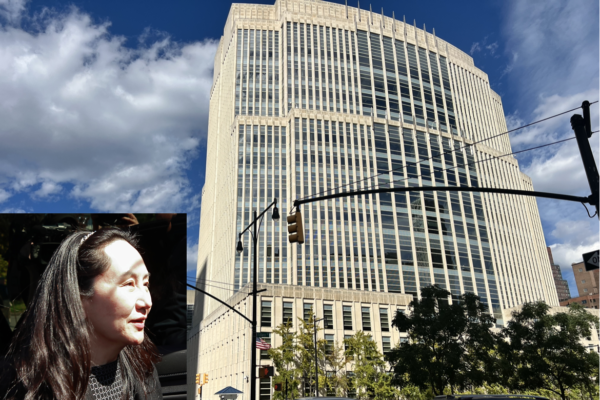
In the ongoing court trial where Huawei is accused of defrauding multinational financial institutions, leading them to face risks of violating US sanctions against Iran, the prosecution continued to present evidence on October 7th regarding the false statements made by Huawei and its CFO Meng Wanzhou to banks. The October 8th court session further focused on Huawei’s compliance commitments to the third affected bank, BNP Paribas, regarding its Iran operations and the relationship between these statements and internal bank risk assessments.
The prosecution referenced reports from Reuters at the end of 2012 and the beginning of 2013 regarding Huawei’s Iran business, as well as statements made by Huawei at the time, during questioning of former FBI agent Leigh Ann Sweeney.
According to the materials presented by the prosecution, Huawei referred to Skycom as its “main business partner” in Iran at the time and claimed that its operations fully complied with UN, US, and EU laws and sanctions. Huawei internally coded its Iran business as “A2” and prepared talking points for Meng Wanzhou, emphasizing that Huawei had “ceased holding Skycom shares” and that both parties were engaged in normal business cooperation.
The prosecution then contrasted these public statements with Meng Wanzhou’s statements to HSBC executives and the factual statements attached to the Deferred Prosecution Agreement (DPA) she signed in 2021, showing a severe inconsistency between her statements and the facts she later admitted.
In August 2013, Meng Wanzhou met with HSBC executive Alan Thomas in Hong Kong and presented company briefings following the aforementioned talking points. However, according to Meng Wanzhou’s factual statement attached to the DPA, Huawei transferred Skycom shares from its subsidiary Hualing Management to another entity controlled by Huawei (Canicula) and not a genuine divestment, and she was aware that the two companies were effectively under the same control.
Meng Wanzhou’s factual statement also indicated that Skycom operated primarily in Iran, and she served as a director of Skycom from 2008 to 2009. From 2010 to 2014, Huawei took full control of major business decisions and operations of Skycom in Iran, with its executives and directors being Huawei employees. Meng Wanzhou admitted that the statements she made to HSBC were “not true” but that “Financial Institution 1 decided to continue its cooperation with Huawei after receiving the PowerPoint presentation. Other financial institutions also continued to maintain cooperation with Huawei.”
The morning of October 8th courtroom session first focused on the allegations of Huawei’s improper acquisition of competitors’ technology.
Cisco technical market engineer Brian Jacklin testified, comparing the command line instructions used in Cisco and Huawei routers. He stated that while some network instructions are industry-standard, some proprietary protocols developed by Cisco, such as Interior Gateway Routing Protocol (IGRP), were also found in Huawei routers.
Jacklin found through command line comparison that the instruction sets of Huawei’s related router series were “almost replicated” from Cisco products, containing a significant amount of highly similar content.
On the same day, former BNP Paribas executive Romain Brante testified, bringing the courtroom focus back to Huawei’s Iran business and the bank’s compliance review.
Brante reviewed the memo from a call on January 17, 2013, between Huawei executives, including Evan Bai, and BNP Paribas. At that time, Huawei and BNP Paribas discussed deepening their cooperation while discussing compliance issues related to Iran and the US markets. Huawei assured BNP Paribas that the company fully complied with international sanction regulations and required the same from its partners.
Due to Huawei’s significantly increased business volume at BNP Paribas in December 2013, the bank requested a re-evaluation of compliance. In January 2014, Huawei’s overseas financing center executive Yang Feng, in response to the bank’s inquiry, stated that Huawei had no business dealings with the Islamic Revolutionary Guard Corps (IRGC) and its related entities.
When BNP Paribas further inquired about Huawei’s relationship with Skycom and whether Skycom was suspected of selling HP computer equipment to Iran, subject to US embargo, Huawei replied that Skycom was only a “business partner” and stated, “We are not aware of the business information of Skycom.”
Brante testified that if a company is effectively a subsidiary of the parent company, banks typically do not refer to it as a “business partner.” Huawei’s response also contrasted with previous reports by Reuters. The report indicated that Skycom had proposed selling at least 1.3 million euros of HP computer equipment to Iran’s largest mobile operator, MCI, while the related equipment was subject to US export restrictions.
Internal documents from BNP Paribas showed that despite earlier compliance concerns, the bank further deepened its cooperation with Huawei until 2016. At that time, Huawei was listed as one of BNP Paribas’s “Tier 1” clients, one of its top ten most important clients.