
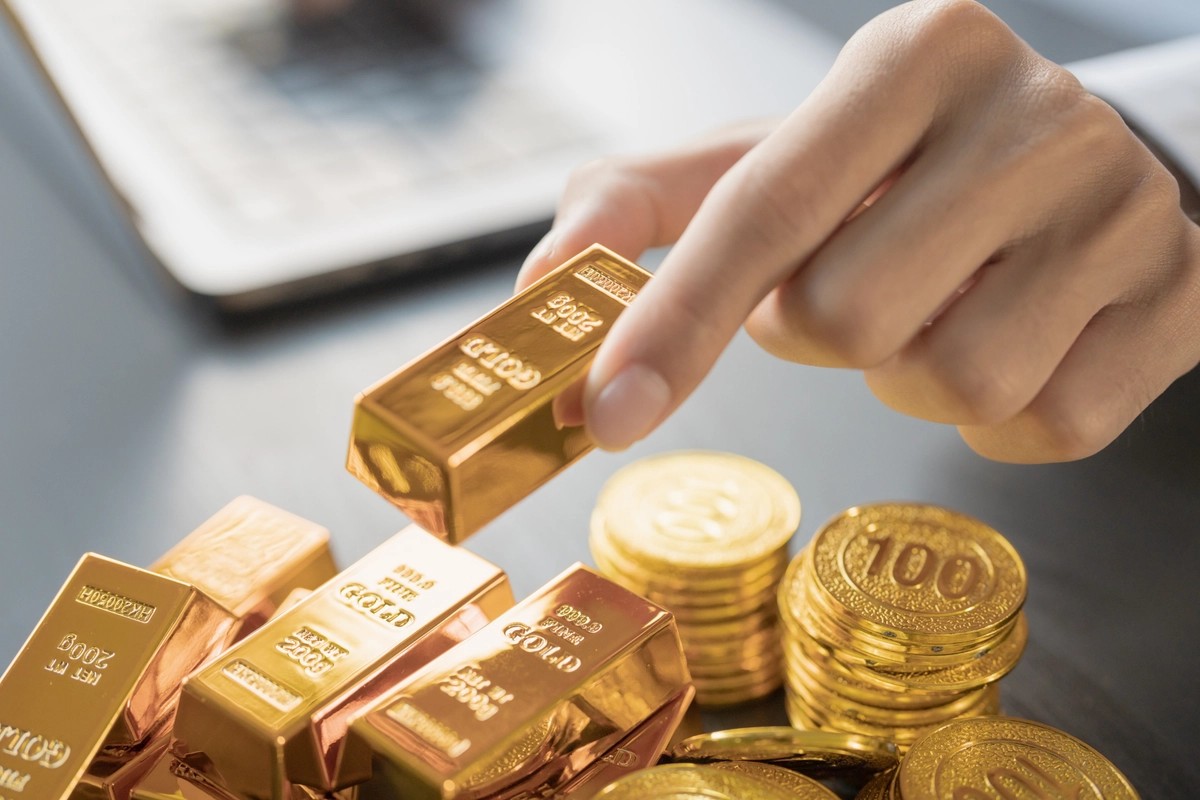
Investors have long seen gold as a tool to hedge against inflation and economic uncertainty. However, with the rapid growth of Artificial Intelligence (AI), this is becoming a new source of demand for precious metals.
The development of AI is driving investments in advanced semiconductors, servers, and the massive data centers needed to support this technology. This expansion also requires a range of materials for high-performance electronic products, including gold.
Although the price of gold has seen a decrease recently, it is still at historically high levels, and the development of AI is creating a growing demand. Despite the high price of gold, tech companies may not necessarily switch to cheaper materials.
According to Fox News, gold is valued in electronic products for its conductivity, reliability, and corrosion resistance. Joseph Cavatoni, gold market expert and Senior Market Strategist for North America at the World Gold Council (WGC), stated that companies usually consider cheaper alternatives after developing technology that relies on gold.
However, this may not always be the case. Cavatoni told Fox Digital News, “They may pioneer a technology involving gold and then say, ‘Let’s find something cheaper to replace it, like tungsten.'”
“But we found that not to be the case in this instance,” he said.
According to data from the World Gold Council, gold demand in the AI industry increased by 2% year-on-year to 80.4 tonnes in the second quarter. Driven by AI infrastructure, high-end semiconductors, and advanced components, demand for electronic products increased by 4% to 68.3 tonnes.
Cavatoni stated that gold has advantages over alternatives in chip production and thermal applications. The AI industry may also be less sensitive to gold price increases, as it requires relatively small amounts of metal.
“This is a rapidly growing field that is not very price-sensitive,” said Cavatoni.
Despite this, technology still only accounts for a small portion of the entire gold market compared to investments, central bank purchases, and jewelry. Cavatoni stated that it is “unlikely to become a driving factor for gold prices.”
Currently, Cavatoni describes technology as an increasingly important contributor to gold demand, saying that it “does not seem to be slowing down anytime soon.”