
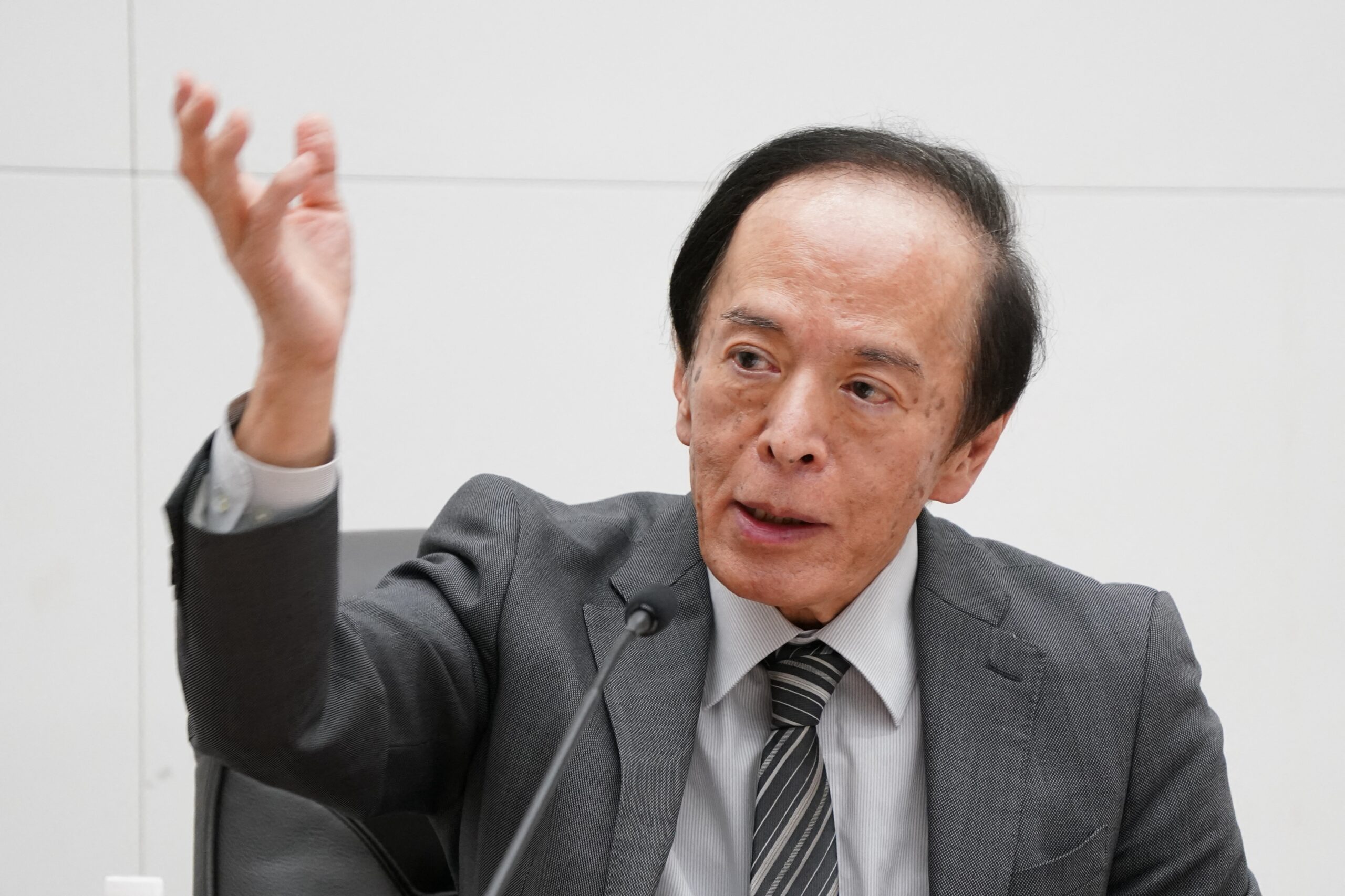
The Bank of Japan raised its policy interest rate from 1% to 1.25% on September 18, reaching a 31-year high. This move comes just three months after the bank raised interest rates in June. Governor Katsuo Ueda stated that the “landscape of Japan’s monetary policy has changed.”
This decision was passed with 7 votes in favor and 2 votes against, showing differing opinions within the Bank of Japan on the pace of further interest rate hikes. Opponents argued that the economy has not shown significant acceleration yet, with core prices still below 2%, making it possibly premature to raise rates at this time.
Ueda mentioned in a press conference that the focus of the Bank of Japan’s policy has shifted from raising the baseline prices to avoiding excessive price increases. He noted that the short-term goal of past policies was to raise baseline prices to 2%, and now that prices are gradually approaching that target, there is a growing risk of overshooting. Therefore, the policy focus has shifted to preventing excessive price increases and maintaining inflation around 2%.
In August, Japan’s core consumer price index rose by 1.7% annually, slowing down by 0.1 percentage point from July, marking the eighth consecutive month of staying below 2%. However, excluding fresh food and energy, the index increased by 1.9%, closer to the Bank of Japan’s 2% price target. The Bank of Japan believes that the positive trends in corporate wage and pricing behavior, along with rising medium to long-term inflation expectations, could push up baseline prices. Factors such as increased energy costs due to the situation in the Middle East, fluctuations in the exchange rate of the Japanese yen, and demand related to artificial intelligence could also transmit to consumers through rising enterprise costs and transaction prices.
Regarding the pace of interest rate hikes, Ueda did not set a timetable for the next increase. He stated that the decision to raise rates at consecutive meetings would depend on economic and price outlooks at that time, as well as risk assessments, and cannot be promised in advance. As for whether each rate hike will be fixed at 0.25 percentage points, he indicated that there are various possibilities depending on price trends.
The final target interest rate of this round of rate hikes remains uncertain. Ueda mentioned that it is challenging to accurately estimate the neutral interest rate that neither stimulates nor suppresses the economy, and determining the “ultimate target interest rate” may require retrospective judgment after continuous policy adjustments. The Bank of Japan’s estimated range for the neutral interest rate announced in March is from nominal 1.1% to 2.5%, with the current policy rate of 1.25% already exceeding the lower end of this range.
With a lack of clear guidance, market expectations for the magnitude of future rate hikes are varied. A Reuters survey at the end of August showed that nearly two-thirds of economists interviewed expect the Bank of Japan to raise the policy interest rate to at least 1.5% by the end of March 2027, with 60% predicting it to reach 1.75% by the third quarter of 2027.
After the Bank of Japan’s announcement of the rate hike, the USD/JPY briefly rose to around 157 yen, while the yield on the 10-year Japanese government bond temporarily rose to 2.985%. Reuters analysts believe that the voting result of 7 to 2 and two committee members opposing the rate hike have dampened investors’ bets on further immediate rate hikes, resulting in pressure on the yen and a weaker performance.