
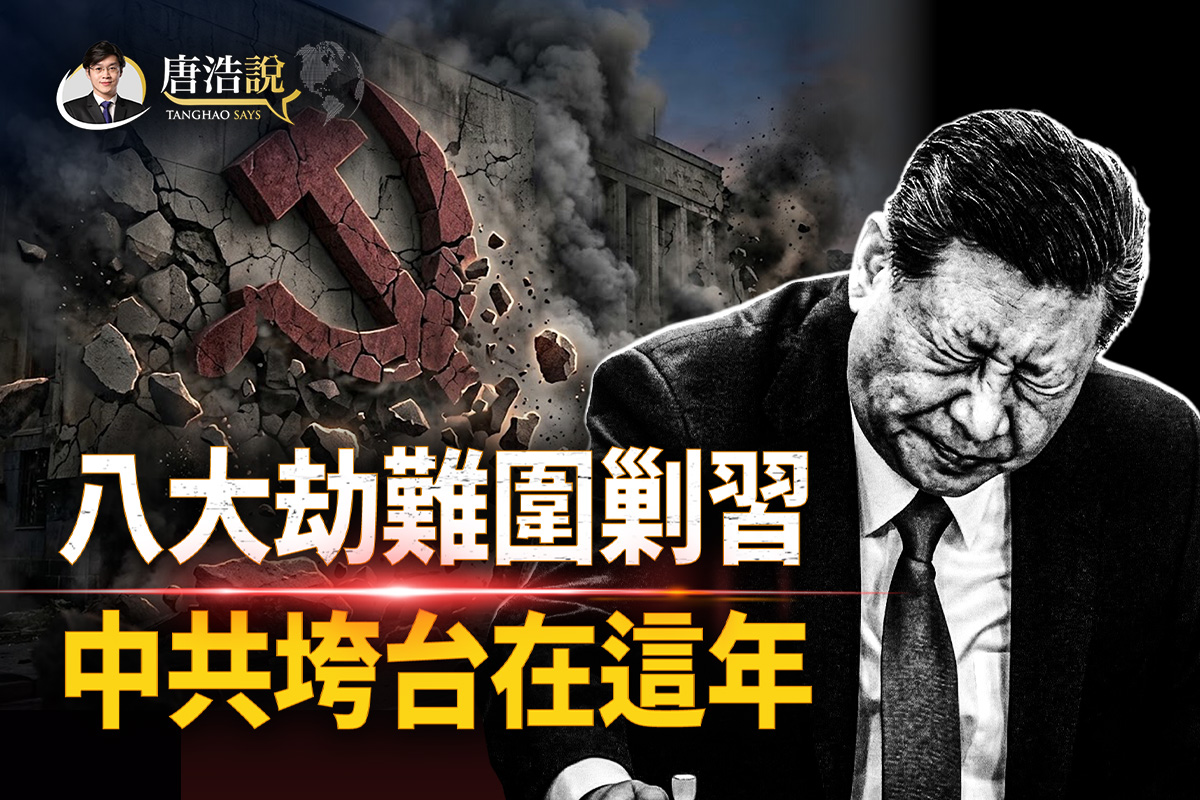
Focus today: Renowned China expert Yu Maochun from the United States urges countries around the world to prepare in advance for the imminent collapse of the Chinese Communist Party (CCP). Why is this necessary? When will the CCP collapse? In what way will it transition to a new regime? Furthermore, what crises are currently besieging the South China Sea region?
The crossroads of the world production team.
Yu Maochun’s warning comes as tensions continue to rise in the South China Sea, where the CCP is aggressively asserting its territorial claims. With escalating military activities and geopolitical competition in the region, concerns are mounting about the potential for conflict and instability.
As a prominent commentator on Chinese affairs, Yu Maochun has long been recognized for his insights into the CCP’s strategies and intentions. In his latest analysis, he emphasizes the importance of preparing for various scenarios that could unfold following a collapse of the CCP, including potential power struggles, regional conflicts, and economic disruptions.
The question of when the CCP will collapse remains a subject of speculation among analysts and policymakers. While some believe that the party’s grip on power is increasingly tenuous, others argue that its authoritarian control mechanisms are resilient enough to weather internal and external challenges.
Yu Maochun’s call for global preparedness is driven by his belief that the CCP’s downfall is not a matter of if, but when. He warns that the international community must be ready to address the potential fallout from a sudden regime change in China, including the risk of power vacuums, social unrest, and geopolitical realignments.
In recent years, the CCP has faced mounting criticism and pushback on multiple fronts, including its human rights abuses, territorial disputes, and aggressive foreign policies. These challenges have raised doubts about the party’s long-term sustainability and raised concerns about the potential for a destabilizing leadership transition.
Amidst these uncertainties, Yu Maochun’s advocacy for proactive planning and risk mitigation measures is seen as a prudent approach to safeguarding global stability and security in the face of China’s evolving political landscape. By anticipating and preparing for the challenges that may arise from a CCP collapse, countries can better protect their national interests and strategic objectives.
As tensions in the South China Sea and broader Asia-Pacific region continue to simmer, the need for vigilance and preparedness has never been more urgent. Yu Maochun’s message serves as a timely reminder that the world cannot afford to be caught off guard by the seismic changes that may soon reshape China and the global balance of power.