
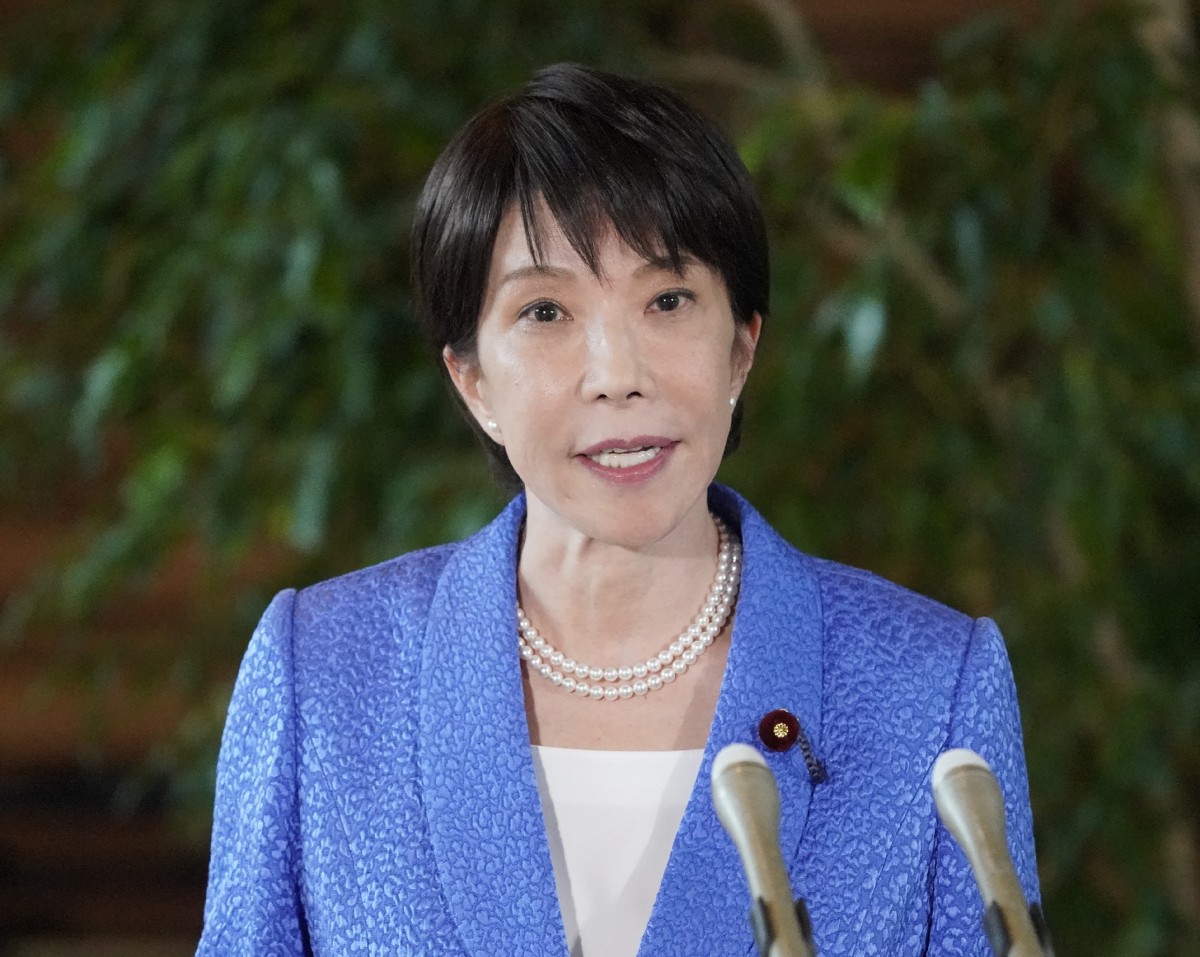
Japan’s Prime Minister Sanae Takaichi conducted her first cabinet reshuffle on Thursday, September 17th, following her appointment. The new cabinet largely continues the existing governmental framework, with 8 key ministers retaining their positions. The Japan Innovation Party entered the cabinet for the first time, changing the mode of political cooperation from “outside cabinet cooperation” to “inside cabinet cooperation.”
The official list released on that day showed that Chief Cabinet Secretary Minoru Kiwara, Foreign Minister Toshimitsu Motegi, Finance Minister Koizumi Gakuzuki, Defense Minister Junichiro Koizumi, as well as Minister of Economy, Trade and Industry Ryosei Akazawa, Minister of Health, Labor and Welfare Kenichiro Ueno, Minister in charge of Economic and Fiscal Policy and Growth Strategy Sanejo Kurauchi, and Minister in charge of Economic Security Naomi Konoda all retained their positions.
The Japanese cabinet, including the Prime Minister, consists of a total of 19 ministers, with 10 changes made in this reshuffle. Among the 10 new ministers, 7 are entering the cabinet for the first time, and 3 are returning ministers.
Notably, Yoshimasa Hayashi is no longer serving as Minister of General Affairs and has left the cabinet; he is succeeded by Hisana Fujii, and the position of Minister of Justice is now held by Takashi Yamashita. Other newly appointed ministers include Koichi Shinohara as Minister of Education, Science and Technology, Haiko Yanao as Minister of Agriculture, Forestry and Fisheries, Tatsunori Ibayashi as Minister of Land, Infrastructure, Transport and Tourism, Hiroyoshi Sasakawa as Minister of the Environment, and Toshiji Furukawa as Minister of Digital Affairs.
An important change in this reshuffle is the Japan Innovation Party’s first dispatch of members to Takaichi’s cabinet. Former Secretary-General of the Innovation Party, Hiroshi Nakatsuka, has been appointed as the Minister in charge of the Cabinet Office, responsible for regulatory reform, administrative reform, and child policy, among other duties.
The Innovation Party previously formed a coalition government with the Liberal Democratic Party but did not send ministers. With Nakatsuka’s inclusion in the cabinet, the Innovation Party has shifted from external cooperation to participating in the cabinet’s governance.
Later in the day, Takaichi will hold a press conference to explain the personnel arrangements and future policy directions.
This marks Takaichi Sanae’s first cabinet reshuffle since taking office. Prior to the reshuffle, she stated that the personnel adjustments were aimed at enhancing the government’s policy implementation capabilities with the Liberal Democratic Party, accelerating the implementation of established policies, and allowing the public to truly feel the prosperity and security brought about by economic growth.
The reshuffle maintains the core structure of the cabinet while promoting some younger and mid-career lawmakers. According to TBS Television, the focus of the reshuffle is to maintain political stability, policy continuity, and enhance policy effectiveness.