
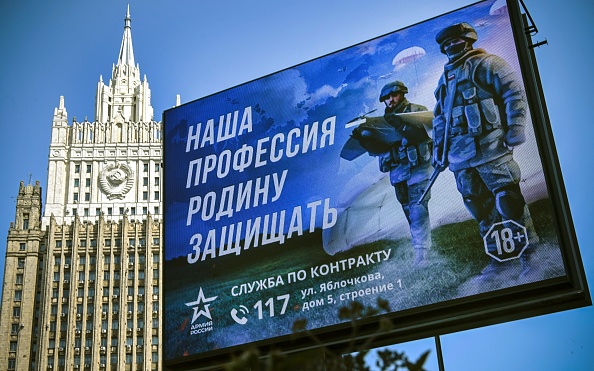
The Russo-Ukrainian war has been ongoing for four and a half years. With the increasing momentum of Ukrainian drone attacks, rumors of a new round of Russian conscription have been circulating, forcing more and more Russians to flee or consider fleeing the country.
One 28-year-old man engaged in digital marketing who fled Russia this summer revealed to the Associated Press that he is a family-oriented person. However, due to the current political situation in Russia and issues such as internet restrictions, he had no choice but to leave behind his family and friends, unsure when he would be able to return.
The continuous drone attacks in Ukraine this summer led to a severe fuel crisis in Russia, dealing a heavy blow to the flourishing e-commerce business within Russia. Since last year, Russian authorities have been implementing strict internet restrictions citing cyber attacks as reasons.
In the first year after the outbreak of the Russo-Ukrainian war in 2022, tens of thousands of Russians fled their homes. Kovcheg, an organization assisting Russians in fleeing abroad, reported receiving nearly eight times the inquiries last month compared to May.
Unlike the mass exodus of men fleeing due to conscription in 2022, there have been no reports of long queues at border crossings currently. Flights to visa-free countries such as Armenia, Georgia, Kazakhstan, and Turkey are also readily available.
Meanwhile, social media in Russia is flooded with discussions about fleeing the country. Many have expressed their determination to leave due to the war, while others are concerned about the economic downturn, uncertain future, and diminishing freedom.
According to Ukraine, Russia is planning another round of conscription after the national Duma elections. Yan Slovizki, an emergency assistance coordinator at Kovcheg, expressed concerns over the conscription, fuel crisis, and internet freedom, mentioning a “panicked exodus” in Russia since mid-July.
A diplomat stationed in Moscow informed the Associated Press that anxiety among Russians was noticeably increasing this summer. There were rumors that the number of Russians in neighboring countries like Georgia and Armenia was higher than usual.
Alen Simonyan, Secretary of the Armenian Security Council, stated in an interview with Russian media last month that Armenia would not intervene if Russians fled to Armenia and would provide assistance if necessary.
Subsequently, the Russian Foreign Ministry condemned Simonyan’s remarks as provocative. Some Russian lawmakers even stated in interviews with the Russian national TV channel RTVI that Russia does not need those who leave the country based on rumors and do not love their homeland.
The 28-year-old man mentioned earlier revealed that when President Putin announced a call for 300,000 new troops in 2022, although he was not eligible for conscription due to health reasons, he fled temporarily for safety reasons.
He returned to his hometown in 2025 and worked remotely for overseas clients from home. However, the continuous crackdown by the government on thousands of internet platforms, websites, and services made it impossible for him to work normally, forcing him to constantly switch virtual private network servers to continue working.
He disclosed that another reason for choosing to flee again was the rumors of a new round of conscription. A 23-year-old woman from Moscow who left Russia last month revealed that her father fled Russia in 2022, narrowly avoiding conscription that year. This year, upon learning that her husband no longer qualified for military service deferment after completing his master’s degree, she had to find a way for the entire family to escape, fearing that her husband might be forcibly conscripted.
A recent graduate who fled to Armenia revealed hearing that even those who were not supposed to be sent to the battlefield were forcibly conscripted and dispatched to the frontlines. For young graduates, this could be a matter of life and death.
There were also cases of individuals being detained for supporting the only openly anti-war opposition party, Yabloko, at rallies and then choosing to flee. Many expressed their reluctance to live in a country without freedom of speech, with a declining economy, students being brainwashed, and a government promoting isolation from the world. Some described Russia as a massive digital prison where ordinary people cannot speak freely, act freely, or exercise any rights.