
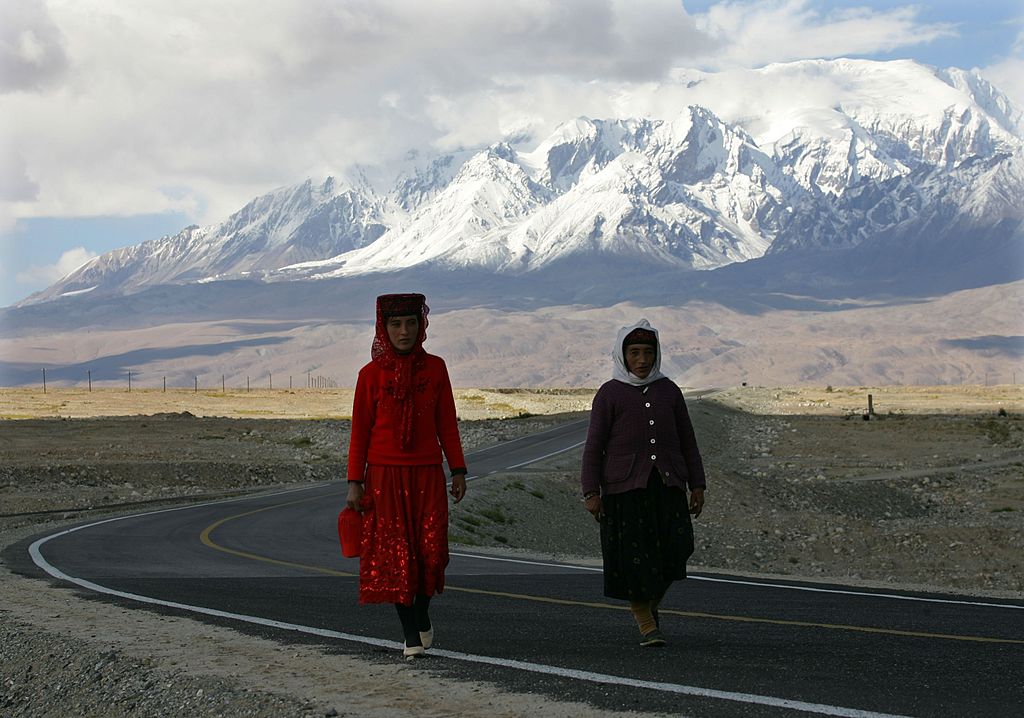
Xinjiang’s Muztagata Peak has experienced a series of mountain accidents this year, resulting in at least 3 deaths and 2 missing persons. Media investigations have revealed that both leaders involved in the July accidents did not possess nationally certified high-altitude guiding credentials. It was exposed that some clubs were spending up to 30,000 yuan (RMB, same below) to rent accreditation for the members, allowing underqualified individuals to lead expeditions up the mountains.
According to a report by “China Newsweek”, on August 31st, a climber went missing while summiting Muztagata Peak in blizzard conditions. As of September 10th, the climber remains missing.
Prior to this, on July 3rd and 4th, two approved climbing teams reached the 7546-meter-high summit of Muztagata Peak but encountered a snowstorm while descending to around 7300 meters, resulting in 4 individuals going missing. Three of them were later found with no signs of life, and the search for the fourth person was halted in mid-July.
On July 15th, the Xinjiang Sports Bureau announced a comprehensive suspension of climbing activities on Muztagata Peak for the year 2026. Despite this, at the end of August, there were individuals attempting to summit the peak again, leading to another incident of someone going missing.
Several sources informed “China Newsweek” that among the 4 individuals who went missing in July, two were climbers and the other two were expedition leaders. The two leaders only possessed a “collaboration certificate” issued by the provincial mountaineering association, lacking the experience of climbing snow mountains above 7000 meters and not qualifying to lead expeditions on mountains of this level.
According to Su Jin (pseudonym), a rock climbing coach from the China Mountaineering Association and an outdoor leader from the Yunnan Mountaineering Outdoor Sports Association, during collaboration on a 7000-meter peak climb, one cannot act as the main expedition leader.
Current regulations in China stipulate that for climbing peaks above 7000 meters, special approval must be sought from the National Sports Administration of the Chinese Communist Party three months before the activity. Xinjiang’s specific regulations also require climbing teams to be equipped with qualified climbing coaches or high-altitude guides holding relevant certificates from the China Mountaineering Association.
Despite approval, the investigation found that the qualifications of the actual expedition leaders did not meet the requirements.
Furthermore, it was discovered that some clubs, when applying for climbing activities, used the credentials of nationally certified high-altitude guides to pass the examination, but in reality, it was underqualified collaboration staff leading the expeditions.
Zhang Chi (pseudonym), a former high-altitude guide for seven years, revealed that some experienced guides were no longer leading expeditions due to age or injuries. Clubs then borrowed their idle certificates for approval. In the past climbing season, borrowing a certificate cost about 10,000 yuan, which has now risen to over 20,000 yuan and even up to 30,000 yuan.
Zhang Chi disclosed that these named guides would be present during the pre-departure camp inspection. However, they might return after arriving at the advanced base camp, leaving others to lead the expeditions.
Some clubs would list the actual collaboration personnel leading the expedition as logistics personnel or ordinary team members to circumvent qualifications and personnel requirements. Other clubs, lacking enough guides, had already collected customer deposits and registered customers as “porters” responsible for carrying supplies and arranged for them to enter the mountains.
National-certified high-altitude guide Wang Yonggan stated that a commercial club hiring a national-certified high-altitude guide would cost about 30,000 to 50,000 yuan for a single event; hiring personnel with provincial guiding or collaboration certificates would cost around 8,000 to 15,000 yuan. To cut costs, some clubs preferred having provincially certified staff act as the main guides.
National-certified high-altitude guide Li Zongli believes that the demands of the mainland climbing market, guide training capabilities, and management systems are not in sync. Some organizations prioritize profits, cutting costs and being reluctant to invest sufficient funds to ensure safety.
Li Yuan, Dean of the Physical Education College of China University of Geosciences (Wuhan), noted that social media has portrayed climbing thousands of meters of snow mountains as risk-free travel products, giving consumers the false impression that ordinary people can easily summit. He believed that the mainland climbing market is still in a stage of “not completely rational”.