
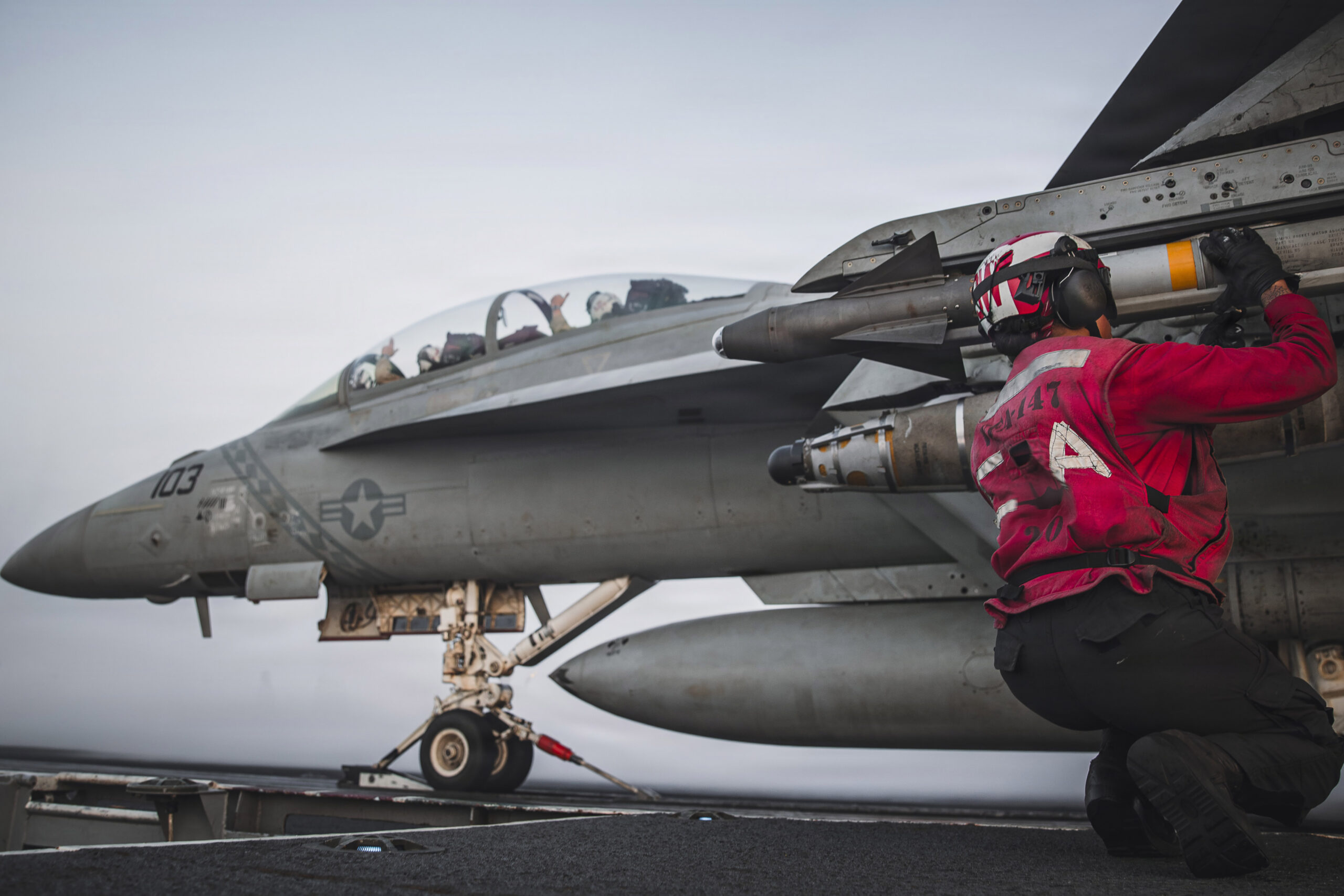
The US Congressional Budget Office (CBO) estimated on Tuesday, September 15, that the defense costs related to the conflict with Iran had reached $38.1 billion as of August 1, with over half of that used for replenishing ammunition. The CBO warned that a decrease in intercept missile stockpiles could increase the operational pressure in future Taiwan Strait conflicts. Simultaneously, the US is accelerating its expansion of weapon production capacity, with defense researchers advocating for stronger industrial capabilities to support long-term deterrence.
According to the CBO, as of August 1, the defense costs related to the conflict with Iran amounted to approximately $38.1 billion. Of this, $21.7 billion was used for replenishing depleted ammunition, accounting for nearly 57%; an additional $10.4 billion was spent on increased flying hours, $2.7 billion on rising fuel prices, and approximately $1.9 billion and $1.5 billion for replenishing war-damaged equipment and other combat costs, respectively. The expenses for military base maintenance or rebuilding have yet to be estimated.
Based on these calculations, CNBC reported that an average of about $246 million was spent per day in the first five months of the conflict. The CBO estimated that if the conflict were to continue at the lower intensity seen in May and June, every additional month would incur around $20 billion; if the conflict were to escalate back to the intensity of July, the monthly cost would rise to about $30 billion, with the potential for even higher expenses in case of further escalation.
The effects of the conflict are also extending to the US economy. The CBO predicts that by the first quarter of 2027, the year-on-year inflation rate of personal consumption expenditures (PCE) will be 0.5 percentage points higher than the organization’s forecast from February of this year, with core PCE rising by 0.3 percentage points.
“Almost every product price reflects transportation costs,” wrote the CBO.
The conflict’s most significant opportunity cost, according to the CBO, lies in the extensive consumption of missile defense interceptors. Since June 2025, involving US assistance in Israel’s defense against Iranian attacks and this year’s operations against Iran, the US military may have utilized between half and two-thirds of related interceptor missile stockpiles, including systems such as the Patriot, THAAD, SM-3, and SM-6.
The report states, “Even with increased production, rebuilding the Department of Defense’s interceptor missile stockpile may still require at least 5 years.” Historical experience shows that increasing missile production typically progresses slowly, with a pre-delivery lead time of about 3 to 5 years from placing new orders to delivery. The Center for Strategic and International Studies (CSIS) also highlights that the lead time for critical ammunition from manufacture to delivery currently ranges from 25 to 51 months.
The CBO particularly points out that China possesses more ballistic and cruise missiles than Iran, and China’s significantly larger economic base enables faster production of such missiles. Therefore, in the event of armed conflict between the US and China, the US missile defense capability may come under greater pressure.
The Pentagon, however, denies claims of US ammunition shortages. Chief spokesman Sean Parnell stated, “We have everything necessary to strike at the time and place of the President’s choosing.”
On the other hand, the inventory issues exposed by the conflict with Iran are prompting the US to accelerate the pace of rebuilding its defense industrial production capacity.
Michael C. Horowitz, Director of the Defense and National Security Program at the Council on Foreign Relations (CFR), highlighted in a report at the end of August that the Epic Fury operation and the ongoing conflict with Iran have brought to the forefront a long-standing problem: the US military lacks sufficient weapons and platforms to meet deterrence and operational needs.
In a study, Jerry McGinn, Director of the Center for Government Contracting, and Research Assistant A.J. Dilts at CSIS indicate that the Pentagon is signing long-term ammunition agreements at an unprecedented scale.
According to current plans, the annual production capacity of PAC-3 MSE interceptors will increase from about 600 to 2,000 by 2030; THAAD will increase from 96 to 400; the Tomahawk cruise missile program is planned to reach over 1,000 annually, while SM-6 will increase to over 500. Over the past two years, approximately 10,000 new companies have entered the US defense industry market.
To enhance the US military’s production readiness, McGinn and Dilts note that the military is developing a “high-low mix” structure of high-end precision weapons and low-cost mass weapons.
The Air Force plans to procure nearly 27,000 low-cost cruise missiles with a unit price of about $218,000 over the next 5 years; the Department of Defense also plans to deploy around 300,000 drones by the end of 2027. According to current budget plans, by the fiscal year 2031, over 70% of the precision ammunition procured by the Pentagon with a unit price below $600,000 will increase from about 49% in 2027.
Horowitz also believes that even with increased resources, the US cannot rapidly replenish expensive cruise missiles, high-end air defense systems, and other difficult to produce conventional weapons within two years. Therefore, he advocates expanding “precise mass” capabilities, including cost-effective, mass-producible drones, missiles, and sensors that can withstand battlefield attrition better, to complement high-end weapons.
Benjamin Jensen, Director of the Future of Warfare Initiative and Senior Research Fellow at the Defense and National Security Group at CSIS, introduces the strategic framework of “Deterrence by Capacity.”
Jensen points out that traditional deterrence is typically based on the three elements of capability, credibility, and communication, but capacity is often overlooked in deterrence discussions. A stronger industrial base, larger stockpiles, faster replenishment rates, and more resilient maintenance capabilities can enhance the US military’s sustained operational capability in prolonged conflicts, subsequently influencing the opponent’s cost-benefit analysis of the war.
In their concluding remarks, McGinn and Dilts state, “War-time readiness is not a finish line that can be declared, but a condition that must be continually built, tested, and maintained.”
They highlight that future deterrence capability will increasingly depend on the US and its allies’ ability to produce, deploy, and replenish operational capabilities faster than adversaries, to outmatch them in consuming military capabilities.