
Since the beginning of the year, several mainland Chinese technology companies have been listed in both mainland China and Hong Kong. Fueled by the speculation around AI (artificial intelligence) and technology concepts, their stock prices have surged significantly. Economists warn that investors should be cautious of these trends.
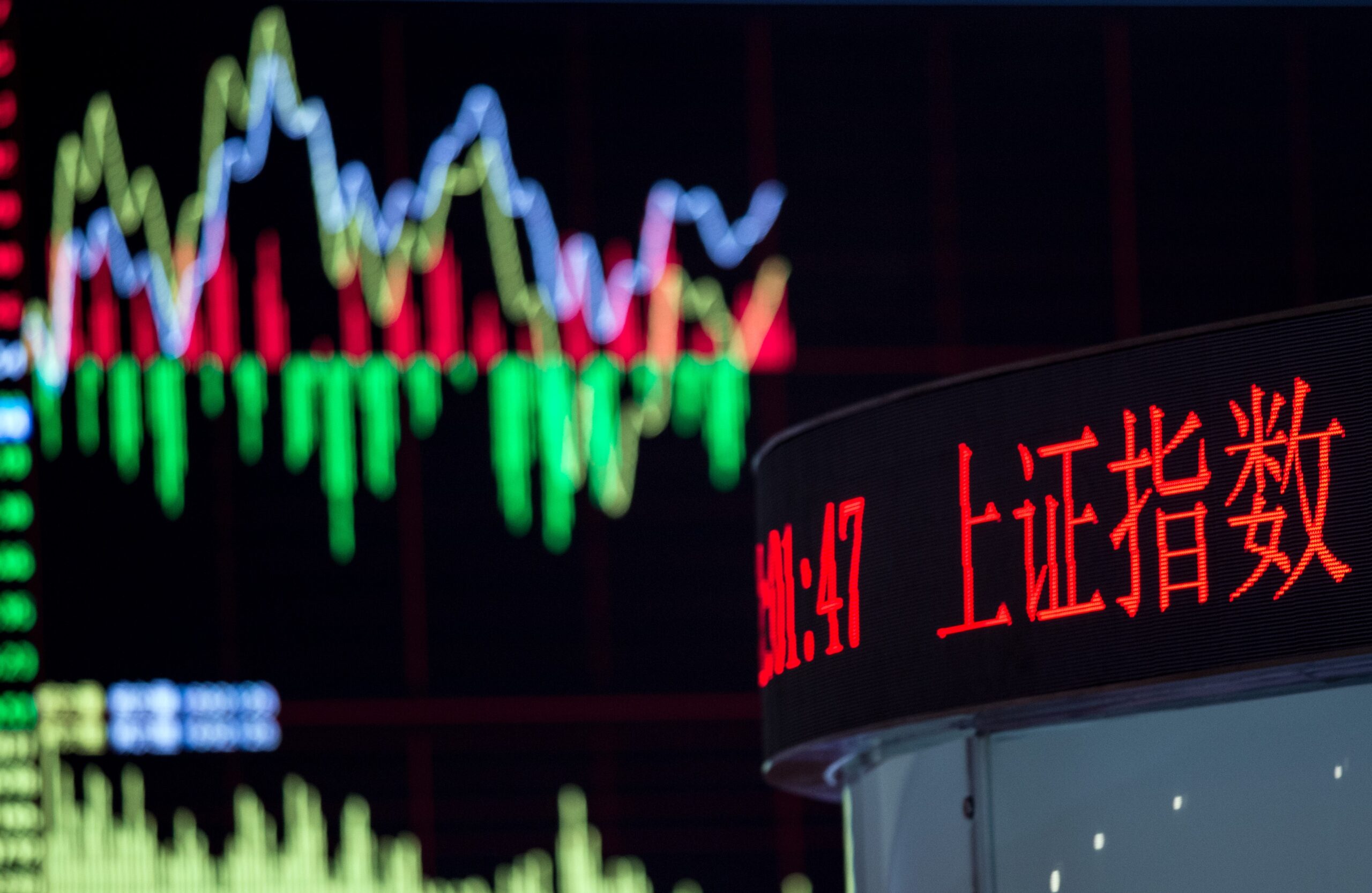
On September 15, the three major indexes of A-shares in China collectively experienced a decline. The trading volume in the Shanghai and Shenzhen markets hit a new low for the year. At the close of the market, the Shanghai Composite Index fell by 0.54% to 3864.28 points, the Shenzhen Component Index dropped by 0.72% to 13287.97 points, and the ChiNext Index decreased by 1.15% to 3247.92 points.
The total trading volume in Shanghai and Shenzhen on the 15th amounted to 1.6127 trillion yuan, a decrease of 16.5 billion yuan compared to the previous trading day, and it was also lower than the previous low point on April 7th at 1.6143 trillion yuan, setting a new low for the year.
In recent years, A-shares have seen a surge in tech-related concepts such as AI computing power, optical modules, humanoid robots, semiconductors, and storage, with funds heavily concentrated in these areas. The “Phoenix Bay Area Finance and Economics Forum 2026” is set to open on September 16. Yang Delong, the Chief Economist of Qianhai Kaiyuan Fund, emphasized the speculative nature of the tech stock market this year, with many AI stocks experiencing significant gains, trapping unwary investors who are then “harvested.”
He stressed the importance of conducting fundamental research on tech stocks, utilizing industry research reports and individual stock analyses to evaluate if there are genuine opportunities for profit growth in the future and whether current valuations are excessively high. Blindly speculating on thematic and conceptual stocks can lead to substantial losses, so investors must be vigilant and cautious.
Yang pointed out that many investors fail to distinguish between value investing and market fluctuations. If a company’s prospects deteriorate and there is little chance of an upward trend, they should cut their losses even if they are caught in a losing position. Only companies with room for growth in performance are worthy of holding onto. Practicing value investing also involves managing positions, knowing when to take profits and cut losses, and setting appropriate exit strategies based on individual circumstances.
Since the beginning of the year, there has been a wave of tech and AI concept stocks being listed in the Chinese and Hong Kong stock markets, with a notable concentration of domestic AI chip and unicorn robot companies entering the capital market. However, the significant decline in the stock price of Yushu Technology has raised concerns about market bubbles, retail losses, and IPO review systems.
Yushu Technology, a leading company in China’s artificial intelligence and humanoid robot sectors, went public on the Shanghai STAR Market on August 19, with an IPO price of 150.80 yuan per share. On the first day of trading, the stock soared to 1100 yuan, a 629% increase from the IPO price, closing at 845 yuan that day.
On September 15, data showed that Yushu Technology closed at 469.80 yuan, with the intraday low dropping to 469.01 yuan, hitting a new low since its listing. Calculated based on the closing price, the stock had fallen by 57.29% from its highest point on the first day of trading, with the total market value decreasing from around 444.9 billion yuan to approximately 190.17 billion yuan, a reduction of about 254.9 billion yuan.
According to a research report released by Guoxin Securities, Yushu Technology’s market capitalization peaked at 444.9 billion yuan on the first day of its IPO, with a price-earnings ratio exceeding 200 times, implying that the company must maintain growth significantly higher than the industry average over the next few years to justify the current valuation.