
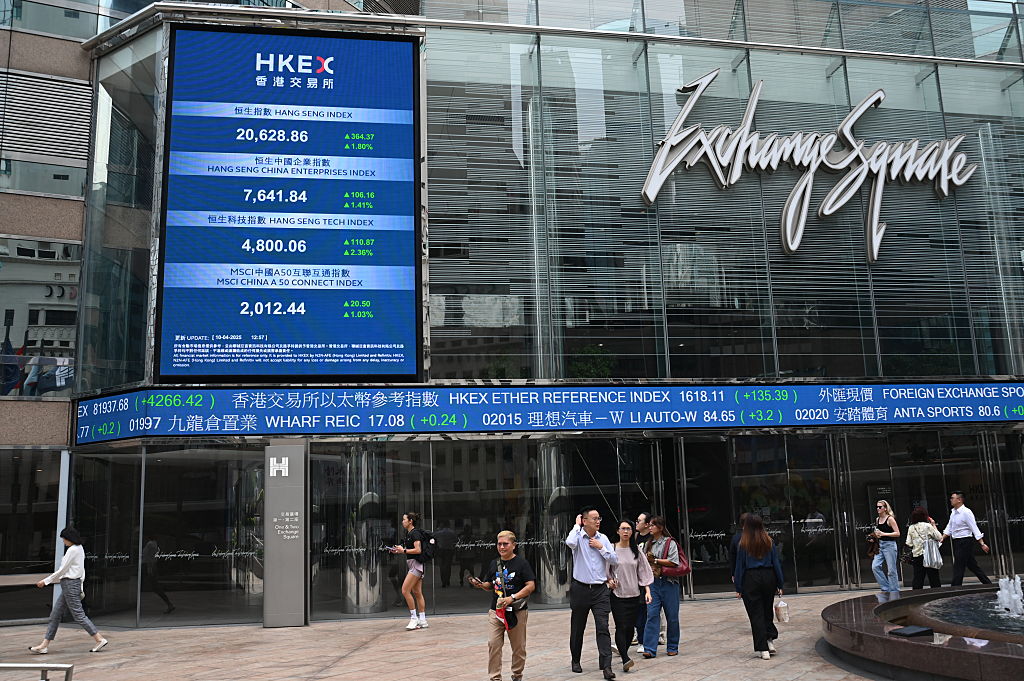
On September 15th, Hong Kong stocks opened higher but turned lower as auto, lithium battery, and AI big model stocks faced concentrated selling pressure. Intraday, Sai Li Si plummeted nearly 8%, while CATL fell over 6%. The Hang Seng Index ultimately declined by 1%.
According to the Daily Economic News on September 15th, the Hang Seng Index closed at 24,667.24 points, down 1%; the Hang Seng Technology Index closed at 4,291.34 points, down 0.62%; and the Hang Seng China Enterprises Index fell by 0.96%.
Auto stocks generally slid. Mainland Chinese new energy vehicle manufacturer Sai Li Si plunged nearly 8% intraday and closed down by 6.12%, marking a new low since its listing in Hong Kong.
On that day, there were reports in the market about adjustments in the cooperation model between Huawei and Sai Li Si, leading to a sharp decline in Sai Li Si’s stock price. Hong Meng Intelligent Driving confirmed after the market closed that Sai Li Si would lead the product, marketing, retail, and service systems of Huawei’s boundary.
Lithium battery stocks also experienced significant declines. Contemporary Amperex Technology (CATL) dropped by 6.01%, hitting a new low since March 10th; Tianqi Lithium fell by 5.16%, with GANFENG Lithium and ION Energy also dropping by over 3%.
According to relevant reports, NIO and Xiaomi adjusted the battery supply arrangements for some vehicle models, sparking concerns in the market about order diversion from CATL.
Analysts at Shenwan Hongyuan Securities believe that there is currently no sign indicating that CATL’s market share is being systematically taken over by other battery manufacturers.
AI big model stocks continued their recent downward trend. MINIMAX-W fell by 7.05%, while SmartSpec decreased by 5.69%. Both companies had been on a continuous decline over several trading days, with market concerns escalating over the continuous financing, fund consumption, and business monetization capabilities of big model enterprises.
Analysts at China International Capital Corporation (CICC) believe that expectations of tightening overseas fund conditions, coupled with intensified competition in the AI industry, are putting pressure on Hong Kong stocks. Investors are shifting towards defensive sectors, with weaker performances seen in consumer, technology, and real estate sectors.
Zhou Junzhi, Chief Analyst of Macro at CICC, stated that before the Fed’s interest rate hike expectations materialize, Hong Kong stocks may continue to oscillate in search of support. She believes that there is relatively limited downside potential for the index, but the upside momentum remains lacking.
Research reports from Dongwu Securities stated that the US Producer Price Index exceeded expectations, while the Middle East situation pushed oil prices higher, exacerbating concerns in the market about inflation and interest rate prospects.
The institution also noted that the mainland’s core CPI inflation rate remains low, domestic demand recovery is slow, and it is not sufficient to support upward revisions in corporate profit expectations.