
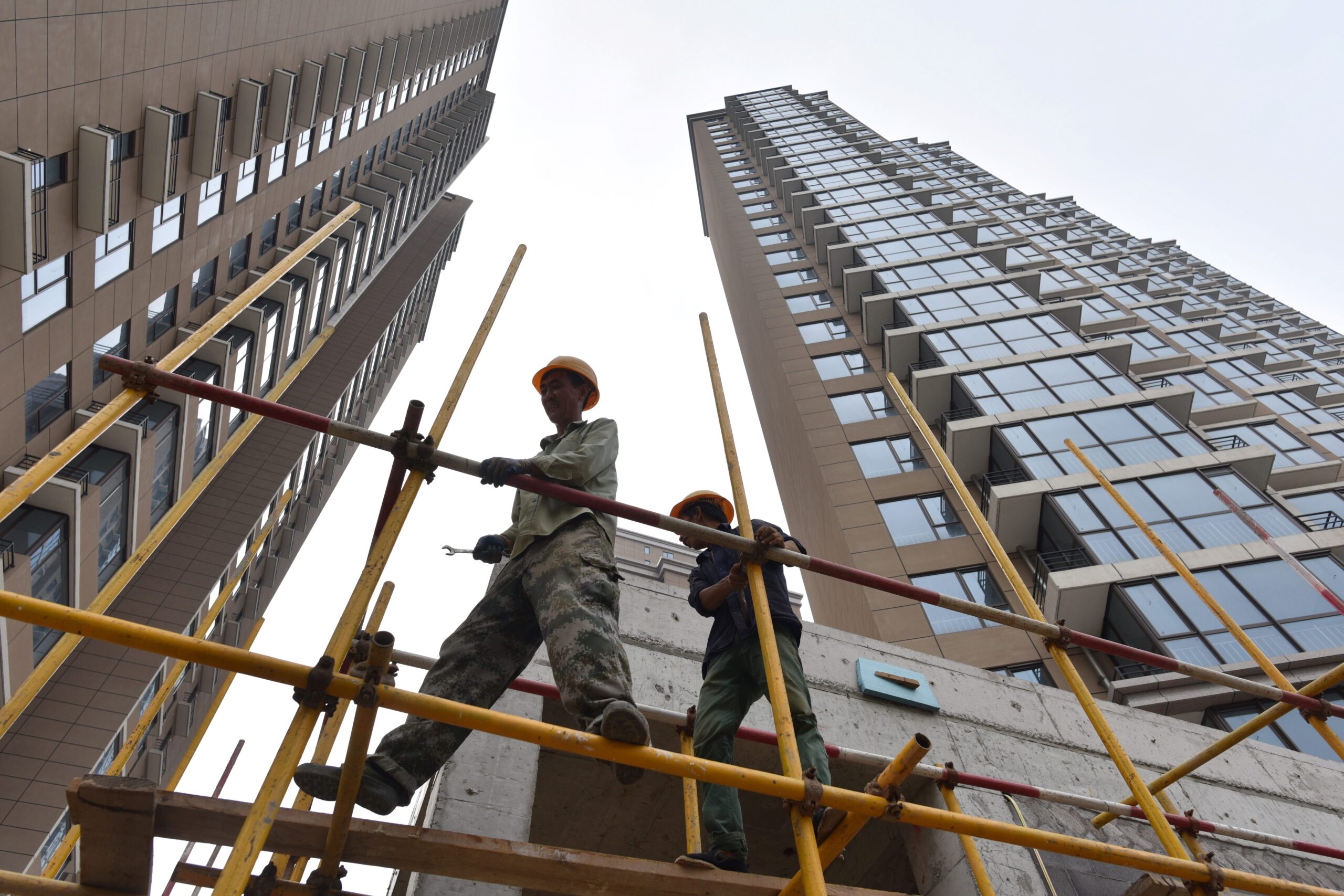
The Chinese real estate market continues to struggle, with official data showing that in August, the overall selling prices of commercial properties in 70 major and medium-sized cities continued to trend downward, with significant pressure on the second-hand housing market. At the same time, the official statement claiming a month-on-month increase in housing prices in first-tier cities has created a noticeable discrepancy with the actual sentiment among the public regarding the property market.
On September 15, the Chinese National Bureau of Statistics released data on the changes in selling prices of commercial residential properties in 70 major and medium-sized cities for the month of August.
Regarding second-hand housing, the selling prices in first-tier cities increased by 0.1% on a month-on-month basis, a decrease of 0.1 percentage points from the previous month. Among them, Shanghai and Shenzhen saw increases of 0.3% and 0.1% respectively, while Guangzhou remained stable, and Beijing saw a 0.1% decrease. Second-tier city selling prices decreased by 0.3% on a month-on-month basis, the same as the previous month. Third-tier city selling prices also decreased by 0.3%, with a 0.1 percentage point narrowing compared to the previous month.
In addition, among the 70 cities, only 3 cities experienced a month-on-month increase in second-hand housing prices, which is a decrease of 2 cities compared to the previous statistical period.
It is worth noting that recent official data shows that although second-hand housing prices in first-tier cities have increased, the month-on-month growth rate has shrunk for 3 consecutive months. Historical data reveals that from March to May 2026, the month-on-month increase in second-hand housing prices in first-tier cities was 0.4%, which then dropped to 0.3% and 0.2% from June to July.
Comparatively, the year-on-year comparison shows a 2.7% decrease in second-hand housing selling prices in first-tier cities, a narrowing of 1.0 percentage point from the previous month. Specifically, Shanghai decreased by 0.8%, Shenzhen by 2.7%, Beijing by 3.5%, and Guangzhou by 3.8%. Second and third-tier city selling prices of second-hand houses decreased by 4.9% and 5.6% respectively, with a 0.2 percentage point narrowing in their decreases from the previous month.
In terms of new housing, the month-on-month selling prices in first-tier cities shifted from flat in July to a 0.1% increase. Among them, Shanghai, Guangzhou, and Shenzhen saw increases of 0.4%, 0.1%, and 0.2% respectively, while Beijing experienced a 0.2% decrease. Second-tier city prices decreased by 0.1% on a month-on-month basis, staying the same as the previous month, while third-tier city prices dropped by 0.2%, narrowing by 0.1 percentage point compared to the previous month. Additionally, there were 21 cities where new housing selling prices either increased or remained flat on a month-on-month basis, a decrease of 2 cities compared to the previous month.
In terms of year-on-year comparison, first-tier city new housing selling prices dropped by 0.9%, a decrease of 0.2 percentage points from the previous month. Among them, Shanghai was the only first-tier city with an increase of 3.0% in new housing prices. Beijing, Guangzhou, and Shenzhen saw decreases of 2.3%, 1.9%, and 2.3% respectively. The prices of new housing in second and third-tier cities also decreased by 2.7% and 4.1% respectively, with a narrowing of 0.1 percentage point in their decreases from the previous month.
For a long time, official economic data released by the Chinese government has been met with skepticism from the public, with some analysts believing that the actual situation in the real estate market may be more severe than what the official data reflects.
While officials emphasize the month-on-month increase in housing prices in first-tier cities, public perception tells a different story.
On September 15, the hashtag “Housing prices in first-tier cities have risen” trended on Weibo, with many netizens posting responses.
Media personality and Weibo influencer “Yuan Sanjin” expressed, “First-tier cities have seen a continuous decline for 4 years overall, with only 3 cities showing an increase for 1 month, how much significance can this hold? It’s like a brief warmth in the dead of winter, doesn’t mean spring is here.”
Weibo influencer “Cai Leilei” commented, “Trends are trends, how can you say it’s up just because it increased for a month, or it’s down just because it decreased for a month? Some might think the trend has reversed.”
Founder of Zhi Xin Qing Nian and Weibo influencer “Geng Xiangshun” questioned in a post, saying, “I read the reports saying housing prices in first-tier cities have risen, but I fail to understand where the driving force for this increase is coming from,” and provided 4 reasons to refute the official statement:
1. There has been a shift in the mindset of young people, with more choosing not to marry or have children, leading to a significant decline in marriage and birth rates, decreasing the overall demand for housing.
2. Due to the impact of AI and the uncertain economic environment domestically and internationally, the future stability of employment and income has decreased, which could result in many people facing unemployment or a lack of income and being cautious about using their savings to buy a house, let alone taking on hefty mortgages for decades.
3. Those who can afford and are willing to buy homes have mostly already made their purchases. Those who are unwilling or unable to buy one will not suddenly change their mind just because prices rise further out of their reach.
4. As job opportunities diminish and living becomes more challenging in large cities, more people are choosing flexible employment, leading to a significant population flow back to smaller cities, towns, and rural areas where the cost of living is slightly lower, causing a decrease in urban populations.
In conclusion, the blogger questioned, “Considering these factors, it’s hard to see any possibility for housing prices to rise. For instance, my friends who are in their 80s and 90s and bought houses in provincial capitals and major cities around 2021 are now facing heavy pressures as they still owe payments for 10 to 20 more years, struggling every month. The housing prices have plummeted, and even if they were to sell their properties now, they might still end up owing the bank money.”