
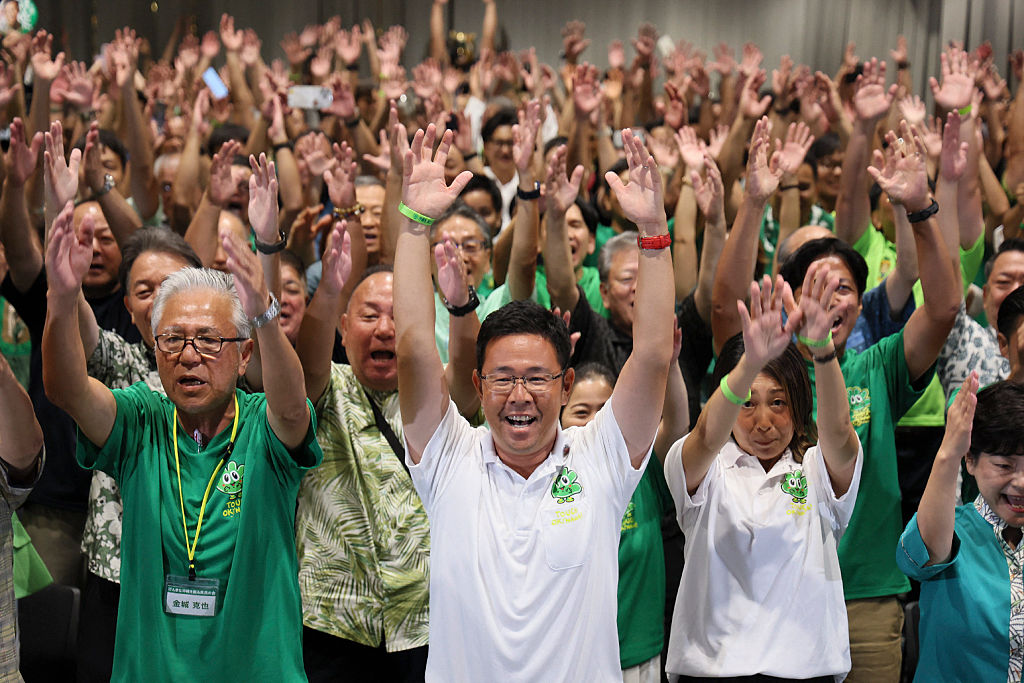
In a significant political development in Japan, conservative candidate Genta Koja has won the election for the governor of Okinawa Prefecture, defeating incumbent Denny Tamaki who sought re-election. Koja received support from six political parties, including the Liberal Democratic Party, securing 59% of the votes. The victory marks the end of Tamaki’s two-term reign and a departure from the past 12 years of governance advocating for reducing the presence of U.S. military forces in Okinawa.
The election results have implications beyond local governance, as they could influence Japan’s military plans in the Southwest Islands region. One of the immediate concerns is the long-standing issue of relocating U.S. military bases. The Japanese government’s plan to move the U.S. Marine Corps from Futenma Air Base to a new facility in Henoko, Okinawa Island, could face fewer obstacles with Koja’s victory. Legal actions taken by Okinawa authorities to halt the relocation may see a shift after Koja’s win.
Furthermore, the military’s use of civilian airports and ports in Okinawa may become more accessible with Koja in office. Masaaki Gabe, an honorary professor at the University of the Ryukyus, suggested to Reuters that Koja is likely to approve the inclusion of certain airports and ports for military use, expanding facilities originally designated for civilian purposes to also serve the military.
Koja’s election aligns with the timing of the impending release of a new national security strategy by the Tokyo government. The strategy is expected to accelerate Japan’s largest military expansion since World War II. The Tokyo government argues that increased defense spending is necessary to deter China from forcibly asserting its territorial claims in East Asia. In recent years, Japan has deployed missiles, electronic warfare units, and boosted ammunition reserves on several Southwest Islands.
With Yonaguni Island, Japan’s westernmost point, located just about 110 kilometers east of Taiwan, tensions with China loom large. Beijing maintains that Taiwan is an integral part of China’s territory and has escalated military activities in the region. Amid strained relations between Japan and China over the past year, Koja previously mentioned that a potential Chinese attack on Taiwan coupled with threats to Japan could prompt military action from Japan.