
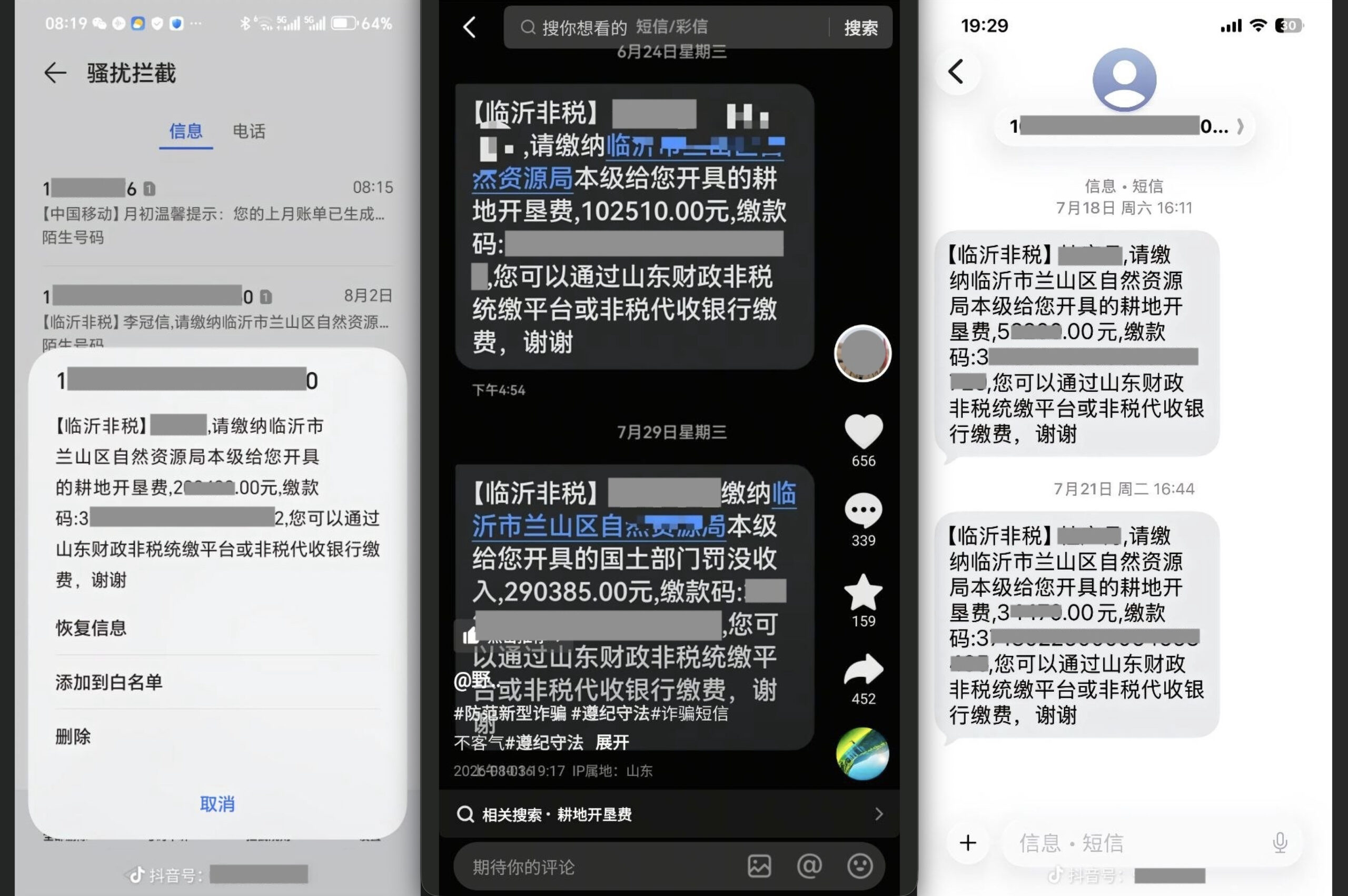
The Chinese Communist authorities are set to implement the “Farmland Protection and Quality Improvement Law” starting in January 2027. Despite the official implementation date approaching, regions like Shandong have already begun inspecting industrial plants and rural residential land to reclaim farmland development fees and fines. Some companies are required to pay millions of yuan. Several individuals interviewed recently expressed concerns over the lack of formal documentation for the reclamation process, with some companies facing pressures such as water and power cuts, as well as aggressive debt collection methods. The financial strain on the Chinese government is believed to be a fundamental reason for the increased fees.
In August this year, the Chinese National People’s Congress Standing Committee passed the “Farmland Protection and Quality Improvement Law”. Chinese Communist Party leader Xi Jinping signed the law the same day, announcing its enforcement starting from January 1, 2027. The legislation was initially proposed by the National People’s Congress Standing Committee in 2024 under the pretext of protecting farmland, later renamed to include quality improvement measures.
The Farmland Law specifies compensation for farmland occupation, requiring non-agricultural constructions on farmland to pay stipulated farmland development fees, with those encroaching on permanent basic farmland paying double the standard fee.
Even before the official enforcement of this law, several regions like Hebei, Shanxi, Gansu, and Jiangxi have already adopted new fee standards for farmland development fees. Significant discrepancies exist in fee structures across different regions, with Shandong province having further refined its fee policies, implementing them among grassroots enterprises.
The Jinan Municipal Finance Bureau and other institutions issued notices in February this year, stipulating that non-agricultural constructions occupying ordinary farmland should pay a fee of 80,000 yuan per mu; while those encroaching on permanent basic farmland should pay double that amount.
As the Chinese real estate market remains sluggish and land transfer revenues decline, local financial pressures continue to mount, gradually extending the reach of farmland development fees to the operational expenses of grassroots enterprises, drawing concern from many interviewed business owners and landlords.
A business owner in Fancheng Town, Lanshan District of Linyi City in Shandong, revealed to reporters that local authorities are conducting land inspections on some enterprises, involving fees related to land nature assessments and fines proportional to the actual land occupied by the businesses.
He stated, “According to the nature of the land during the previous land survey, here in Shandong province, we would pay a non-tax fee of 60,000 yuan per mu for occupying farmland.”
Regarding the fines, the amount is not solely determined by whether the factory premises are on farmland. “The fines are calculated based on the total area occupied by your factory, regardless of whether it’s farmland or not. You have to pay 20,000 yuan per mu if you occupy it.”
The business owner mentioned that his factory occupies only a few mu of land and has already paid approximately 220,000 yuan, with neighboring factories facing even higher amounts, some having to pay upwards of one million yuan.
Concerning why businesses are paying without formal documentation, he explained that businesses are under significant operational pressure. “If you don’t pay, they’ll trouble you; unless you quit.”
He disclosed that some enterprises in the area, if they refuse to pay, face various operational pressures, including water and power cutoffs, roadblocks, and government-hired personnel interfering with factory operations.
He further revealed that in Fancheng Town, some government-hired individuals responsible for different villages would bring excavators to pressure businesses for payments.
“They would place the excavator’s bucket on your factory premises. If you refuse to pay, they would destroy it. You either pay willingly or face the consequences; what can you do?” he pondered. He believed that even if a business were to report such incidents to the authorities, resolving the issue would be challenging.
The business owner clarified that the farmland development fees paid by enterprises are not directly remitted to the local town government. Payments are processed through Shandong Provincial Non-Tax Channels, allowing enterprises to receive payment invoices.
According to public records, Fancheng Town had 1,586 industrial enterprises and two industrial parks in 2019, primarily focusing on board materials, chemical engineering, and construction materials industries.
He emphasized that one of the current focal points of the inspections is determining the nature of land previously occupied by businesses during different historical periods. For instance, if a factory was established around the year 2000, local authorities or village collectives allocated land for the factory, but without completing modern land-use procedures, such historical legacy issues could now be subject to scrutiny.
The business owner noted, “Back then, there was no procedure where the state would allocate industrial land for you. They simply marked out an industrial park for you to build a factory, saying that the town would support you. Many companies did not have complete documentation back then.”
He mentioned that various regions in Linyi City are currently levying farmland development fees, primarily targeting factories.
Nevertheless, his primary concern was that paying these fees does not necessarily resolve the land procedural issues for enterprises. He stressed that besides the current payment amounts, the lack of clear policy boundaries is what truly unsettles enterprises. “Even if you pay, it doesn’t guarantee legality. The local government doesn’t have a definitive stance either.”
He deliberated on the uncertainty faced by enterprises, asserting, “You pay but can’t negotiate. Their sole task is to collect the money.”
Believing that some companies were already struggling to stay afloat financially, additional expenses such as farmland development fees could further impact their sustainability. “In essence, the government is low on funds, indirectly extracting money from businesses.”
Yitang Town in Lanshan District, Linyi City, is situated across the river from Fancheng Town.
A factory owner from Yitang Town shared that he recently settled two payments for a property. One was a farmland development fee amounting to 19,300 yuan, and the other was a fine of 6,450 yuan. The property was used as a caretaker’s residence, with the original factory being dismantled five or six years ago. After the factory’s demolition, lacking resettlement housing, he built a-new structure following instructions from the demolition department.
He stated that over 50 households in his village have been requested to pay fees, with some individuals having paid up to 600,000 yuan. Fee standards differ across regions, with Linyi having varying rates of 40,000 and 80,000 yuan per mu, while some areas in Hebei charge higher fees.
He remarked that such inspections have extended from Heze City in Shandong to other regions gradually. Regarding land utilization, the fees include reclamation charges. Following industrial land clearance, restoration to farmland might be uncertain.
In his view, land usage classification and whether it encroaches on farmland are linked to satellite imagery. “The government has satellite pictures, if you encroach on farmland beyond the red line, you have to pay the first penalty.”
He stated that while some operators opt to pay the fees, others may not afford to, prompting them to dismantle their factories. For those refusing to pay, he noted, pressures might intensify gradually.
Continuing to operate a business without paying could lead the relevant authority to conduct inspections from various aspects. “The worst-case scenario is demolition.”
Regarding the current land inspections and related fees, he believed they are linked to local financial pressures. “In essence, Shandong is running out of money, China is running out of money, and the country is running out of money.”
The first payment he made was collected by Shandong’s financial department, but he was unsure about the fund allocation. Nonetheless, he speculated that considering numerous residential and factory areas, the scale of involved funds might be substantial.
He noted the challenging economic environment currently faced locally. “Many factories have shut down as they can’t sustain operations.” He explained that some owners left due to financial problems, making them challenging to locate.
He believed that combining operational challenges with additional land-related fees might become unbearable for some small businesses. attributeName`Yitang Town had 2,346 industrial enterprises in 2019, with the primary industries being board materials, chemicals, machinery, construction materials, food, and plastics.
In another instance, a factory owner in Tianliu Town, Shouguang City, Shandong, revealed that the local administration is progressing in investigating land utilization, especially farms converted into factories and breeding sites, with operators required to finalize related procedures and pay various fees.
For his factory, he illustrated that following current standards, the total payment amounted to 114,000 yuan per mu, comprising 60,000 yuan for farmland development fees, 20,000 yuan for fines, and 28 yuan per square meter for compensated construction land usage, among other taxes. With a factory area of approximately four mu, he had already paid the first three fees, anticipating a total payment of about 505,000 yuan once all proceedings conclude.
He reasoned that ongoing land investigations are a consequence of lax regulations governing agricultural infrastructure, breeding projects, and related constructions in the past for economic development. “In the past, many issues were overlooked for the sake of economic growth, but as the overall environment deteriorates, they are now settling the score.”
Recounting his previous involvement in local planned breeding regions, he highlighted the usage of farmland infrastructure without complete land procedures. However, with stricter farmland protection policies, many entrepreneurs engaged in agricultural breeding activities in line with historical planning are now facing new challenges.
He noted that such circumstances are not exclusive to Shandong but also affect regions like Hebei, though execution levels vary across different regions.
On the multiple fees tied to the current inspections, he believed that apart from land management aspects, financial stress on the government could be a backdrop factor. Simultaneously, he speculated that local financial constraints could drive the authorities to acquire funds through land-related projects.
However, he cautioned against assuming the situation would resolve once a brief period passes. “The situation won’t disappear. They don’t have money themselves, how can they manage you?”
He linked the current land investigations with private investors’ reluctance. He opined that stakeholders had initially invested in a relatively lenient policy environment; now, encountering additional fees, procedural requirements, or land nature adjustments might heighten operational risks.
In these uncertain times, he suggested that projects already invested in might face a dilemma.