
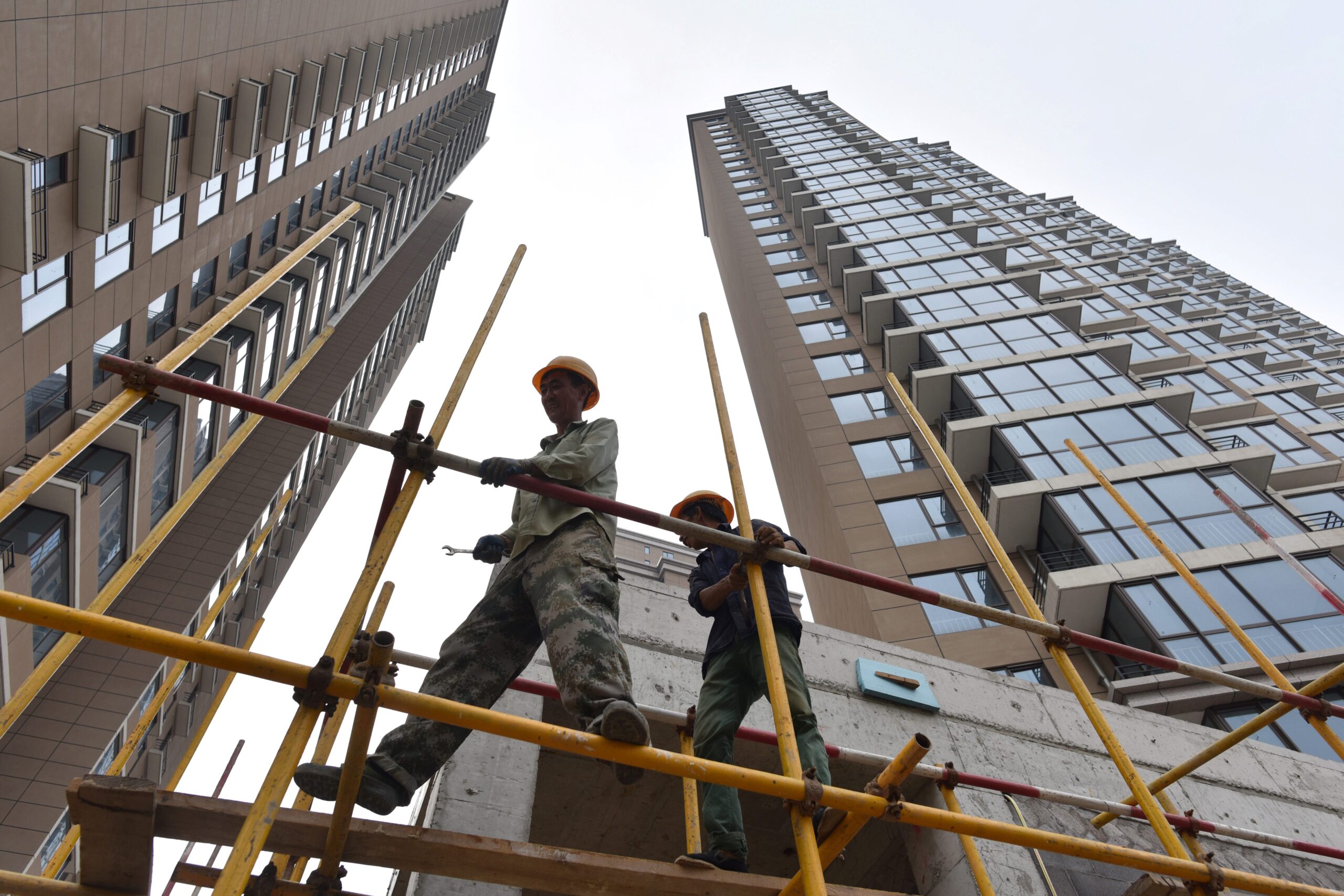
On September 9, in the land transfer terms of Quanzhou City, Fujian Province, conditions for selling existing houses were written in. Industry insiders say that this move has led to a decrease in cash flow for enterprises, reducing the funds available for investment, and causing a restructuring in the logic of land acquisition for real estate developers.
According to a report by “Daily Economic News” on September 11, the Natural Resources and Planning Bureau of Quanzhou City issued a public announcement on September 9, stating that four plots of land in Fengze District will be publicly auctioned on September 29. Among them, Plot No. Feng2026-13 in the Donghai Central Vitality Zone clearly stipulates the implementation of three basic systems: project company system, lead bank system, and existing house sales system. At the same time, the existing house sales system requires that the project can only apply for sales after completion of acceptance of completion inspection, initial registration of real estate, and registration of existing house sales.
This is not the first time Fujian Province has introduced plots with existing house sales models. On September 3 this year, Plot 2026P13 newly listed in Huli District of Xiamen also required the implementation of existing house sales.
Not only in Fujian, on September 1 this year, the announcement of the transfer of two residential land plots in Qingtian County, Lishui City, Zhejiang Province also clearly stated the need for “existing residential sales of salable properties”. In November 2025, Pingjiang County in Hunan also released new commodity housing projects built on newly auctioned land, only starting the sale of commercial housing after completion and acceptance.
The report also indicates that the implementation of existing house sales is slow, accounting for only a very small portion.
Regarding this, Citic Securities stated in its latest research report that under the existing house sales model, the timing of real estate developers’ sales receipts is delayed, as well as the timing of individual mortgage loan disbursement, which is delayed until the completion of the project. This leads to a decrease in corporate cash flow and a reduction in funds available for investment. Assuming that land and housing prices remain stable, the extended capital occupation time also leads to an increase in real estate developers’ costs, requiring the land market to find a new balance price, with a contraction expected in the short term.
Ke Rui, a Chinese real estate big data application and consulting services provider, believes that with the increasing requirement for existing house sales, real estate developers will become more cautious and refined in land acquisition.
Yan Yuejin, Deputy Director of the E-House Research Institute in Shanghai, believes that from the current operational perspective, existing house sales are only targeted at individual high-quality land plots, thus having limited overall impact on supply and demand relationships.
In the Chinese real estate market, developers adopt the pre-sale system for commercial housing, allowing them to collect payments in advance before the houses are completed. During the rapid expansion of the mainland’s real estate sector, the problems caused by this highly leveraged model were masked. However, today, as real estate developers face debt crises, many pre-sale projects have stalled due to the break in the capital chain, resulting in a large number of unfinished buildings. This has led to significant dissatisfaction among many people who have already paid for the purchase of homes and are still repaying mortgages, with cases of people seeking legal recourse becoming increasingly common.