
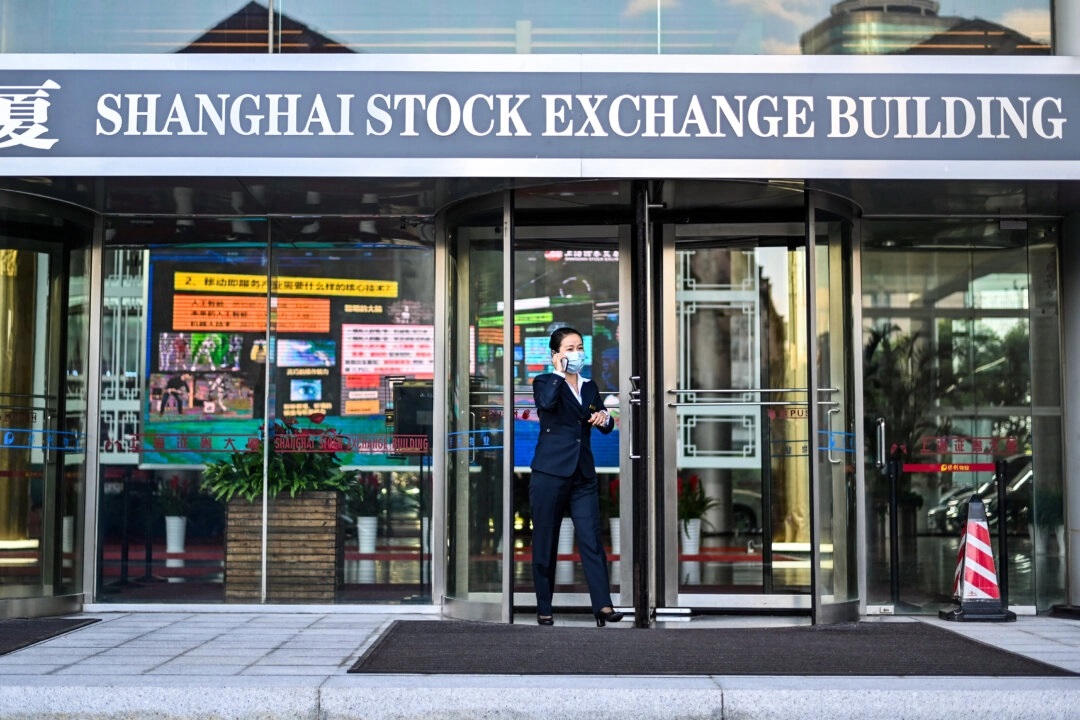
Bloomberg reported on Tuesday (August 25) that in the first half of 2026, over 100 Chinese listed companies were pursued by the Chinese authorities to pay back taxes and overdue fines amounting to a total of 7.7 billion yuan. Against the backdrop of economic weakness and pressure on local finances, the official tax collection actions by the Chinese Communist Party are severely impacting listed companies.
Many companies have almost exhausted most of their profits in the first half of the year due to paying back taxes. Just in the first six months of 2026, the total amount of taxes reclaimed from listed companies exceeded the sum of the previous 14 years since Xi Jinping took office in 2012.
The background of this large-scale collective corporate tax reassessment is that local governments are actively seeking new sources of fiscal revenue. With domestic demand weakening, tax revenues have declined from the peak in 2023, and the land transfer revenue that local governments have heavily relied on in the past is shrinking at a double-digit rate.
An anonymous tax official from a city in western China stated that the authorities are targeting financially strong large companies or listed companies for tax reassessment. Another official also confirmed that the tax authorities in Beijing had pressured local governments to issue such notices, but faced resistance from local officials.
For years, provinces in China have used tax refunds, subsidies, and tax incentives to attract investment, even though some financially strapped cities find it difficult to pay government wages and maintain transportation routes. They continue to rely on various incentive policies to attract businesses in an attempt to achieve their economic growth targets.
The owner of a household appliance manufacturer in central China surnamed Gao stated that due to insufficient government fiscal revenue and difficulty in finding new tax sources, more taxes are being squeezed from existing sources. He disclosed that the tax department in his city has strengthened tax enforcement since mid-2025, conducting comprehensive reviews on almost all businesses.
This year, Chinese listed companies have been issuing a wave of tax reassessment announcements. These companies indicated that they discovered most issues only after receiving “self-inspection” notices from the tax authorities and emphasized that they have not faced administrative penalties.
Since 2021, the Chinese Communist Party has been implementing the “Golden Tax Phase IV” system, connecting tax data with databases from banks, customs, market supervision, and social security. With the nationwide electronic invoice system essentially completed in 2025, Beijing can now real-time monitor the majority of commercial transactions, making it harder to conceal underpayment of taxes.
A Chinese Communist Party official from western China revealed that the “Golden Tax Phase IV” automatically flags issues, prompting tax authorities to require companies to conduct self-inspections before formal inspections. The official added that since the end of 2025, enforcement efforts have significantly intensified.
According to analysis, the tax collection actions mainly require companies to repay misused tax deductions, overstated value-added tax (VAT) deductions, preferential taxes that companies are no longer entitled to after disqualification, and overdue fines.
Over the past decade, most listed companies have enjoyed various degrees of tax incentives. An analysis by CITIC Securities earlier this year found that about 64% of A-share listed companies have enjoyed reduced corporate income tax rates.
As of the end of June, the 10 most severely affected companies by the tax reassessment accounted for over 70% of the disclosed amounts to be repaid by listed companies.
The company with the highest disclosed repayment amount is Beidahuang, with a total of approximately 1.41 billion yuan to be repaid in taxes and overdue fines, including about 1.024 billion yuan in taxes and around 386 million yuan in fines. Beidahuang, listed for over two decades, has never incurred losses in the first half of the year. It is now required to repay past tax incentives, which amount to 120% of the company’s net income in 2025, causing Heilongjiang Beidahuang to project a loss of nearly 537 million yuan in the first half of this year.
Furthermore, the affected companies also include giants in industries such as mining, energy, and technology, such as Yunnan Copper Group, Taiji Group, Ai’er Ophthalmology, and electronic products wholesaler Aishede. Among these four companies, publicly available data currently confirms that Yunnan Copper Group needs to repay approximately 512 million yuan, Aishede around 308 million yuan; the specific amounts for Taiji Group and Ai’er Ophthalmology have not been disclosed.