
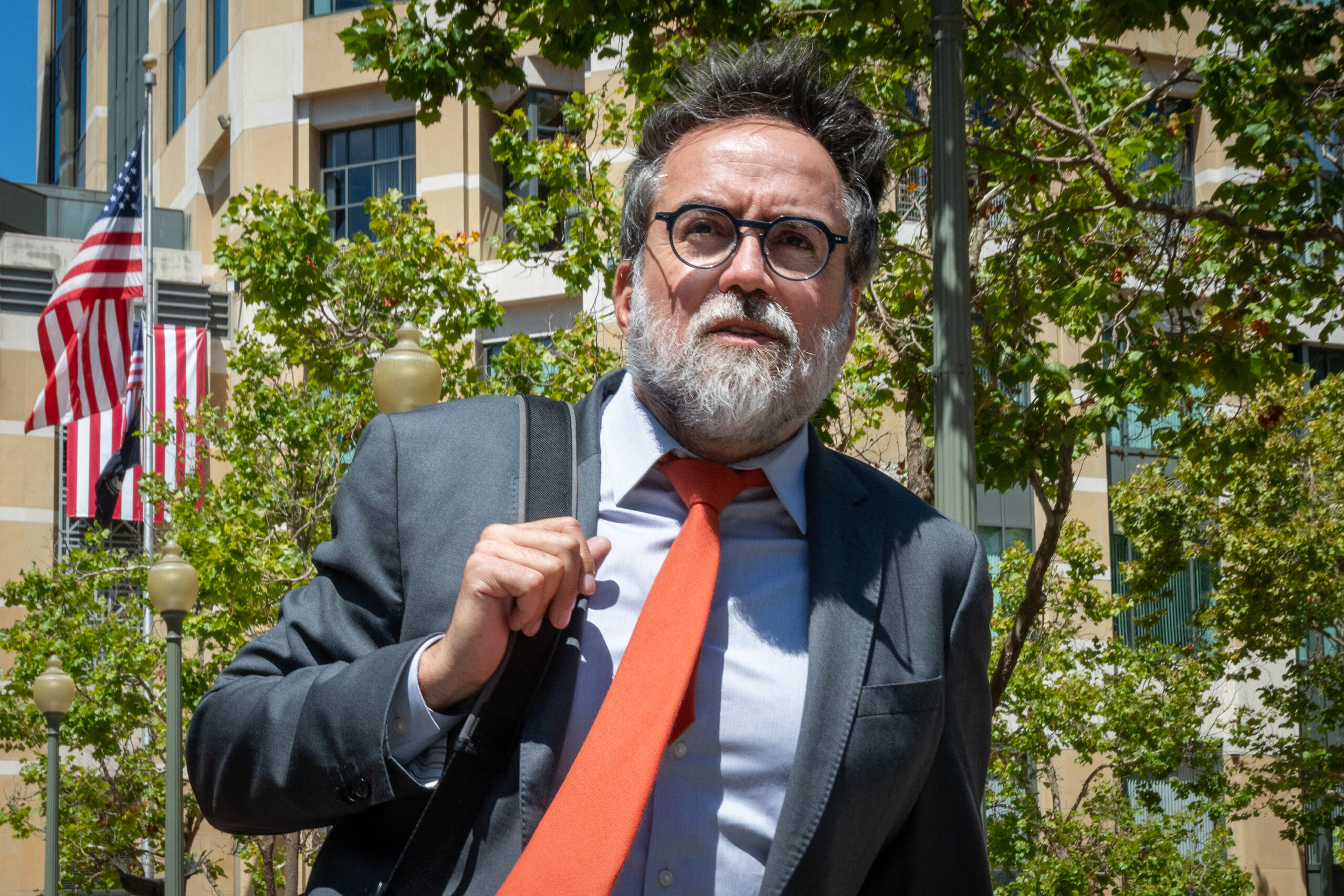
Meta’s former engineering director and whistleblower Arturo Béjar testified on Wednesday (August 19th) that the company prioritized user growth and profits over safety for a long time, and pointed out that CEO Mark Zuckerberg shaped this corporate culture.
Béjar testified for the second consecutive day in the federal court in Oakland, California. This trial involves lawsuits filed against Meta by California, Colorado, Kentucky, and New Jersey, accusing Facebook and Instagram’s product designs of causing young users to become addicted, as well as involving data collection issues related to children under 13 years old.
Meta denies the allegations, stating that the company values the safety of teenagers and has taken measures to address related risks.
Béjar stated that Meta operates in a top-down management style, with CEO Mark Zuckerberg deeply involved in many decisions. He mentioned that significant changes in product design often required Zuckerberg’s support. “If Mark prioritizes something, mountains move in months,” Béjar said.
He worked at Facebook from 2009 to 2015, primarily handling security issues such as online bullying. He returned to the company as a consultant from 2019 to 2021, participating in work related to Instagram users’ well-being. Béjar claimed he had interacted with Zuckerberg dozens of times.
Béjar revealed that he had seen several internal Meta research reports showing that teenagers on Facebook and Instagram could be exposed to harmful content and develop negative feelings, but implementing effective product adjustments was not easy. “In plain terms, because of the company culture Mark created, we could not develop the features we were discussing to protect user safety and well-being,” he said.
He also challenged Zuckerberg’s public statements in 2021. At that time, whistleblower Frances Haugen publicly released internal Meta documents, and Zuckerberg denied that the company prioritized profits over safety and well-being.
On Wednesday, Béjar stated, “Based on my experience at Meta, that’s not an accurate statement.”
He added, “It’s just not true, every bit of it is false. When it comes to children, you just can’t trust Mark Zuckerberg.”
Another crucial testimony from Béjar involved users under the age of 13.
Under the Children’s Online Privacy Protection Act (COPPA), Meta requires users to be at least 13 years old to create an account. However, Béjar mentioned that his research found “tens of thousands” of children under 13 on Instagram, and the company was aware that young children were using the platform.
When asked about the company’s attitude towards users under 13, he said, “Especially on Instagram, the company’s attitude is ‘don’t ask, don’t tell’.”
Béjar pointed out that Meta has highly advanced technology to identify fake accounts but has not set clear “targets” or “metrics” to detect suspected users under 13 and verify their age.
States like California accuse Meta of collecting personal data from children under 13 without parental consent, violating federal law. Meta stated that the company is making efforts to identify users under 13 and deactivate related accounts.
Béjar also mentioned that employees responsible for social media products are largely evaluated and compensated based on user numbers and usage time.
“In this situation, safety is an afterthought,” he said.
He believed that features like video autoplay, infinite scrolling, and displaying likes, views, comments, and follower numbers, which were originally designed for adults, could pose greater risks for teenagers.
He also criticized some of Meta’s safety tools as having limited effectiveness.
For example, in 2021 Meta introduced the “Take a Break” feature, reminding users to pause platform usage. Béjar called such tools “doomed to fail from the design” because users must activate them themselves, and reminders can be easily overlooked. “Safety tools should be set to open by default,” he said. “Most people won’t go and turn on that setting.”
He compared it to a car’s safety airbags: “It’s like you have to manually turn on the safety airbags every time you get in the car.”
Meta’s lawyer, Paul Schmidt, stated during the hearing on Tuesday that adolescent mental health, social media, and how teenagers use social media are crucial issues, and Meta believes the company has a responsibility in these areas.
“The company has a responsibility to take action on its own and to work with adolescents and parents to address these issues,” Schmidt said.
During cross-examination, Meta’s lawyer Brian Stekloff also questioned Béjar about the professional competence of Meta employees he had worked with in the past and whether the relevant security issues were genuinely resolved.
Béjar admitted that Meta had hundreds of security personnel, some of whom he respected and considered competent. He also acknowledged that during his second stint working for Meta, he was an external contractor and did not directly work with Zuckerberg, nor could he access some company resources.
This trial is part of the lawsuits filed against Meta by 29 states in 2023, with cases from California, Colorado, Kentucky, and New Jersey being heard first, while the remaining 25 states are expected to go to trial later.
After Béjar’s testimony, the jury listened to a pre-recorded testimony from Meta researcher Elena Davis. Davis had studied the addictive aspects of social media.
She read excerpts from her report, stating that Meta could adjust Facebook to make it “less habit-forming and to assist those looking to ‘detox’ from Facebook usage.”
Meta currently faces thousands of similar lawsuits alleging that its products harm children. Béjar has been a key witness in four trials against Meta.
The trial is expected to last about six weeks. It is presided over by California federal district judge Yvonne Gonzalez Rogers, and the jury is expected to provide an advisory verdict first, followed by the judge’s final liability determination and civil penalty ruling.