
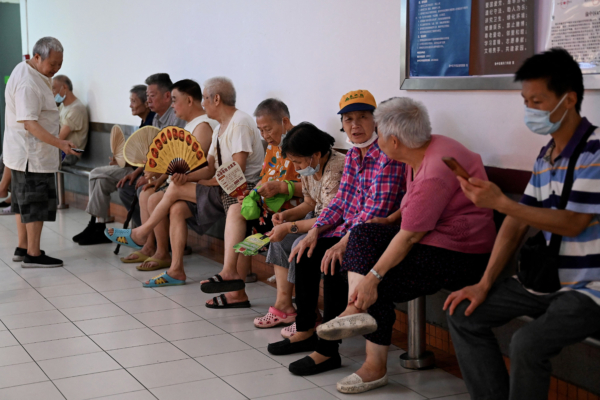
In recent days, the Chinese Communist Party (CCP) has publicly released some data on residents’ pension, sparking a new round of grievances. Netizens claim that the social security and medical insurance systems are the most unfair. Experts analyze that the pension system is in crisis, and the next step may be targeting civil servants, with the so-called reforms being mere posturing.
This report, commissioned by the National People’s Congress and conducted by the China Society of Social Security, reveals that the average monthly pension for retired enterprise employees is 3,162 yuan, while urban and rural residents receive merely 214 yuan on average. While the macroscopic view of China’s social security system is considered “perfect,” there are still underlying deficiencies. The results have incited a storm of criticism from netizens, demanding transparency in the salaries of employees in state-owned enterprises, civil service, and monopolistic industries.
The report acknowledges that employees in government agencies and public institutions generally enjoy both basic pensions and occupational pensions, with a combined pension replacement rate exceeding 80%, significantly higher than that of enterprise employees. However, specific data was not disclosed.
Furthermore, the report indicates that the number of workers who interrupt their contributions to the social security system has increased significantly, from 29.56 million in 2011 to 63.25 million in 2022, highlighting a severe trend of payment interruptions.
Netizens express their frustration, questioning the equalization of income distribution and criticizing the discrepancies in pension benefits between different societal sectors. They share anecdotal examples highlighting the disparities in retirement benefits, burial allowances, and working conditions across various provinces and industries.
Calls for reform intensify, urging for equal treatment and fair distribution of resources among different groups in society. Suggestions include reducing the payment rates and adjusting the pension replacement rates to align with those of enterprise employees, aiming for a more equitable system.
At a recent national pension development forum in Beijing on November 2nd, Zheng Gongcheng, President of the China Society of Social Security, emphasized the importance of achieving fairness in the social security system and narrowing the disparities among different groups towards achieving more equitable pension levels.
Historian Li Yingzhi points out the longstanding disparities between urban and rural populations in China’s financial and social policies, reflecting the systemic inequalities that have fueled public discontent over the years.
The challenges in the pension system persist, with concerns centered around the disparities between urban and rural residents, enterprise employees, and civil servants. Efforts to reform the system face complexities due to the limited state finances and the need to balance the financial burdens among different groups.
Wang He, a columnist, indicates that the existing pension system is facing a crisis, notably in the discrepancies between pension benefits for urban and rural residents, enterprise employees, and civil servants. While the 2014 unified pension reform attempted to bridge the gaps, significant disparities persist, raising questions about the fair distribution of financial subsidies.
Amid economic challenges and increasing dissatisfaction among the public, the need for structural reforms in the pension system becomes apparent. The push for reforms aims to address the flaws in the system and tackle the growing discontent among the populace.
In conclusion, the revelations from the recent report shed light on the inequities in the current pension system and underscore the urgent need for reforms to achieve a more just and equitable distribution of resources and benefits among different segments of society. The public outcry and demands for change signal a pressing need to address the deep-rooted disparities and ensure a fair and sustainable social security system for all citizens.