
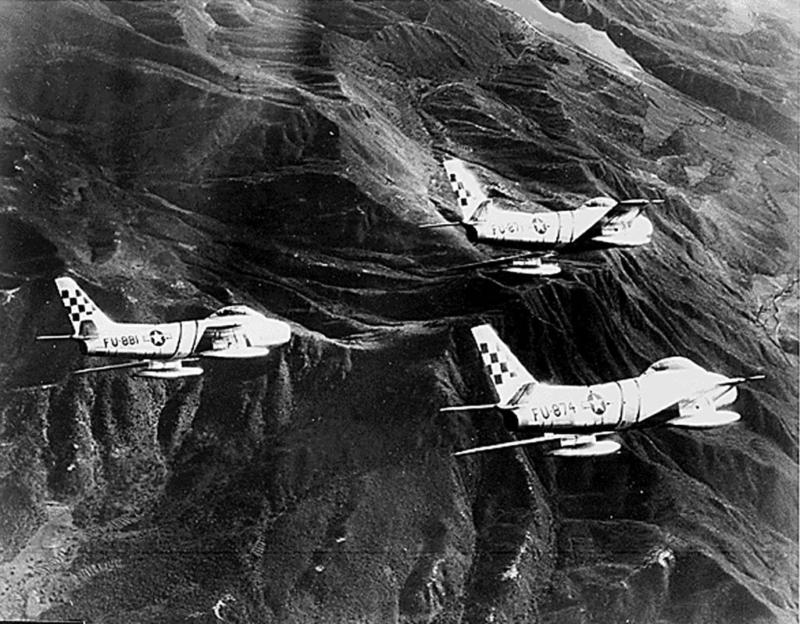
After World War II, the United States and the Soviet Union entered into fierce competition in jet fighter aircraft. The US jet fighters ultimately gained a slight advantage in the Korean War, laying the foundation for long-term air superiority in the future.
Following the previous article: How did the US jet fighters win the initial battle (Part 1)
The North American F-82 “Twin Mustang” was the last piston-engine fighter in the United States, with all subsequent models being jet fighters. The unique design of the F-82 with dual fuselages and engines earned it the nickname of two P-51 Mustang fighters spliced together. After the outbreak of the Korean War, US forces stationed in Japan with the F-82 were the first to engage in combat, shooting down 3 North Korean aircraft.
The F-82 had long endurance capabilities and was primarily used for ground attack missions, destroying 16 enemy aircraft. It significantly attacked enemy trains, trucks, buildings, and T-34 tanks of the North Korean army with its 25 rockets, continuously strafing North Korean troops on roads. It played a crucial role in containing North Korean offensives, defending the Busan perimeter, and engaging in battles.
The F-82 was unable to combat the Soviet jet fighter MiG-15 and was fully replaced by jet fighters by 1952.
The second US jet fighter, the Republic F-84 Thunderjet, first flew in 1946 and entered service in 1947. However, it faced numerous issues and almost got canceled until the F-84D model debuted in 1949. The swept-wing F-84F introduced in 1954 propelled the US’s second jet fighter towards maturity; it was the first mass-produced fighter aircraft to adopt aerial refueling technology, and the first capable of carrying Mark 7 nuclear bombs, with a total of 7,524 aircraft produced in various models.
The maximum takeoff weight of the F-84 fighter was 10,671 kg, with a top speed of 1,001 km/h, a combat range of 1,080 km, equipped with 6 machine guns, and could carry up to 32 rockets or 1,800 kg of bombs.
In October 1950, China entered the Korean War, and the Soviet Air Force also intervened under the guise of the Chinese army. US F-84 fighters were transported by aircraft carriers to Japan and later deployed at Daegu airfield in South Korea to escort B-29 bombers. However, the F-84’s performance was inferior to the Soviet MiG-15 fighter. The bold design of the MiG-15 with swept wings offered greater speed and agility. The task of engaging MiG fighters in aerial combat quickly shifted to the F-86 fighter, while the F-84 focused on its…
(Continued)