
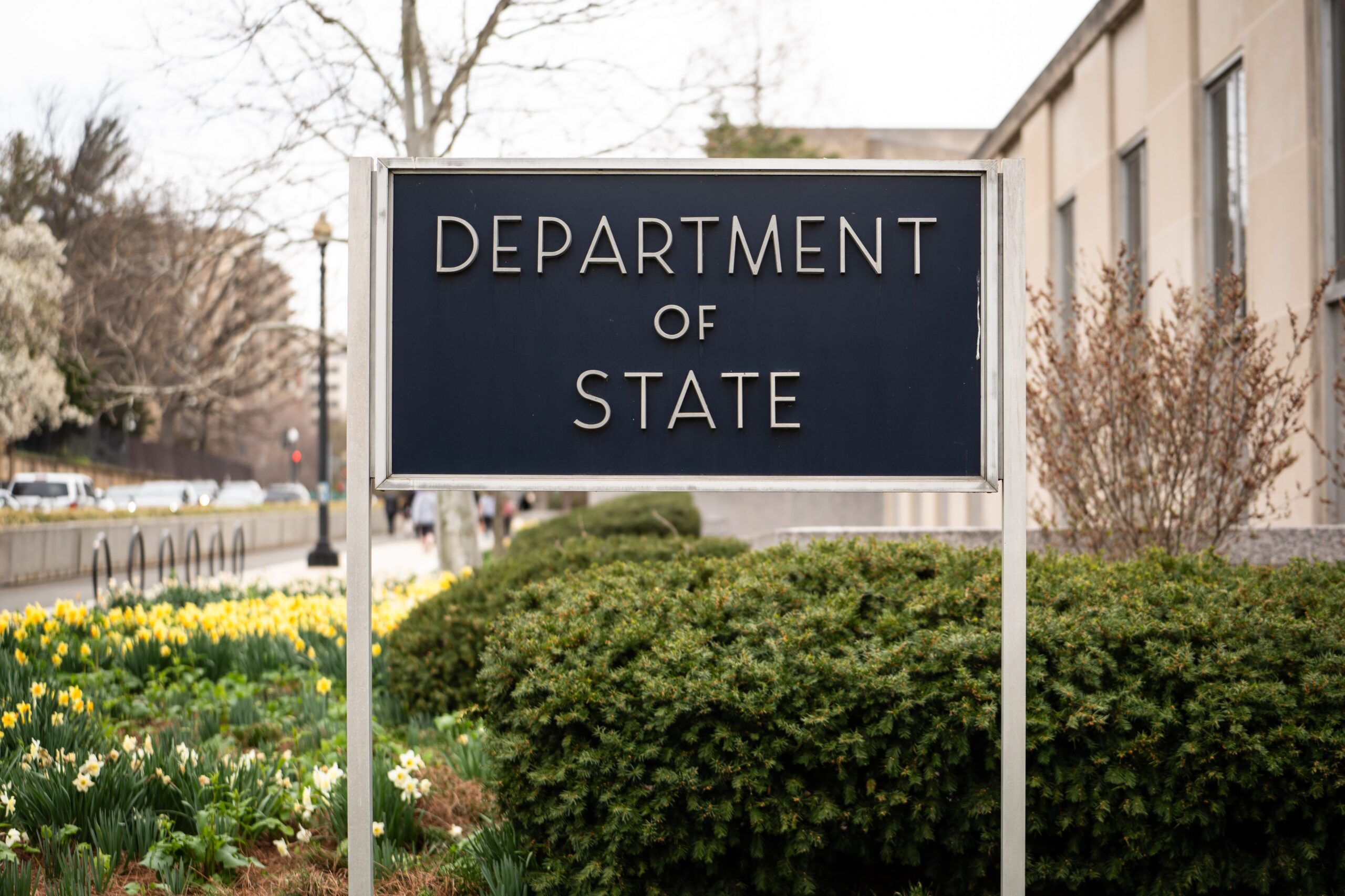
The US government has temporarily suspended short-term professional exchange programs conducted in mainland China, Hong Kong, and Macau due to frequent harassment of applicants by the Chinese authorities, but applicants from Taiwan are not affected.
According to a report by Kyodo News on Friday (October 9), sources revealed that the measures to suspend the recruitment of candidates from mainland China, Hong Kong, and Macau to participate in short-term visits to the US funded by the US government took effect in late July. However, this does not affect the related projects of the American Institute in Taiwan (AIT). AIT represents Washington in carrying out projects in Taiwan.
The suspended professional exchange programs include the International Visitor Leadership Program (IVLP) and Professional Fellows Program (PFF).
The Chinese Communist Party’s practice of saying one thing and doing another has once again drawn attention. During his visit to Washington in September, Chinese Communist Party leader Xi Jinping also announced that China would invite up to 100,000 American youths to participate in exchange and learning programs over the next five years.
Some of the suspended US exchange programs have been in operation for decades, inviting dozens of participants from China and other countries to study in the US each year, with study durations ranging from two weeks to one year, covering various fields such as diplomacy, counter-terrorism, artificial intelligence, and cybersecurity.
Sources mentioned that the late Chinese Premier Li Keqiang, former Hong Kong Chief Executive Carrie Lam, and current Security Bureau Chief John Lee have all participated in this US exchange program. Carrie Lam and John Lee have been sanctioned by the US since Beijing implemented the comprehensive national security law in Hong Kong in 2020.
According to the Kyodo News report, in an August memorandum, the US government mentioned that US diplomatic missions believed that the Chinese authorities had engaged in “excessive interference” with Chinese citizens’ participation in US government-funded visit and training programs, thus leading to the suspension of this final exchange program in China.
The memorandum additionally stated that some applicants were forced to withdraw, while others faced “harassment and threats” from the Chinese authorities for participating in US programs, and even some were arrested.
Two sources familiar with the recruitment process of these programs stated that US Ambassador to China David Perdue opposed the suspension, but the State Department still decided to take action.
They added that this decision seemed to be made “top-down” without consulting the opinions of the six US diplomatic institutions in China.
Sources noted that although some programs had been terminated earlier this year due to cost-cutting, the overall halt was “completely unexpected.”
Ian Chong, Associate Professor of the Political Science Department at the National University of Singapore, expressed that the willingness for cooperation between the US and China may not have translated into actions by government agencies on both sides.
“Despite the friendly rhetoric, daily interactions between Washington and Beijing remain quite limited,” he told Kyodo News.
A Hong Kong researcher revealed that he spent six weeks in a research center at a university on the East Coast of the US in April and May of this year, only to find out upon returning to Hong Kong that he was among the final group of participants recruited from China for the US exchange program.
“This program provided me with a comprehensive understanding of the United States and helped me break some previous stereotypes,” he told Kyodo News. “I believe this is something that ordinary travel cannot offer.”