
On Thursday, October 8th, Shield AI, a US defense technology company, announced that an additional $150 million has been added to the agreement with the US Navy for their other transaction (OT) to advance the Artificial Intelligence piloted Vertical Takeoff and Landing combat aircraft X-BAT project.
With the previous additional funding of $50 million each in August, the total funding commitment for the X-BAT project from government and private sources has now reached $400 million.
According to reports on the Shield AI website, this funding comes from the Deputy Assistant Secretary of Defense for Acquisition and Sustainment Warfighters Support Office’s Defense Exportability Features Program. The $50 million additional funding in August came from the Navy’s Rapid Capabilities Office for Air and the Defense Innovation Unit’s Rapidly Integrated Maritime Expeditionary Strike (RIMES) program.
Currently, a team consisting of 500 engineers from Shield AI and suppliers like GE Aerospace is participating in the X-BAT project, manufacturing prototype models. The team has completed engine ignition tests, thrust vectoring nozzle integration, and verified the aerodynamic performance of the weapon bay through low-speed and high-speed wind tunnel testing.
The Artificial Intelligence pilot for X-BAT is operated by Shield AI’s Hivemind software, which is capable of executing missions in environments with disrupted GPS signals, limited communication, and no runway dependency.
Armor Harris, Senior Vice President of Shield AI’s aircraft business, stated that while the team is developing the aircraft, they are also advancing mission systems, ship integration, and production work simultaneously to conduct more tests early on, identifying and resolving issues promptly to reduce development risks and accelerate entry into flight testing phase.
The X-BAT project is set to commence flight testing later this year as part of the US Department of Defense’s RIMES project, involving multiple industry participants, aimed at providing remote strike capabilities to various combatant commands of the US military.
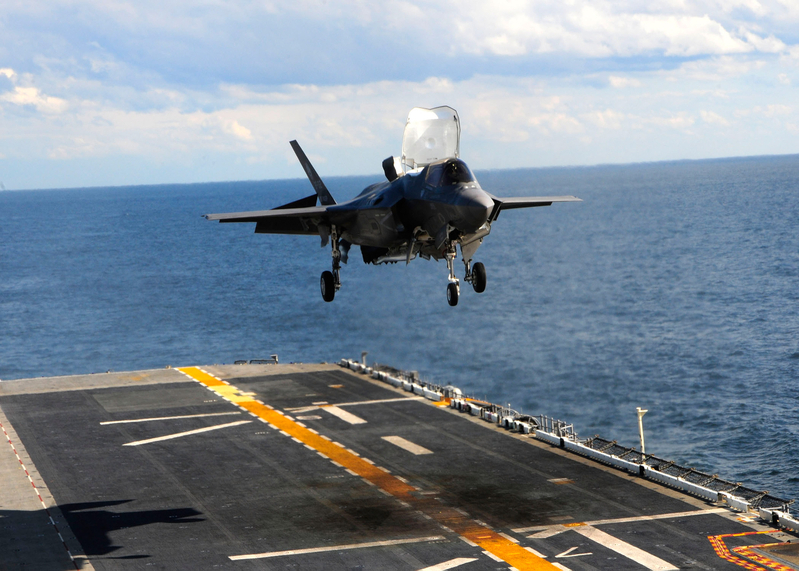
X-BAT is designed as a low-observable, multi-mission aircraft capable of vertical takeoff and landing from ships, islands, and austere locations, providing long-range airborne strike capabilities without relying on fixed runways.
J. J. “Yank” Cummings, Director of Mission Solutions for the US Navy at Shield AI, emphasized that the objective of X-BAT is to enhance the killing power, survivability, and combat capability of the US Navy’s naval aviation.
Cummings explained that the design of X-BAT, being runway-independent, occupying minimal deck space, can increase the sortie rates of carrier-based aircraft, enhancing the long-range air combat capabilities of nuclear-powered aircraft carriers (CVN), amphibious assault ships (LHA), amphibious assault ships (LHD), and expeditionary sea base ships (ESB).
Cummings also mentioned that the design of X-BAT takes into account the safety of manned and unmanned aircraft on flight decks, high-intensity cooperative operations, integration with the existing mission and capabilities of carrier-based aircraft squadrons, allowing X-BAT to increase combat power without affecting ongoing operational missions.
Established in 2015, Shield AI is a leading defense technology and aerospace unicorn company dedicated to developing AI-driven “fully autonomous pilot” software, drone swarm systems, and cutting-edge tactical aircraft for the military sector. Their products include Hivemind autonomous control software, V-BAT and X-BAT aircraft, and Aechelon simulation and synthetic reality technology. With offices and facilities in the US, Europe, the Middle East, and the Asia-Pacific region, Shield AI provides technical support for military operations globally.