
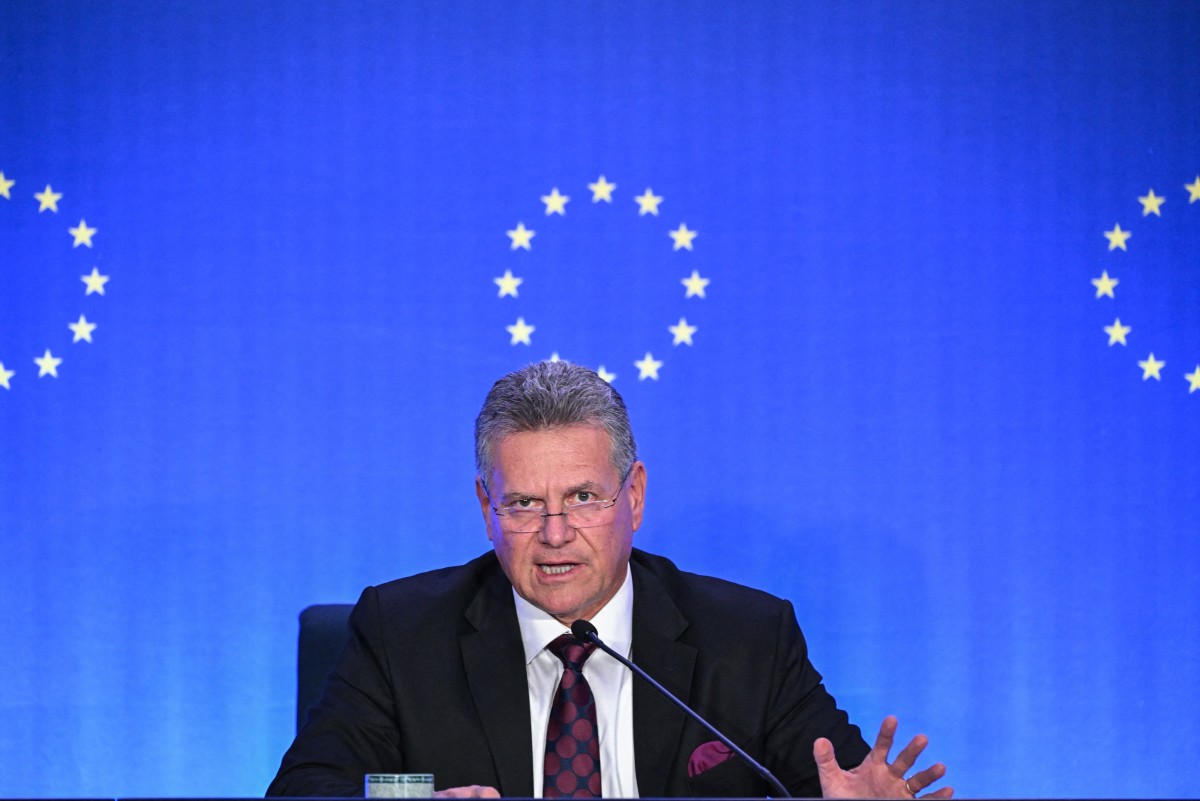
The European Union’s trade commissioner, Maros Sefcovic, announced on Friday in Beijing that the EU and China have reached a consensus to halve the quantity of hybrid and plug-in hybrid cars exported from China to the European Union. This agreement comes after a two-day trade discussion between Sefcovic and Chinese Minister of Commerce, Wang Wentao.
This particular issue of exporting hybrid cars has been a major point of contention between the EU and China. While both parties have reached an agreement, specific measures to restrict these exports have not been clearly outlined yet.
Sefcovic also mentioned that China has agreed to open its market to EU products such as automotive components, olive oil, and other food items. Additionally, officials will work towards relaxing restrictions on Chinese rare earth exports.
According to a statement from China’s Ministry of Commerce, they are willing to continue providing convenience for the approval of exports of rare earth and permanent magnets to the EU.
Sefcovic emphasized that the progress made in the EU-China negotiations is just the first step and there is still a long way to go. The trade talks took place against the background of escalating tensions between the EU and China, potentially leading to a trade war.
European leaders have been increasingly concerned about the growing trade deficit with China. The EU’s trade deficit with China amounted to 360 billion euros last year, equating to around 10 billion euros per day. The EU is hoping for China to cease the massive dumping of subsidized low-priced goods in Europe, which has been significantly impacting local industries. If negotiators fail to make progress in the short term, the EU will consider introducing new measures to prevent Chinese products from entering the EU market.
Sefcovic stated, “My goal in this trip is clear: to work towards rebalancing EU-China trade relations. The trade deficit is a huge challenge for the EU.”
The commissioner had previously labeled the EU’s trade deficit with China as “unsustainable.”
Many European leaders have criticized China for unfair trade practices, including providing substantial subsidies to businesses, dumping products, and currency manipulation. France and Germany have increased pressure on Beijing this week, urging the EU to significantly expand its economic retaliation capabilities. They have proposed that the EU consider severing trade relations with countries that instigate trade wars. The two largest economies in Europe are also pushing for an EU investigation to determine whether subsidized imported products are detrimental to EU industries such as chemicals and plastics. These investigations could lead to additional tariffs being imposed by the EU.
Losing access to the EU market would be a significant blow for Beijing as China heavily relies on exports to offset the impact of a sluggish domestic economy.
Bernd Lange, the Chair of the European Parliament’s Trade Committee, suggested that China’s “economic crisis” provides negotiating leverage for the EU ahead of Sefcovic’s visit to China.