
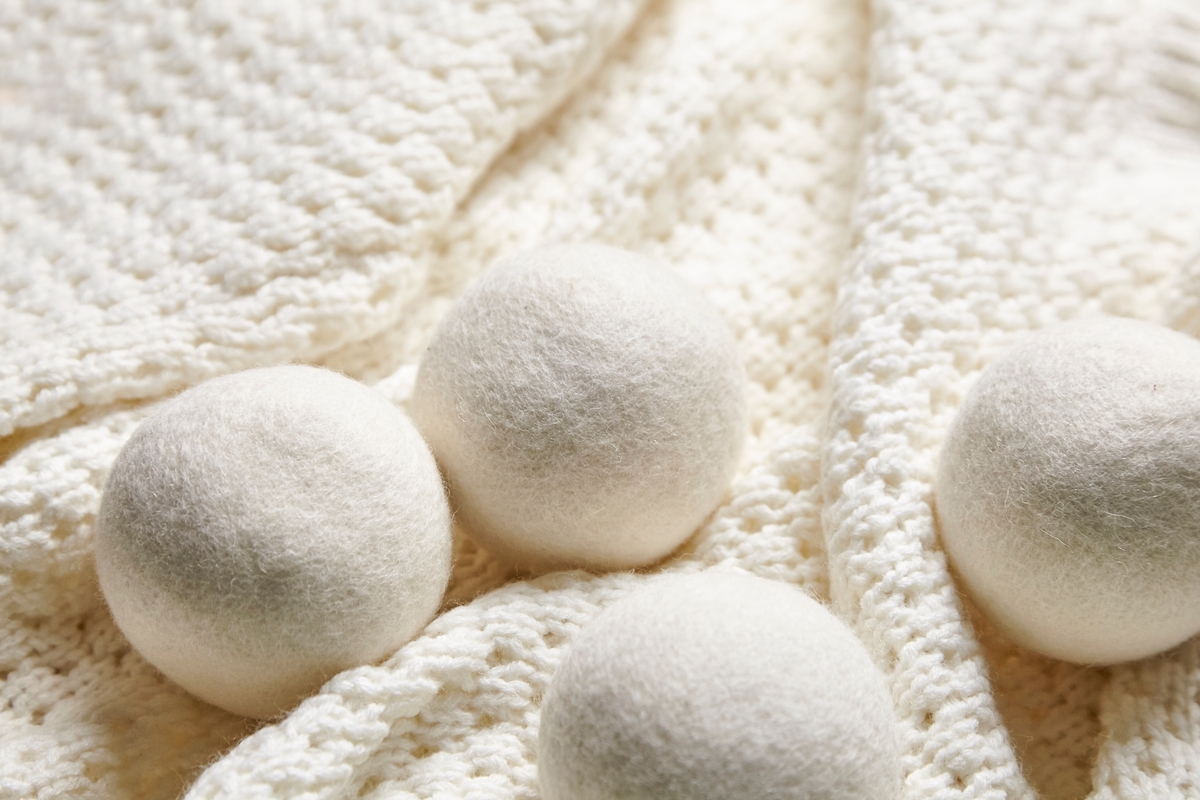
Recently, a column discussing fabric softener products has struck a chord with thousands of readers. I’ve been receiving messages and letters from all of you, and I truly appreciate the feedback, even from those who weren’t entirely satisfied with switching to wool dryer balls instead of fabric softener. But first, let’s revisit this issue.
According to a report on the medical website WebMD, fragrance and additives in laundry products can trigger skin issues. Fabric softeners can be highly sensitizing, potentially leading to eczema, manifesting as dry and itchy skin.
Dryer sheets commonly contain fragrances and volatile organic compounds such as aldehyde and butane, which can irritate the respiratory system. A chemical called quaternary ammonium compounds found in fabric softeners has been linked to asthma. Acetone in dryer sheets may also have effects on the nervous system, like causing headaches or dizziness.
In contrast, wool dryer balls are made of 100% wool yarn. They resemble oversized tennis balls and gradually become felted over time, making them exceptionally durable and non-dispersing. A set of wool dryer balls seems like a one-time purchase that can soften thousands of loads of laundry without the need for batteries, maintenance, or replacement. One purchase does it all!
Imagine a heap of wet towels being tossed into a dryer. You press the start button, and that soggy mass of fabric tangles and sticks together for a while until the layers dry enough to separate, allowing hot air to flow through. This prolongs drying time, wasting time and energy.
Now, envision six wool dryer balls bouncing around inside (I use a full set of six each time I dry), effortlessly maneuvering between garments to separate them, enabling efficient circulation of hot air from the very beginning of the drying cycle. I’ve compared drying times with and without wool dryer balls, and the results were quite remarkable. Wool dryer balls can reduce drying times for a load of laundry by at least 25%, saving time and energy. I’ve also found these balls tightly wedged in long-sleeved shirts and denim pockets. They can slip into narrow crevices, which is precisely why they’re so fantastic.
As the dryer balls rub against the fibers of your clothes during the drying cycle, the laundry comes out softer. Moreover, when used correctly, they can effectively eliminate static electricity.
Since wool dryer balls need space to bounce and interact with damp clothing, they work best when the dryer isn’t overstuffed and can efficiently complete the drying process. You’ll notice that drying your laundry in two separate cycles is quicker and more effective than cramming it all into one. The balls require space to work their magic.
Some readers mentioned missing the delightful scent from using dryer sheets. If scent is crucial to you, here’s a healthier and better alternative: add a few drops of essential oil to each dryer ball. Let them sit for a while, allowing the oil to penetrate the fibers deeply. I recommend leaving them for a few hours. Using these scented dryer balls will leave your laundry smelling subtly elegant and non-toxic.
One of the major complaints from the feedback I’ve received is that fabric softener sheets can eliminate static electricity, which wool dryer balls can’t do. Static electricity mainly stems from overdrying clothes. Regardless of using wool dryer balls or not, if the dryer runs for an extended period, you’ll notice static buildup.
Here’s what I do: since I don’t have the time to stand in the laundry room monitoring for overdrying, I spritz water onto the wool dryer balls to saturate them. Due to their high density, clothes dry faster compared to dryer balls, effectively increasing the humidity inside the dryer. This method works wonders, without causing any damage to the wool dryer balls or extending drying time.