
Stellantis’s South America President, Herlander Zola, has issued a warning amidst the rapid expansion of Chinese automotive brands in Brazil. He emphasized that in order to maintain competitiveness, a shift towards complete importation of parts for assembly might only require 10% of the current workforce in South America. Zola urged the Brazilian government to establish policies supporting local manufacturing industries to protect the domestic supply chain and preserve local employment opportunities.
Stellantis is a global automotive giant that owns 14 automobile brands including Jeep, Fiat, Peugeot, Citroën, Chrysler, and Maserati.
On Tuesday, Zola, speaking at a press conference in São Paulo, highlighted that Chinese automakers are aggressively capturing the Brazilian market, which could alter the production model of the local automotive industry and impact steel, tire, and auto parts suppliers as reported by Bloomberg and local Brazilian media.
Chinese brands have rapidly increased their market share in Brazil, rising from around 9% for the entirety of 2025 to approximately 17% in the first nine months of 2026, with a surge to 25% in September alone.
Chinese automakers such as BYD, Great Wall Motors, and Geely are expanding their operations in Brazil. BYD, for instance, initiated assembly operations at the former Ford plant in Bahia in October 2025 and plans to further expand local manufacturing.
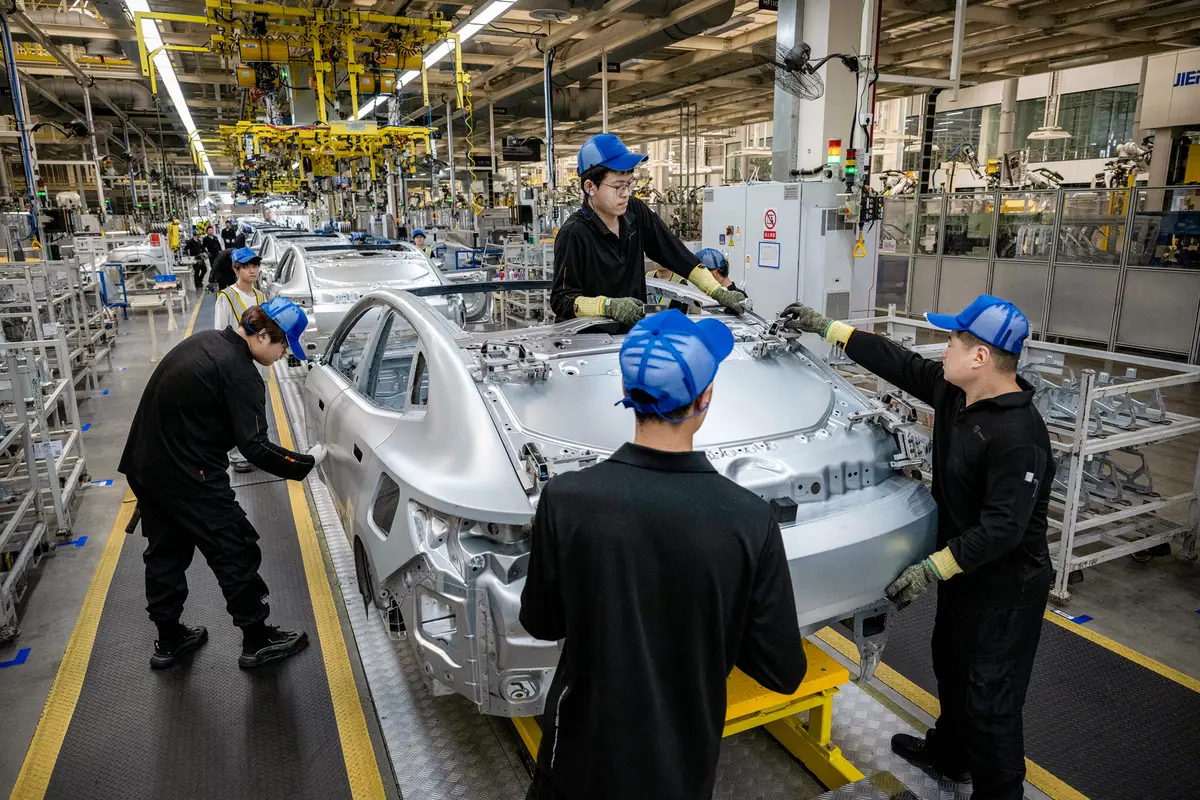
One of the strategies employed by Chinese automakers is importing CKD (Completely Knocked Down) or SKD (Semi Knocked Down) kits, transporting parts or partially assembled vehicles from China to Brazil for final assembly.
This model drastically reduces the need for local labor compared to traditional automotive production lines.
Zola stated that Stellantis currently employs around 35,000 staff in South America. If the entire business model shifts entirely towards importing parts for assembly, only 10% of the current workforce would be required.
He expressed, “Given the current circumstances, it’s more effective to produce cars in China and then dismantle them to ship here.”
Zola predicted that Brazil’s import of complete vehicles and assembly kits would reach approximately 700,000 units this year. Estimating each car weighs about one ton, this influx represents nearly 700,000 tons of steel entering the Brazilian market through imported vehicles, potentially further impacting the domestic steel industry.
Concerning whether traditional automakers underestimate Chinese competitors, Zola candidly stated, “Western automotive industry misjudged the market. No one foresaw this rapid development.”
He pointed out that Chinese automakers maintain a highly vertically integrated production model, whereas Western automotive industry has been outsourcing component production for decades, focusing primarily on vehicle assembly.
During the COVID-19 pandemic, global supply chains faced disruptions, with Western carmakers busy seeking component supplies, placing new product research and development on the back burner. In contrast, Chinese automakers retained their vertically integrated manufacturing system.
Zola believes that existing import tariffs and industry measures are insufficient to encourage car manufacturers to engage in more comprehensive local production in Brazil.
He called for governmental regulations to incentivize companies to source steel, tires, shock absorbers, and other components produced in Brazil rather than simply raising import tariffs.
Brazil is set to hold the second round of presidential elections on October 25. Stellantis is closely monitoring the industrial policies the new government will adopt. Zola stated that to maintain competitiveness, the company may also adopt an assembly parts model and adjust production strategies if necessary.
Simultaneously, the Brazilian Congress is discussing the abolition of the “six workdays, one off” system, reducing the standard workweek from 44 hours to 40 hours without decreasing salaries.
Zola highlighted that if this reform passes, it will significantly impact production costs in the automotive industry. Stellantis has prepared response plans for potential changes.
Using Argentina as an example, where labor costs are approximately twice that of Brazil’s and intensified competition from imported cars, Peugeot’s market share in Argentina decreased from around 9% last year to about 5% this year, leading to reduced production demands at local plants.
Brazil accounts for roughly 65% of the South American automotive sales market. Zola emphasized that until there is more clarity on the future policy direction in the Brazilian market, it’s challenging for the company to confidently make industrial decisions for the entire South American region.