
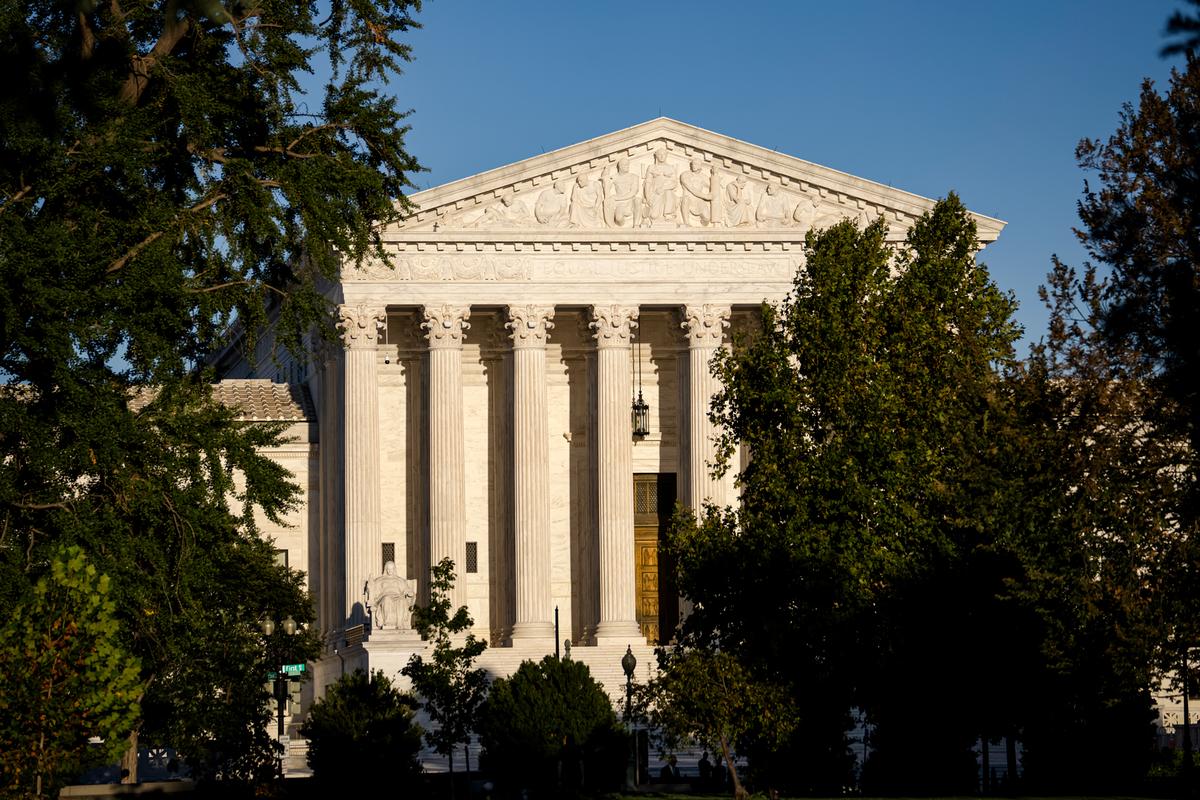
As the new term of the United States Supreme Court approaches, some of the country’s most controversial legal issues will once again be put before the justices, including gun rights, religion, and immigration.
Starting from October 5th, the justices will hear a contentious case concerning the extent of local government authority in suing energy companies for their alleged impact on “climate change”. Over the next few months, the Supreme Court is expected to revisit key precedents while deliberating on the constitutionality of assault weapon bans and whether Catholic schools should participate in a preschool education program in Colorado.
In addition, the Supreme Court will also be examining disputes related to parental rights, “gender-affirming care”, gender discrimination lawsuits, the eligibility of formerly protected individuals to apply for lawful permanent residency, and the types of citizenship identification that states can require of voters.
Some of these disputes revolve around federal law, while others center on how courts interpret the Constitution. For example, in December of this year, the Supreme Court will hear a case regarding whether Alaska unconstitutionally confiscated a bush pilot’s plane for transporting a case of beer.
Here are several of the most notable Supreme Court cases to watch, along with the key issues in each case.
On December 2nd, the justices will consider whether Connecticut and Illinois counties’ bans on assault weapons violate the Second and Fourteenth Amendments to the Constitution.
These cases, namely “Viramontes v. Cook County” and “Grant v. Higgins”, are expected to involve oral arguments on whether these laws align with the Supreme Court’s ruling in “New York State Rifle and Pistol Association v. Bruen”, where the Court held that gun control measures must be consistent with historical approaches to gun regulation in the U.S.
The Supreme Court is set to hear whether states have the right to require voters to provide proof of citizenship, and the removal of non-citizens from voter rolls before elections.
On October 1st, the case of “Rhoney v. Da Cunha” will be heard, examining whether the Immigration and Nationality Act requires detention of non-citizens who illegally entered the U.S. without a bail hearing. Brazillian citizen Ricardo Aparecido Barbosa Da Cunha is challenging this detention while residing in the U.S. for about twenty years.
The Supreme Court will also address cases involving religious neutrality, gender discrimination in the workplace, and the rights of individuals to challenge workplace discrimination based on gender.
On November 30th, the Court will review cases regarding the termination of asylum status and the eligibility of non-citizens for lawful permanent residency.
Lastly, a case involving a family-owned ranch’s land being seized for natural gas development under private and federal agreements will be examined by the Supreme Court.
These cases highlight the range of legal issues that the Supreme Court will be addressing in the upcoming term, shaping the legal landscape of the United States for years to come.