
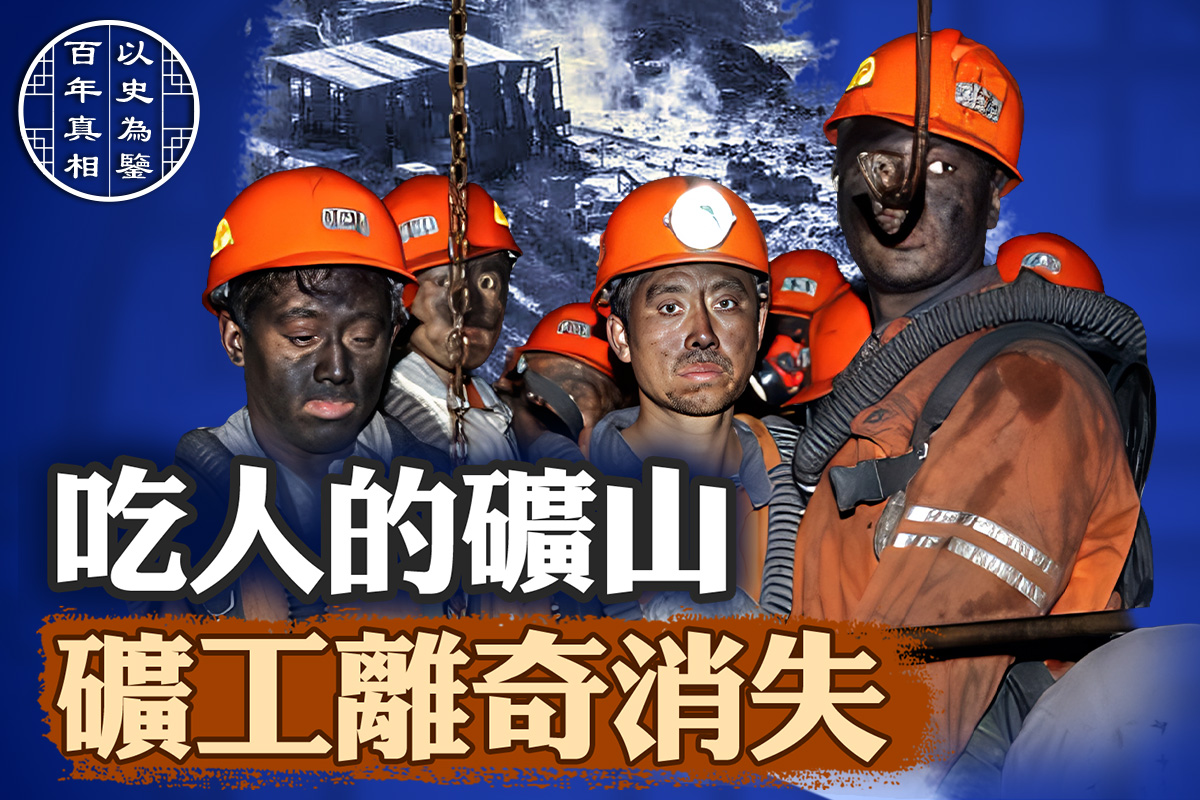
Hello audience, welcome to “The Truth of a Century”.
On the evening of May 22, 2026, at 7:29 p.m., a loud explosion was heard from hundreds of meters underground in Qinyuan County, Changzhi City, Shanxi Province, China. The Liushenyu Coal Mine of Shanxi Tongzhou Group exploded.
Initially, official Chinese media reported 8 deaths and 38 trapped individuals. However, a few hours later, following instructions from higher authorities, the death toll suddenly surged to 90, with 123 people injured and many missing.
Many Chinese netizens immediately realized that the situation was far from simple.
As more insider information was exposed, people discovered that this was not just a simple mining accident, but a man-made disaster brought about by various factors. The era known as the “man-eating mine” had returned.
Today, we will discuss what lies behind the most serious mining accident in China in 17 years and who pushed hundreds of miners into the trap of death.
In China, concealing mining accidents is no secret, especially in coal-producing provinces like Shanxi, where major mining accidents have been covered up for years.
With further investigations, even more shocking revelations came to light. This mine not only violated regulations for a long time but also engaged in a series of system crimes such as illicit mining, unauthorized workers, dual-monitoring systems, concealed work areas, and more.
One chilling detail was the concept of “unregistered operations.”
According to official investigations, out of 247 workers underground during the accident, a staggering 103, nearly half of them, were not wearing locator cards.
Locator cards are electronic positioning devices that miners must carry when going underground. Their purpose is to let the surface monitoring system know how many people are underground, where they are located, and where to rescue them in case of an emergency.
However, these 103 miners did not have locator cards. In the system, they simply did not exist. After the accident, rescue personnel did not even know where they were.
Many would ask: Why weren’t all miners provided with locator cards?
The answer is brutally simple. Since the mine was conducting illegal mining activities, if miners carried cards, it would expose the unauthorized mining areas. Therefore, the easiest way was to make these workers disappear from the system.
These miners were essentially “unregistered workers.” They lacked proper protection, complete contracts, and when accidents occurred, they were treated as non-existent.
Some miners directly told the media, “Apart from miners digging coal, everything else is fake.” This statement may well depict the reality of the Chinese coal mining industry.
Analysts mentioned that the Chinese movie “Blind Shaft” had long exposed these practices. In some illegal coal mines, when miners died, compensation of a few tens of thousands of yuan would settle the matter.
Even more shocking was the revelation that the Liushenyu Coal Mine had two sets of mine maps. One set was for official reporting purposes, while the other, the true mining map. This practice in the Chinese coal mining industry bears a specific name – “Yin and Yang maps.”
While the mine appeared legal and compliant on the surface, underground there were hidden areas not reported – areas for clandestine mining, unlawful operations, and deliberately concealed regions.
Miners revealed that before each inspection by higher-ups, the mine would seal off illegal mining areas with bricks and cement. Once the inspectors left, they would reopen these areas.
Furthermore, they would create a “concealed door” using steel wire mesh, snake-skin bags, sprayed foam to mimic tunnel rock walls, then covering it with a layer of coal ash. Upon pushing open this “concealed door,” another coal mine empire would be revealed inside.
Can such deception really bypass regulatory authorities?
In truth, it’s not that these deceptions cannot be discerned but rather a lack of willingness to investigate. Many industry insiders have claimed that professional safety inspectors going underground could easily spot the fakes since new bricks differ from old ones, and traces of recent construction versus long-term usage are distinct. Therefore, the issue lies not in the inability to spot these deceptions, but in whether regulatory bodies are willing to look.
If “Yin and Yang maps” were already outrageous, more so was the existence of two monitoring systems in this coal mine. One was a facade for official network monitoring, displaying everything as normal, safe, compliant, and with orderly production; while the other revealed the “shadow system” showing the actual operation of the mine.
This was not merely ordinary violation but a comprehensive scheme of crime and fraud, from maps to monitoring, personnel, production data – nearly everything was falsified.
Many enraged Chinese netizens remarked, “The biggest fake is fake regulation.”
This statement cuts to the core. Without the prolonged tolerance of regulatory authorities, such massive falsification systems could not persist.
The Liushenyu Coal Mine had previously encountered issues. In 2024, it had been listed as a seriously disaster-prone production mine nationwide. Therefore, it was well-known that it was a high-risk mine. This mine had been penalized multiple times in the past due to safety issues such as malfunctioning emergency stop protection, roof collapses, and safety measure deficiencies.
But how much were the fines? 20,000 yuan. Once, workers were fined 30,000 yuan for not wearing reflective vests.
For a large coal mine producing over a million tons annually, fines of a few tens of thousands could almost be seen as an encouragement to violate the law, because the cost of breaking the law was simply too low.
An industry insider disclosed that with just a small compensation, losses due to one or two deaths could be contained, and so many companies were not afraid of fines. This practice of false regulation and real crime had long become an unwritten rule in the entire industry.
What angered the Chinese public in this mining disaster was not just the unscrupulous businesses but the collusion between officials and businesses. It was widely known that local Chinese Communist Party (CCP) governments heavily relied on land revenue, but in many resource-rich cities, coal mines were just as crucial for local economies – GDP, tax revenue, employment, and political achievements were deeply tied to coal mining.
Consequently, local governments often turned a blind eye to excessive production, unauthorized mining, and violations because as long as coal continued to be extracted, the local economy would keep running. When rigorous supervision led to decreased production, income, and performance, many officials were unwilling to comply.
Corrupt businessmen and officials had long formed a complete chain of interests. Companies made profits, local finances prospered, and officials enjoyed benefits.
But the lives of miners? To them, those lives were the least valuable.
This situation exposed a deeper issue: under the CCP regime, the value of ordinary people’s lives, especially migrant workers, was extremely low. In many places, they were merely seen as production tools, not as dignified individuals.
Many Chinese people still recall the early 2000s when mining accidents in China were extremely severe – almost every year, thousands of miners perished underground. The term “man-eating mine” shocked the entire nation.
After that, the CCP aggressively rectified coal mine safety, even setting up supervisory agencies, enhancing regulation, and closing down small coal mines. Many believed that era had passed, but the Shanxi mining disaster suddenly revealed that many problems had not truly disappeared; they had only been deeply concealed.
In today’s China, issues akin to the mining disaster are not limited to coal mines.
From tainted milk powder to substandard constructions, from high-speed rail accidents to chemical explosions, from unfinished buildings to electric car fires, many major accidents showcase a similar logic: falsification, corruption, financial interests, and regulatory failures.
In the CCP’s rule, safety is often not a top priority; official interests take precedence. And when the entire system revolves around interests, it’s the ordinary people who ultimately pay the price.
That’s why after major disasters in China, many fear not just the accidents themselves but “how much truth is still being concealed.”
The massive explosion at the Liushenyu Coal Mine in Shanxi once again reveals that in the CCP system, many disasters are not acts of nature but man-made calamities.
Without system change, the “man-eating mine” will never truly vanish.
What devours the lives of these miners is not just gas; it’s the corruption of power and the CCP’s indifference to life.
That concludes today’s show. If you enjoyed our content, please remember to like, subscribe, and share. Until the next episode, farewell.