
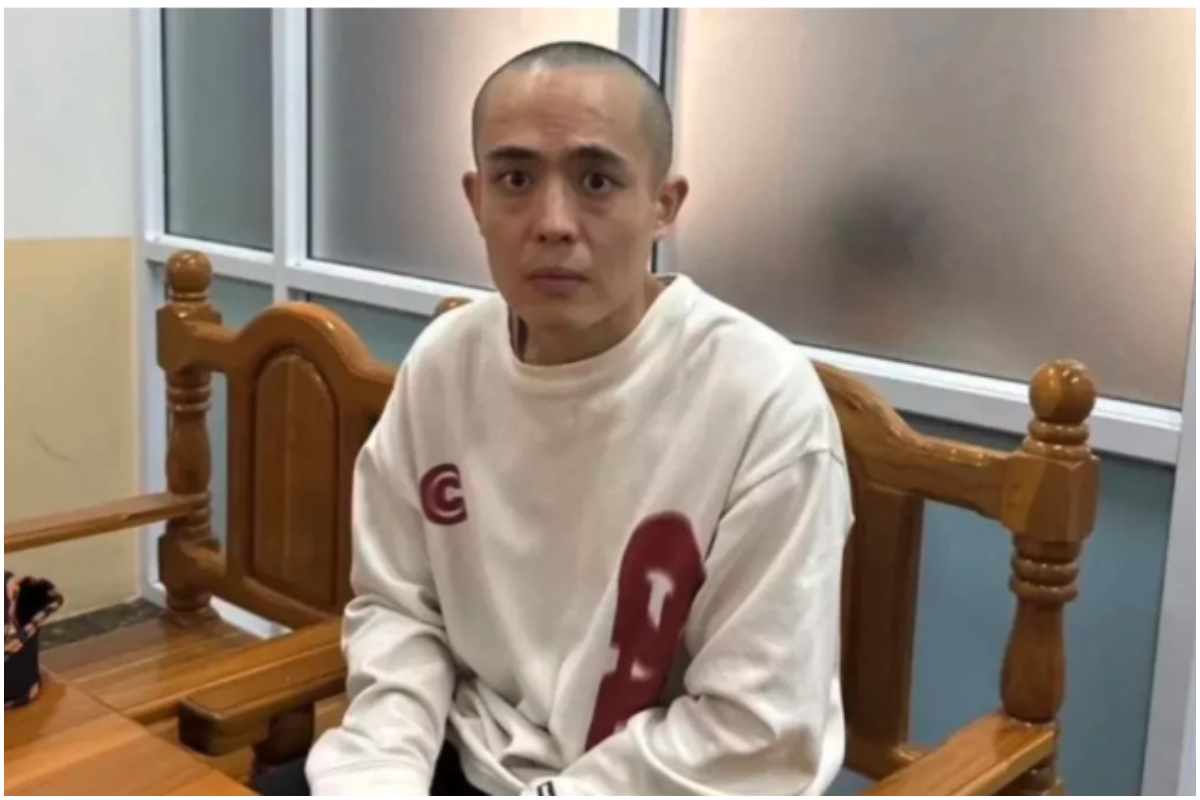
Actor Wang Xing from mainland China was recently exposed to more details of the Miao Wadi case in Myanmar, where he was deceived and sold three times within four days, even attempting to buy his freedom with money. The case revealed that local human trafficking groups priced the victims based on their education and typing speed, with one person being sold for up to 200,000 Chinese yuan.
According to a report from “Shanghai Observer News” on October 7th, after being abducted into Miao Wadi, Wang Xing was first taken to the Apollo Zone, then sold to a “black zone” near the Asia Zone, and finally transferred to the Triumph Zone.
Within just four days, Wang Xing was sold three times. He tried to negotiate with the human trafficking group members to buy his freedom with money, but they told him that Miao Wadi lacked people, not money.
The related case also indicated that the involved groups primarily profit from trafficking humans, with one person being sold for 100,000 to 200,000 yuan depending on factors like education and typing speed. Regardless of the victim’s abilities, the groups would accept them, just at different prices.
By the end of December 2024, Wang Xing saw a casting notice to film in Thailand in an actors’ WeChat group. Yan, who had been an extra and used the alias “Yan Sixteen”, posed as a deputy director recruiting actors for the crew.
After a so-called audition, Wang Xing departed from Shanghai on January 2, 2025, arriving in Bangkok the next day. Instead of being taken to a hotel, the vehicle that picked him up drove him to the Thailand-Myanmar border. Along the way, he was asked to switch vehicles and later controlled by individuals.
Realizing the danger, Wang Xing sent a pre-arranged distress signal “Did you feed the cat?” to his girlfriend. Subsequently, he was abducted into Miao Wadi by armed personnel, losing contact with the outside world.
On the evening of January 5th, Wang Xing’s girlfriend sought help online. On January 7th, Wang Xing was brought back to Thailand. After being rescued, he disclosed that around 50 Chinese individuals were also detained in the zone with him.
The Chinese Ministry of Public Security personnel stated in an official documentary that as early as 2023, they had initiated “special research and situation collection work” on Miao Wadi. However, the same personnel later mentioned that after Wang Xing’s case, it was as if the lid on Miao Wadi had been lifted.
Following Wang Xing’s disappearance, his girlfriend and brother reported the case in Shanghai and contacted the Chinese Embassy in Thailand. At that time, the family was instructed to file a case in Thailand; it was not until January 6th that the Shanghai police opened a case on Wang Xing’s suspected illegal detention.
After Wang Xing was rescued, a large number of families of those trapped sought help online. The “Bring Star Home Plan” document created by the families ceased updating on Chinese networks, but the overseas version “Millions of Stars Return Home Plan” continued to collect and organize relevant information.
A report released by the overseas support team in 2025 stated that the project had compiled records of 1877 clues regarding Chinese citizens being abducted and trafficked. Previous help documents also indicated some cases marked as “not filed” or “police refused to file a case”.
The Wang Xing case has once again sparked public attention on Miao Wadi. The connections between the Asia-Pacific New City in the Miao Wadi area and Chinese state-owned enterprises and related institutions have been exposed in previous research reports.
A report by the United States Institute of Peace (USIP) in 2020 revealed that Chinese operators of certain casino city projects in Myanmar collaborate with Chinese government agencies and package related projects as part of the “Belt and Road” initiative.
Another report by the institute in 2024 showed that the Asia-Pacific New City had signed a construction contract worth 260 million US dollars with the Chinese Metallurgical Science and Technology Group, and established connections with a think tank under the National Development and Reform Commission and the China Overseas Chinese Entrepreneurs Association.
During his detention in Thailand in 2024, the founder of the Asia-Pacific New City, She Zhijiang, claimed in an interview with “Peninsula TV” that he had been a Chinese state security officer and said that Chinese state security officers had taken him to Myanmar for inspection, with assistance from the China Overseas Chinese Entrepreneurs Association to sign contracts for his project.
The reports by the US Institute of Peace suggested that the projects show how transnational criminal networks utilize connections with Chinese state-owned enterprises and related institutions to legitimize their operations.