
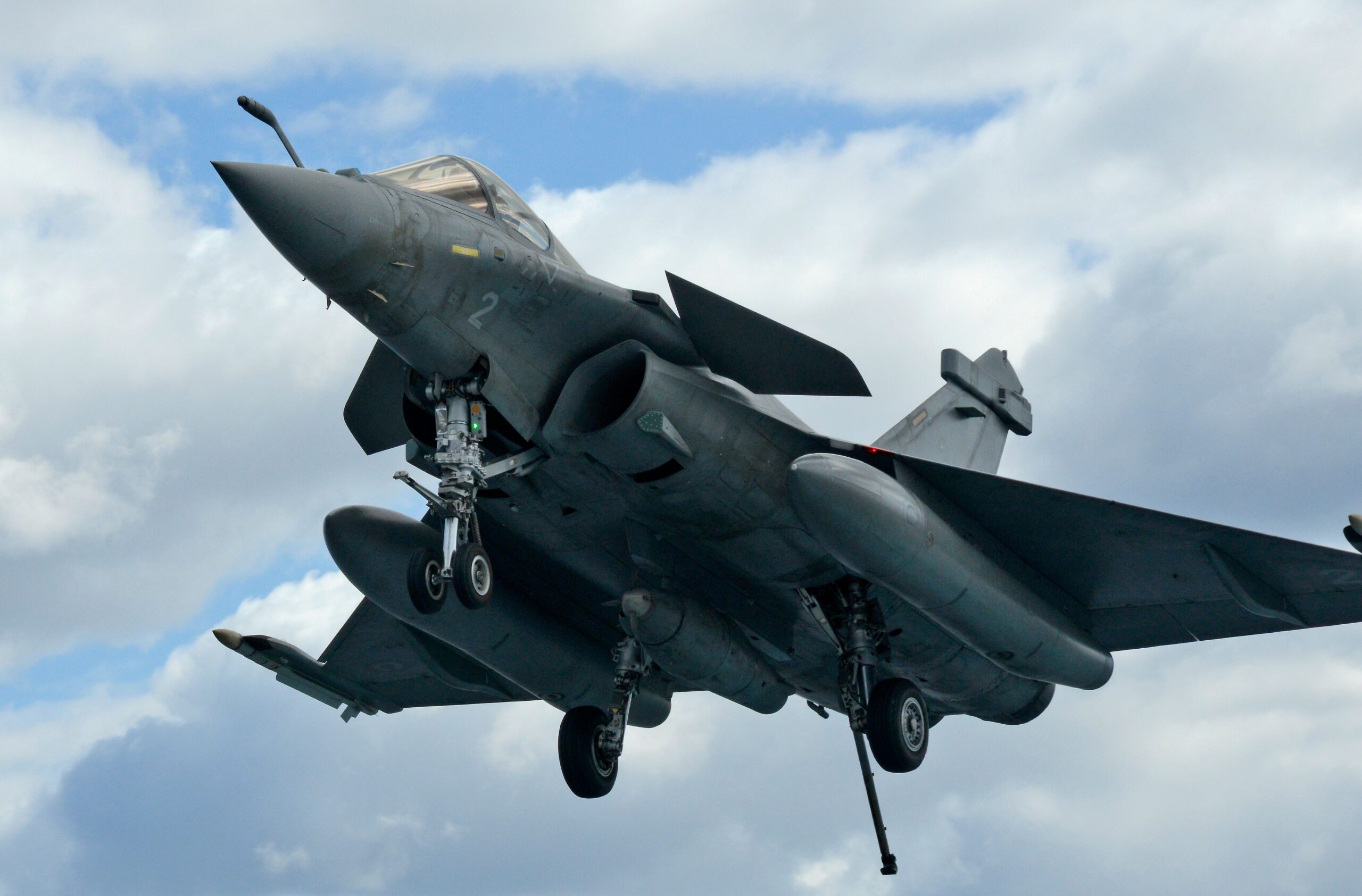
A French general has stated that the strategic focus is shifting towards the Indo-Pacific region, with France’s increasing military engagement in the area adding a layer of deterrence against potential adversaries.
According to a report from the Nikkei Asian Review on October 7, the French Air and Space Force is currently conducting a 40-day mission under the codename “Pegase 26” (from September 8 to October 15). This mission involves the deployment of 4 Rafale fighter jets and support aircraft, covering a total distance of over 40,000 kilometers across three continents, showcasing France’s ability to rapidly deploy air power globally.
The aircraft departed from France in early September, making stops in Japan, South Korea, Indonesia, India, and visiting the French overseas territory of Reunion Island.
In the face of China’s expansionist ambitions in the South China Sea, Taiwan Strait, and South Pacific, the French military is building a defense network through air cooperation with countries along the first and second island chains and Indian Ocean partners.
French Deputy Defense Minister Alice Rufo emphasized the need for immediate coordinated action in response to threats, stating, “We must be able to operate together in the event of a threat.”
Major General Julien Sabene of the French Air and Space Force stated in a recent interview, “France is an Indo-Pacific nation, not an outsider looking into the region. We have territory, citizens, and interests in this area and therefore have a responsibility to maintain a presence here.”
Sabene highlighted, “The world’s focus is gradually but steadily shifting towards the Indo-Pacific region, where we aim to defend freedom of navigation and maintain stability to prevent conflicts from arising.”
He added, “Potential adversaries are well aware that no matter where a conflict may erupt, France can swiftly deploy forces to the scene, serving as a form of deterrence. This knowledge may lead adversaries to exercise restraint, as they know we can arrive with fighter jets within hours.”
The “Pegase” mission, initiated in 2018, is part of France’s broader Indo-Pacific strategy established in 2019, making France the first European country to adopt such a policy.
This deployment also reflects Europe’s expanding military participation in the Indo-Pacific. As per research by the Heinrich-Boll Foundation, deployment actions by France, Germany, Italy, and the Netherlands reached their highest level since the end of the Cold War in 2024 and 2025.
Luke Collin, responsible for defense and national security business at The Asia Group, stated that European involvement in the Indo-Pacific region is based on the fundamental idea of linking European and Indo-Pacific interests, serving as the best means to deterrence in both theaters of operation.
He further explained, “This connection between the two theaters establishes a link based on the principle of an ‘rules-based order’ under international law; this principle has become increasingly important since Russia’s invasion of Ukraine in 2022.”
Sabene emphasized that France can contribute its expertise in “airborne surveillance and air defense.” He noted that during conflicts in the Middle East, French military facilities in the region had been targeted, and assets of the French Air and Space Force played a critical role in defending regional allies.
Alessio Patalano, Professor of East Asian Warfare and Strategy at King’s College London, stated that France is a significant player in the Indo-Pacific region, fully integrated into the region’s security architecture due to its overseas territories.
“Patalano remarked, “France’s military infrastructure is extensive and widespread throughout the region; hence, they have a comprehensive understanding of the actions of all parties.” He added, “Although not on the scale of the United States, France is an important force not only in the region but globally as well. The world closely monitors France’s movements, considering it is a nuclear power.”