
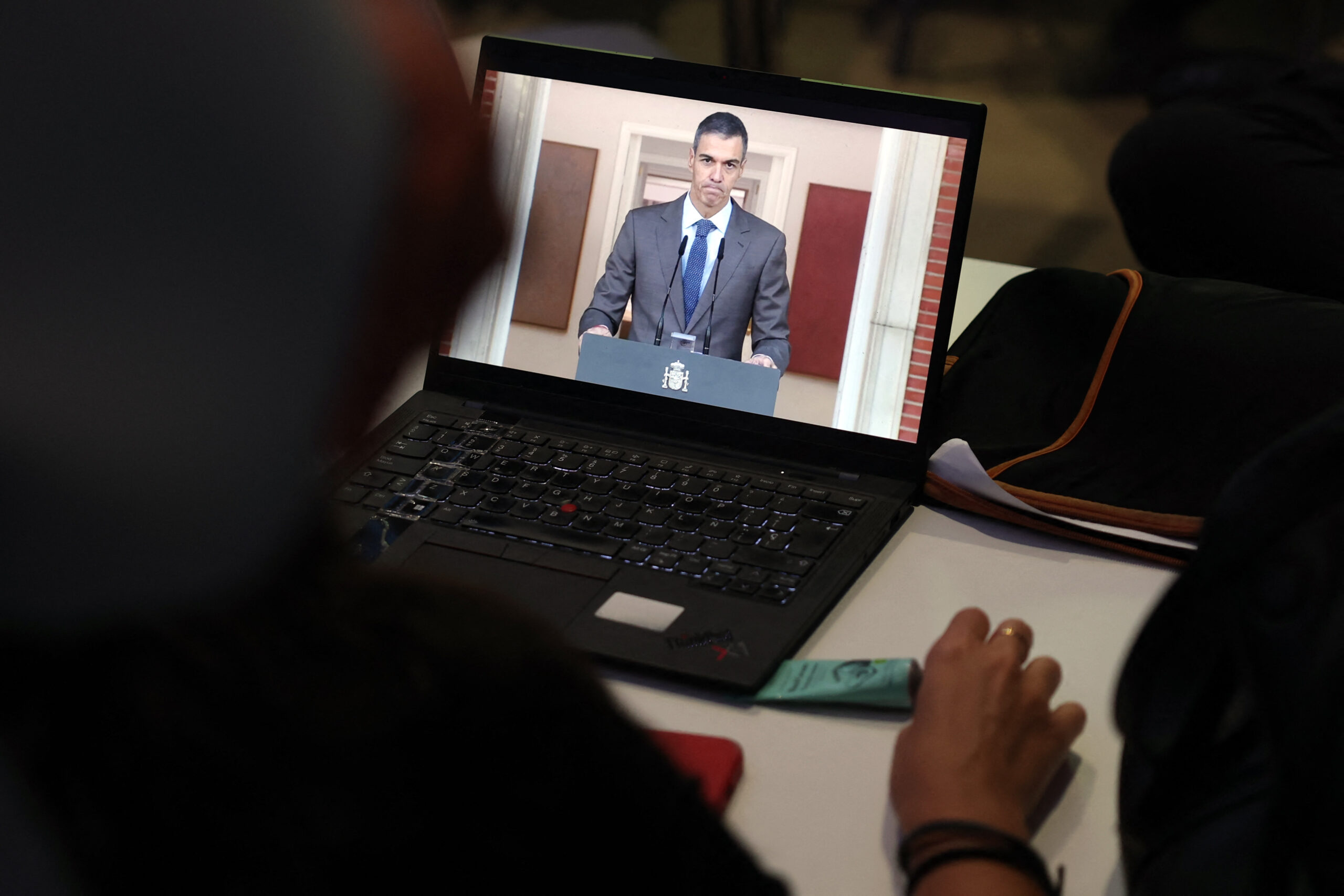
On October 5, 2026, Spanish Prime Minister Sanchez announced in a televised speech that the country will hold early national elections on November 29 this year. Facing continued low popularity in polls, Sanchez’s leadership of the Spanish Socialist Workers’ Party (PSOE) is seen as a political gamble. A defeat would mark the end of one of the last remaining left-wing governments in Europe.
The Sanchez government proposed legislation to address the increasingly severe housing crisis, which had garnered some voter support but was rejected by right-wing lawmakers last week, sparking a new round of public protests.
According to Reuters, Lorenzo Bernaldo de Quiros, president of consulting firm Freemarket Corporate Intelligence and an economist, analyzed that the housing issue provided Sanchez with an opportunity to reshape his image as a leader of the left-wing camp, helping to shift public attention away from the Ceuta immigration crisis and corruption scandals.
“This is a window of opportunity, if he does not hold early elections, those issues will become the focus again,” said de Quiros.
Prior to this, the eviction of 87-year-old Maricarmen Abascal from her apartment where she had lived for 71 years had sparked nationwide protests. In response, the Sanchez government unveiled two bills last Tuesday aimed at extending eviction protections for vulnerable tenants until 2030 and automatically renewing existing lease contracts.
In the vote on Friday, the Catalan separatist party Junts, which defends landlords’ rights, voted against the bills, leading to their rejection. Sanchez responded firmly, stating on X platform that he will not withdraw these ordinances and sees the parliamentary vote as a turning point.
Sanchez’s term as prime minister will continue until July 2027. For months, the government has been lagging in polls.
The latest polls indicate that a coalition government led by the conservative People’s Party (PP) with support from the right-wing Vox party is the most likely election outcome, with support rates of 34% and 18% respectively. Both parties oppose measures challenging landlords’ property rights and instead advocate for deregulation and incentives for private property owners.
In 2018, after a massive corruption scandal within the ruling People’s Party, opposition leader Sanchez presented a motion of no confidence against former Prime Minister Mariano Rajoy to parliament. Sanchez took office after Rajoy was ousted.
Although Sanchez has never received enough votes to form a majority government, he successfully established a fragile coalition with various parties, including far-left and separatist right-wing groups, and has been in power for eight consecutive years.
The increasing divisions among coalition partners have resulted in the government barely passing any legislation in its third term, and it has failed to pass a budget since 2023. Despite this, Spain’s economy continues to maintain one of the best growth performances among developed countries.
While Sanchez came to power on the issue of corruption within the People’s Party, over the past year, high-ranking members of the Socialist Workers’ Party to which he belongs have also faced corruption charges, further dragging down the party’s already weakened support rates. Throughout his term, the party’s support rates have fluctuated between 26% and 31%.
Recently, Sanchez rejected the US-led demand to increase defense spending to 5% of Gross Domestic Product (GDP) and turned towards establishing closer relations with China, causing concerns among US and some European leaders that this move could lead to Europe being flooded with Chinese imports.
Furthermore, while other European countries are tightening policies on foreign immigration, the Sanchez government has consistently advocated for a pro-immigrant policy and issued the largest-ever “amnesty decree” in 2026, legalizing hundreds of thousands of undocumented immigrants.
(This article referenced reports from Reuters and Politico)