
International oil prices rose on Sunday, with Brent crude oil briefly surpassing $103 per barrel. The surge came after Houthi rebels claimed to have launched ballistic missiles and drones to attack Saudi Aramco facilities in Riyadh and Khurais, raising concerns about Saudi oil supply.
At the same time, the conflict in Yemen is rapidly escalating. With the support of Saudi Arabia, the internationally recognized Yemeni government has declared a large-scale military operation against the Houthi rebels to reclaim areas still under their control. The rebels have made significant territorial gains along the Red Sea coast and the Bab-el-Mandeb Strait in recent times.
Houthi military spokesperson Yahya Saree stated that the organization had recently targeted Saudi oil facilities in Riyadh and Khurais using missiles and drones.
According to the Associated Press, Saree did not specify the timing of the attacks or provide further details or evidence. On the other hand, a Saudi Aramco refinery experienced a fire on Saturday, though the cause of the blaze has not been disclosed.
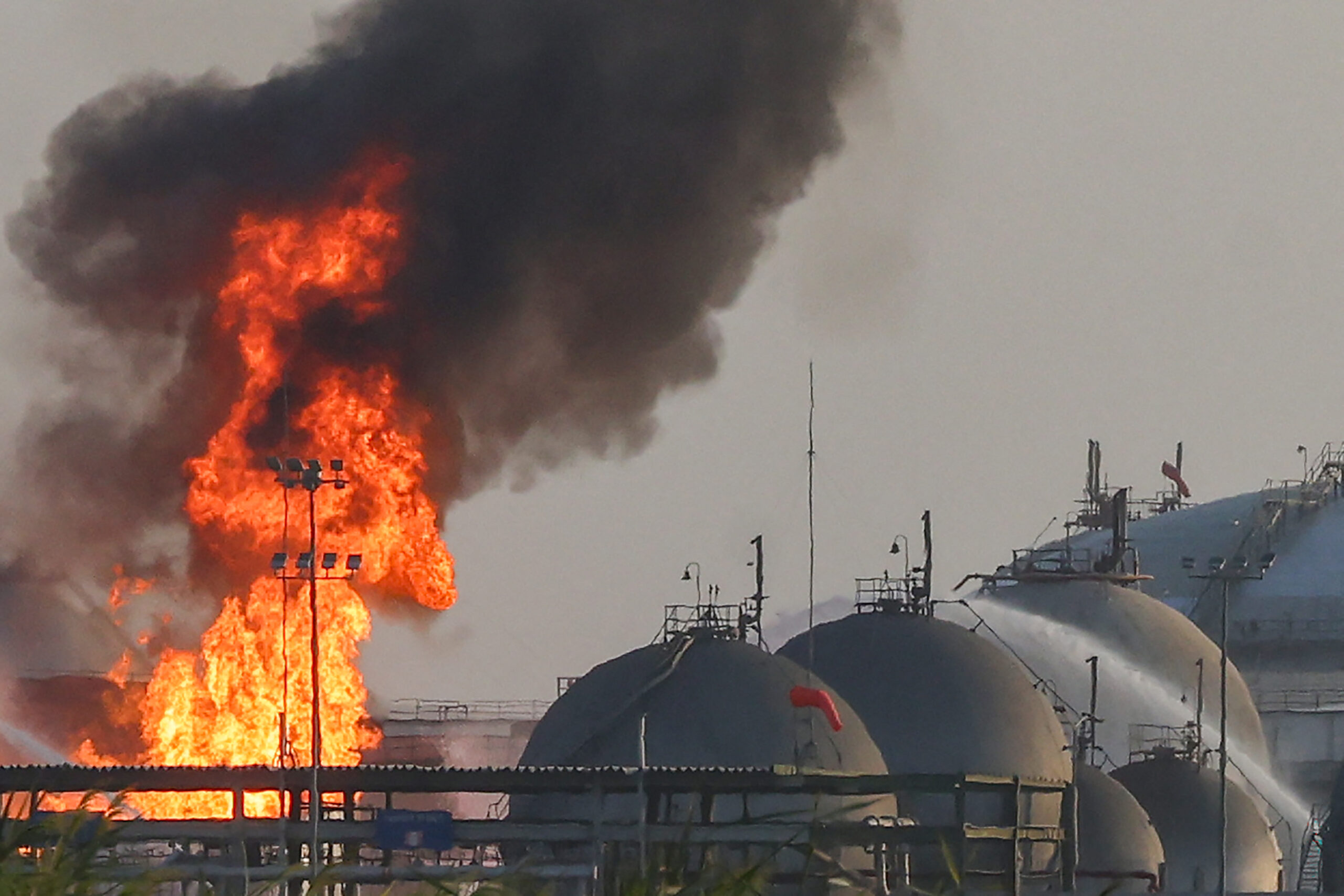
A reporter from Agence France-Presse observed flames and thick smoke rising from a Saudi Aramco facility south of Riyadh on Saturday, with firefighters working to extinguish the blaze. The connection between the fire and the alleged Houthi attacks remains unclear.
The market is concerned about the potential impact on Saudi oil production. As of 6:02 PM Eastern Time on Sunday, Brent crude futures rose by 81 cents, or 0.79%, to $103.06 per barrel, while US West Texas Intermediate (WTI) rose by 46 cents, or 0.50%, to $91.57 per barrel.
Saudi Aramco has not yet announced whether the fire has affected production volumes, facility shutdowns, or oil exports.
As the conflict between Saudi Arabia and the Houthis intensifies, the Yemeni government also declared a large-scale military operation against the Houthi rebels on Sunday.
Yemeni Presidential Committee Chairman Rashad al-Alimi stated that the operation aims to “reclaim remaining territories” currently controlled by the rebels.
In recent days, the Houthis launched a major offensive in the outskirts of Taiz against government forces and their allies, disrupting major road links between Taiz and Aden. The rebels also seized control of coastal areas along the Red Sea and the Bab-el-Mandeb Strait last month, marking one of their largest territorial gains in recent years.
On the other hand, the Houthis claim that Saudi Arabia has been carrying out continuous airstrikes in their controlled areas.
Agence France-Presse reported that Al-Masirah TV, controlled by the Houthis, stated that Saudi warplanes conducted 26 airstrikes on Sanaa on Saturday. Local media reports cited by the channel mentioned targets such as Nuqum, Attan, Al-Sabeen, and Al-Nahdayn areas.
Two journalists from Agence France-Presse reported hearing loud explosions and witnessing warplanes firing missiles at the city.
The internationally-backed Yemeni government forces admitted to launching partial attacks, targeting “important objectives” in Sanaa and the northern Saada province.
Apart from land-based energy facilities, maritime security at the southern end of the Red Sea is once again a cause for concern.
The UK Maritime Trade Operations office issued a warning on Sunday, stating that an oil tanker sailing 60 nautical miles south of Al Mukha, Yemen, witnessed multiple explosions nearby. Crew safety was reported, and there have been no reports of environmental impact (such as oil spills) so far, with authorities investigating.
UKMTO did not confirm whether the oil tanker was hit or provide details on whether the explosions were related to the Houthi rebels.
Since July this year, Saudi Arabia and the Houthis have resumed hostilities after years of relative calm. The Houthis rapidly expanded their control along the Red Sea coast and announced a maritime blockade on Saudi shipping in the Red Sea.
Since the outbreak of the US-Iran conflict at the end of February, maritime traffic in the Hormuz Strait has been disrupted, highlighting the increasing importance of the Red Sea and the Bab-el-Mandeb Strait as alternative energy transport routes. While Saudi Arabia can export crude oil through the Red Sea coast at Yanbu, bypassing the Hormuz Strait, the recent heightened threats by the Houthis against Saudi Red Sea shipping have increased the safety risks along this alternative route.