
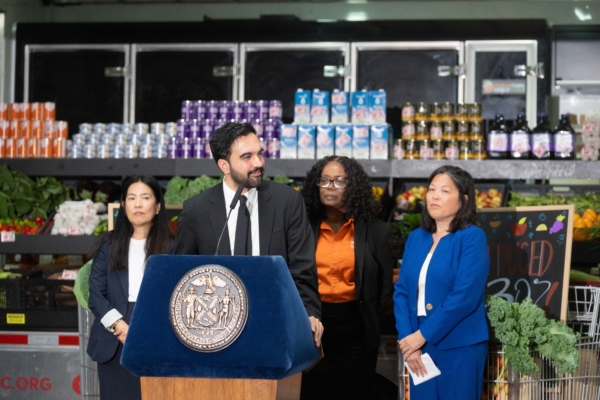
New York Mayor Mamdani’s “Public Supermarket” plan is facing legal challenges. The Multicultural Business Coalition (MBC), consisting of immigrant and minority-owned supermarkets, grocery stores, and convenience stores, filed two lawsuits with the New York State Supreme Court on August 24 to block the city from advancing the plan. They criticized that public supermarkets may create unfair competition for small immigrant-owned businesses.
Mamdani’s plan, funded by the city with approximately $70 million, aims to establish a public supermarket in each of the five boroughs, with openings scheduled between 2027 and 2029. The city hopes these supermarkets will sell basic foods such as fruits, vegetables, and dairy products at a discount of around 30% below market prices, to help New Yorkers cope with the rising cost of living. Mamdani stated that with over 1,000 supermarkets currently in New York City, the five public supermarkets will not fundamentally alter the market structure, and he expressed “confidence” in the legality and necessity of the plan.
However, supermarket owners argue that public supermarkets do not operate under the same competitive conditions as private businesses. The lawsuits point out that the city can provide rent, tax, and other public resource support, enabling public supermarkets to sell goods at prices that private businesses cannot match. Many immigrant-owned community supermarkets already face high rent, labor, tax, and operational costs, with limited profit margins. If government-supported supermarkets directly undercut prices by 30%, it could lead to some small shops losing business or even being forced to close.
One of the lawsuits seeks class action status, alleging that this policy may violate New York State civil rights protections and equal protection clauses in the state constitution. The coalition includes a large number of Latinx, Asian, and Arab-owned businesses that have been operating in New York communities, particularly in areas with minority ethnic residents such as East Harlem, for many years.
The other lawsuit questions whether the city conducted sufficient land use and economic impact studies before advancing the public supermarket initiative. The plaintiffs demand that the city assess the actual impact of public supermarkets on existing businesses in the vicinity before furthering the project.
The lawsuit documents draw parallels between Mamdani’s public supermarkets and the controversy surrounding Walmart’s entry into the New York market. Critics argue that although they differ in ownership, both rely on large-scale procurement and low-price strategies to attract consumers, posing significant competitive pressures for smaller community supermarkets.
Currently, the city has announced two locations for the plan: The Peninsula in Hunts Point, Bronx, and La Marqueta in East Harlem, Manhattan; locations in Brooklyn, Queens, and Staten Island are yet to be disclosed.