
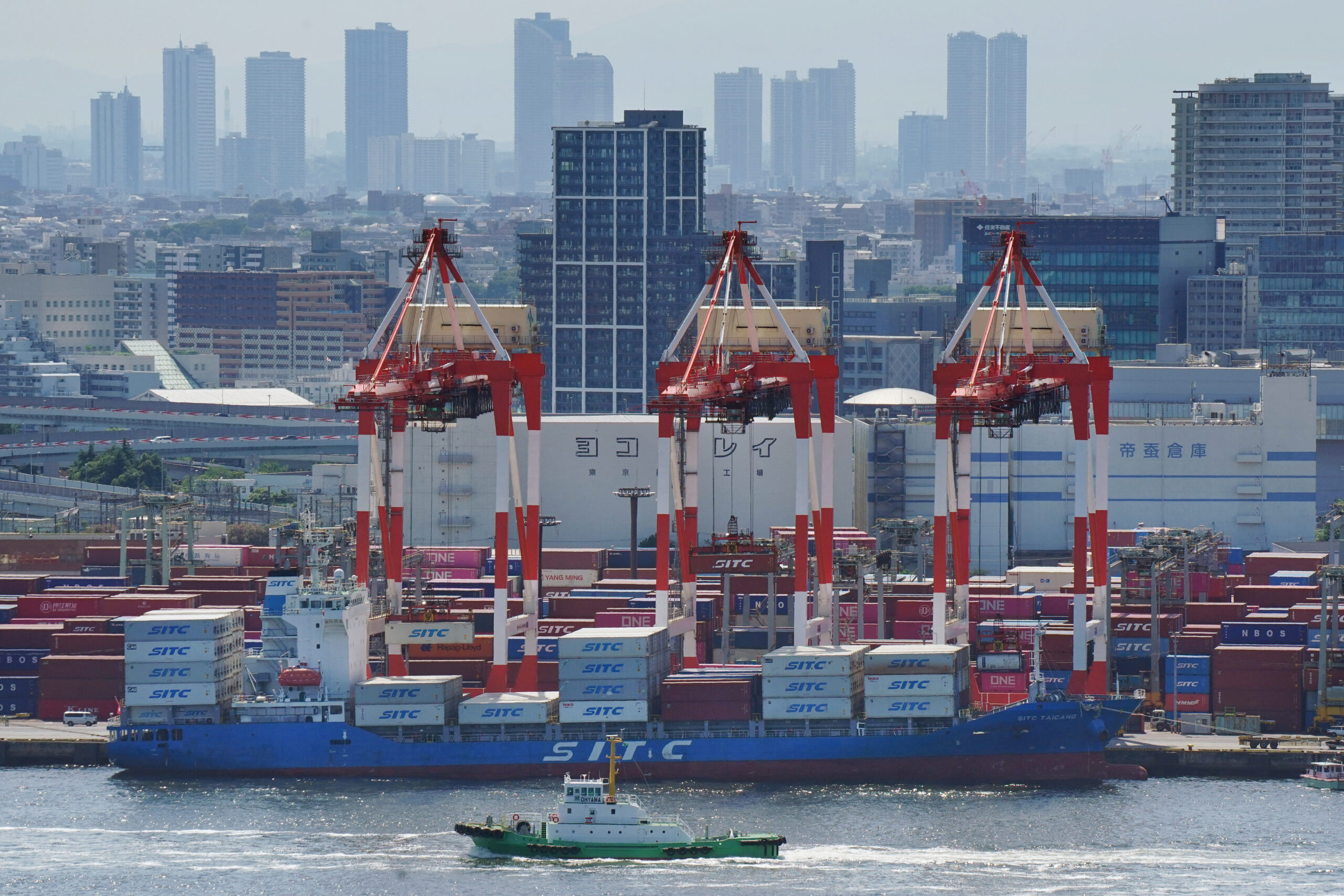
On Thursday, August 20, Japan’s Ministry of Finance released preliminary trade statistics for the month of July. The data revealed that Japan’s exports in July increased by 23.2% year-on-year to 11.51 trillion yen, driven by the growth in semiconductor-related products and automobile exports. At the same time, imports surged by 27.8% to 12.15 trillion yen, largely influenced by the sharp rise in import costs of energy. This resulted in a trade deficit widening to 634.5 billion yen, marking the third consecutive month of deficit.
According to the Ministry of Finance, based on comparable statistical data, both export and import figures for July set the highest monthly record since January 1979. The momentum of export growth continued in July, with the pace accelerating further compared to June. Data from the Ministry of Finance indicated that exports of electronic components such as semiconductors increased by 49.1% year-on-year, semiconductor manufacturing equipment grew by 40.9%, and automobile exports rose by 19.5%, becoming significant drivers of export growth.
Looking at key markets, Japan’s exports to China rose by 25.8% to 2.01 trillion yen, reaching a new monthly high for the fifth consecutive month. Exports to the United States increased by 22.0% to 2.09 trillion yen, also hitting a new monthly historical high.
However, the year-on-year growth in export volume for July was only 5.2%, indicating that the substantial increase in nominal export value was largely driven by the weakening of the yen, global price hikes, and the demand for high-priced semiconductors related to artificial intelligence, rather than a significant surge in actual shipment quantities.
On the import side, the total import value in July increased by 27.8% to 12.15 trillion yen. Crude oil imports surged by 87.8% year-on-year, electronic components like semiconductors grew by 79.7%, and non-ferrous metals increased by 67.7%.
The rise in energy prices has been a key factor pushing up import costs. Japan heavily relies on imported energy resources, and the increase in international crude oil prices directly adds to the import costs for businesses and the overall economy.
Due to the faster growth rate of imports compared to exports, Japan’s trade deficit reached 634.5 billion yen in July, approximately three times higher year-on-year. The trade surplus with the United States decreased by 50.7% to 280.4 billion yen, while the trade deficit with China expanded by around 17.9% to 775.4 billion yen.
In summary, Japan’s exports in July were supported by demand for semiconductors, electronic products, and automobiles, but the rapid rise in import costs has put significant pressure on the trade balance.