
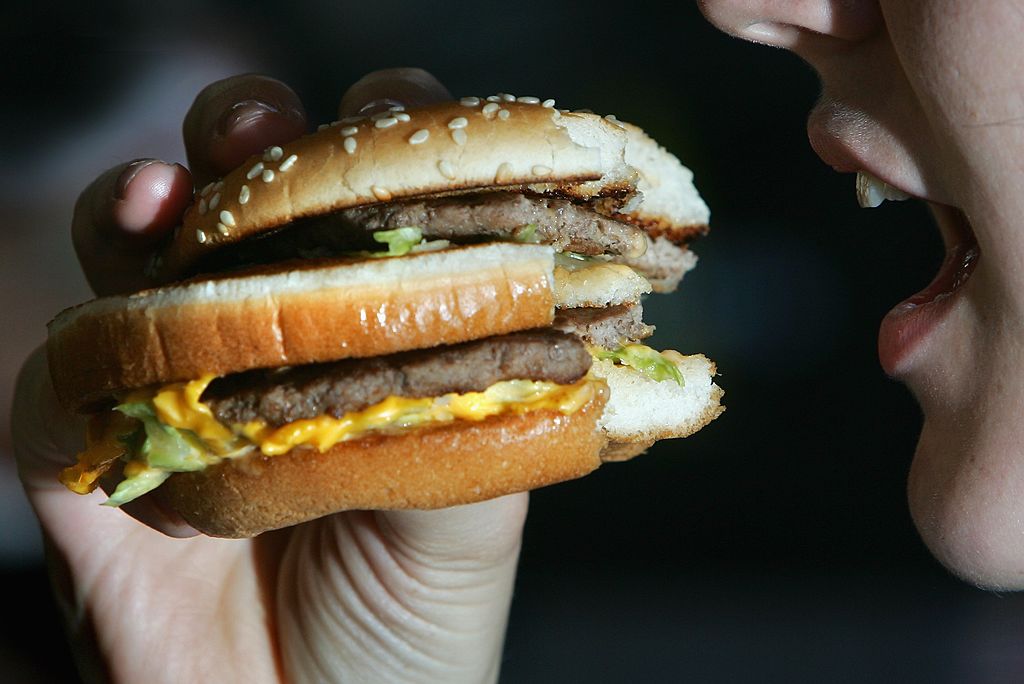
With the Chinese economy slowing down and people becoming more cautious about their spending, coupled with the trend of shrinking household sizes, what used to be ordinary Western fast food, including hamburgers known as “junk food,” is rapidly becoming one of the fastest-growing and most competitive sectors in the Chinese dining market.
According to a report by Reuters on Monday (August 17), Chinese consumers, who are now more focused on the value for money, are driving the hamburger industry to transform from a niche market dominated by McDonald’s, KFC, and Burger King to a hotly contested arena with various brands vying for market share.
Wang Fang, a university student in Beijing, mentioned that hamburgers have become her and her classmates’ top choice for lunch because opting for just a burger is much cheaper than ordering multiple dishes at a restaurant.
She explained that hamburgers “contain both meat and vegetables, making it an affordable and balanced meal.”
Chinese food industry analyst Zhu Danpeng also pointed out that compared to full-service restaurants, hamburgers offer a more budget-friendly option while still providing a substantial meal, making it a high-value choice.
This trend has attracted renowned brands from various sectors of the food and beverage industry to join in. Yum China’s Pizza Hut has launched the “Pizza Hut Burger Bar,” setting up burger counters within existing stores, expanding to over 200 stores in just six months.
The company plans to reach 500 to 600 stores by the end of 2026, accounting for about 10% of the entire Pizza Hut network.
Yum China states that burger sales are expected to surpass 1 billion Chinese yuan this year, representing 5% to 6% of the brand’s revenue.
Hotpot giant Haidilao introduced its burger brand “Joyful Burger” last month, along with offerings of pizza, pasta, and fried chicken; while coffee chain M Stand has opened burger-focused outlets in multiple cities.
Domestic brand Tastien continues to fiercely compete with McDonald’s, KFC, and the US-based Shake Shack.
According to data from market research firm iiMedia Research, the market size of the Western fast-food industry in China reached 499.65 billion yuan (approximately 74.1 billion US dollars) in 2025, projected to grow to 587.09 billion yuan by 2027.
Data from the emerging research company Emergen Research shows that the burger category market size was 18.4 billion US dollars in 2025, with an estimated annual growth rate of 8.7% until 2035.
Burgers also rank first in consumer preference surveys, with over 50% of respondents indicating they would choose burgers when ordering.
Euromonitor, a market research firm, notes that 43% of Chinese consumers order takeout at least once a week, much higher than the global average of 23%, driving the demand for burger delivery services.
Liu Tao, a 48-year-old musician in Beijing, often takes his son to McDonald’s during breaks in his son’s schedule. He stated, “When you want something clean, quick, and something that your child won’t get tired of, there’s nothing more suitable than a burger.”
Some renowned international brands are also looking to capitalize on this business opportunity. When the US chain Five Guys Burgers opened in Beijing this month, customers waited in line for over two hours just to have a meal.
In May, the US fast-food brand Wendy’s announced its entry into the Chinese market with plans to open up to 1,000 franchise restaurants over the next decade.