
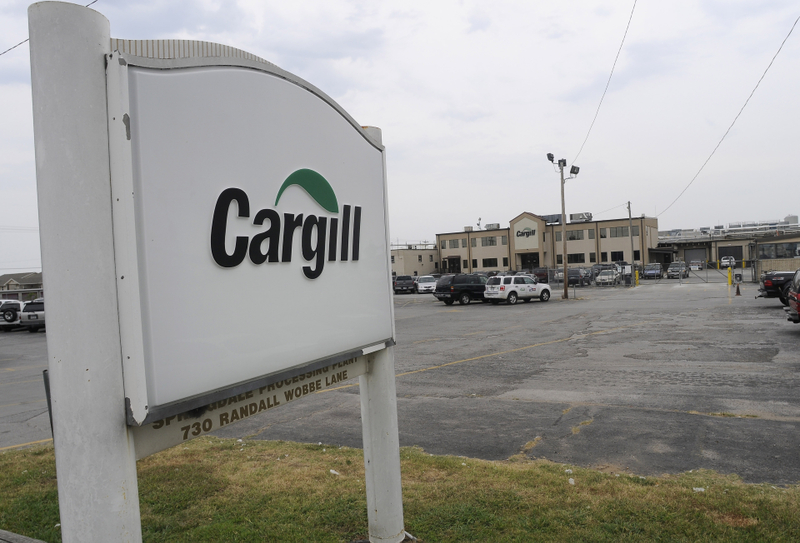
The labor dispute between American beef processing giant Cargill and the union officially came to an end on Monday, August 17th. After union members voted in favor of Cargill’s latest contract proposal, Cargill announced plans to resume beef production at its Fort Morgan plant in Colorado in September.
Cargill officials stated that employees are expected to return to the plant around August 24th, with slaughter operations set to restart during the week of September 7th. The company expressed satisfaction that employees accepted the agreement and will provide training and support to ensure a safe return to work.
Dean Modecker, head of Teamsters Local 455, which represents the majority of workers including truck drivers and warehouse staff, stated that in the past, workers had rejected company proposals multiple times. This time, with an overwhelming majority (1,113 in favor, 211 against), Cargill’s proposal was approved.
“While this may not be the ideal agreement we had hoped for, the reality is that workers do not have other skills to rely on for their livelihoods. We understand the current challenging situation in the industry, and if the company becomes profitable in the fourth or fifth year of the contract, we hope that workers can share in the success,” he said.
According to the union, in the first year of the new contract, workers’ base hourly wage is set to increase by a total of $1.40, but specific terms were not fully disclosed. Cargill, on the other hand, noted that workers’ base hourly wage has already risen gradually from $15.35 in 2018 to $23.50.
In fact, Cargill’s competitor, JBS, had previously faced labor disputes over wage issues, with some employees even calling for strikes before reaching a settlement recently.
The dispute occurred amidst significant turmoil in the American beef industry.
In 2026, beef prices soared to historic highs, while the national cattle herd reached its lowest level in 75 years. Processing plants faced losses as the cost of live cattle rose faster than the profit from meat prices, leading many operators to choose to close or sell plants to reduce losses. For instance, Tyson Foods cited a shortage of live cattle as the reason for its recent announcement to close or sell three U.S. beef plants and packaging facilities.
Industry experts attribute the supply shortage to ongoing droughts depleting grazing lands, compounded by the U.S. government’s suspension of live cattle imports from Mexico to prevent the spread of the New World Screwworm.
States like Texas, Arizona, and New Mexico heavily rely on live cattle from Mexico as a source for fattening. Mexican live cattle imports usually account for 5.2% of the annual placements in large feedlots in states such as Texas, Oklahoma, Arizona, California, amounting to 18%.
The Fort Morgan plant dispute originated from contract negotiations in February this year. Workers demanded higher wages to cope with inflation and living costs, improvements in healthcare, safety, and restroom breaks. Cargill’s proposal included an approximately 70-cent raise in the first year and a total of around $2.15 over five years. However, the union believed those wages were insufficient to cover living costs and that the company could afford better conditions with its profits.
As the negotiations between both parties remained deadlocked, Cargill ceased cattle deliveries and suspended slaughter production from April 23rd, leading to a significant decrease in plant capacity, though workers initially continued to receive wages.
On May 19th, about 90% of workers rejected the company’s “final proposal,” leading Cargill to officially lock out approximately 1,700 employees on May 20th, halting their salaries and transferring cattle to other state plants.
Cargill emphasized that this action was taken to ensure facility, employee, and food safety, while the union criticized it as a pressure tactic, prompting workers to start rotating protests.
In June, the union filed charges of unfair labor practices (ULP) with the National Labor Relations Board (NLRB), leading to a stalemate in negotiations until the end of July when talks resumed and a preliminary agreement was reached. After workers rejected the proposal again in early August, the latest version was finally approved on August 17th, bringing an end to this nearly six-month-long labor dispute.