
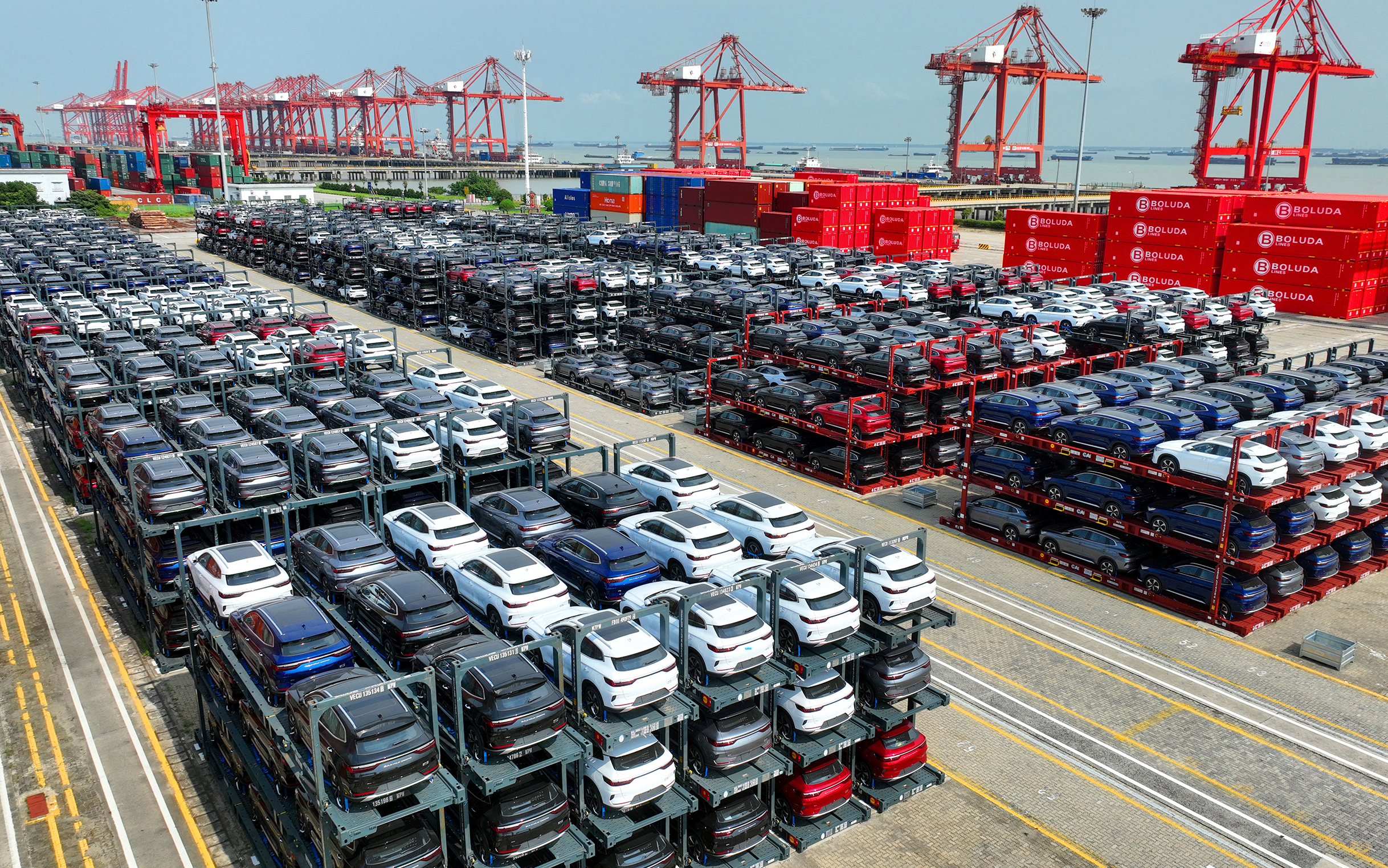
Amid the continuous widening trade imbalance between Europe and China, European Union Trade Commissioner Maroš Šefčovič will lead a delegation to visit China to engage in discussions with the Chinese side on how to rebalance their bilateral trade relationship. China’s manufacturing of automobiles, especially the rapid increase in sales of hybrid vehicles in the European market in recent years, will be one of the topics of negotiation this time.
Šefčovič and his team departed for China on October 7th and will hold meetings with the Chinese Minister of Commerce, Wang Wentao, in Beijing on October 8th to 9th. The EU aims to make concrete progress before the EU Leaders’ Summit next week. Since initiating related negotiations in June this year, the EU has requested China to take measures to reduce the bilateral trade imbalance.
The background of this meeting is the continuous expansion of the EU’s trade deficit with China. According to Eurostat data, the EU’s trade deficit with China was around 359.8 billion euros in 2025, an increase of about 15% compared to the previous year. In the second quarter of 2026, the deficit further rose to 103 billion euros, reaching the highest level in nearly four years.
In recent years, the EU has been urging Beijing to improve market access, reduce industry subsidies, and address other policies seen by the EU as distorting the market.
Automobiles are a significant issue in these negotiations. In October 2024, the EU imposed anti-subsidy tariffs on Chinese-made electric vehicles, leading to changes in the presence of Chinese automakers in the European market.
As hybrid vehicles are not included in the EU’s anti-subsidy measures against Chinese electric vehicles, Chinese companies have increased sales of hybrid vehicles in Europe in recent years. Therefore, the EU has started to pay attention to the potential impact of the rapid increase in the import of these vehicles on the European automotive industry.
Europe has recently proposed discussing arrangements with Beijing, including export restrictions or import quotas, to control the entry of certain Chinese goods into the European market. However, China has previously opposed “voluntary export restrictions,” seeing such measures as not in line with the principles of fair competition.
Therefore, whether hybrid vehicles can become a specific breakthrough in EU-China trade negotiations will also test whether both sides can make substantive progress on the issue of trade imbalance.
Just before Šefčovič’s visit to China, Germany and France also urged the EU to further strengthen its trade defense capabilities.
According to Reuters, on October 5th, German Chancellor Friedrich Merz and French President Emmanuel Macron jointly wrote to the President of the European Commission, Ursula von der Leyen, urging the EU to expedite the use of existing anti-dumping, anti-subsidy tools, and establish new rapid response mechanisms to take action when foreign goods enter the European market in large quantities and severely impact European industries.
Germany and France stated that market-distorting behavior had put pressure on the economic and industrial base of Europe in sectors such as automobiles, aerospace, machine tools, chemicals, and pharmaceuticals.
Although the joint letter from Germany and France did not directly mention China, China’s significant industrial capacity and its exports to the European market are crucial contexts in the EU’s recent discussions on trade defense policies.
This situation has led the EU to adopt a dual-track approach to its economic and trade policy towards China: on one hand, seeking to reduce trade imbalances and increase European companies’ access to the Chinese market through negotiations with Beijing; on the other hand, preparing to strengthen trade defense mechanisms to mitigate the impact of mass Chinese goods entering the European market on local industries.
Šefčovič’s visit to China this time will be a crucial occasion for the EU to assess whether this negotiation strategy can achieve tangible results, with the issue of Chinese hybrid vehicle exports potentially serving as a concrete entry point for discussions on how to rebalance trade relations.