
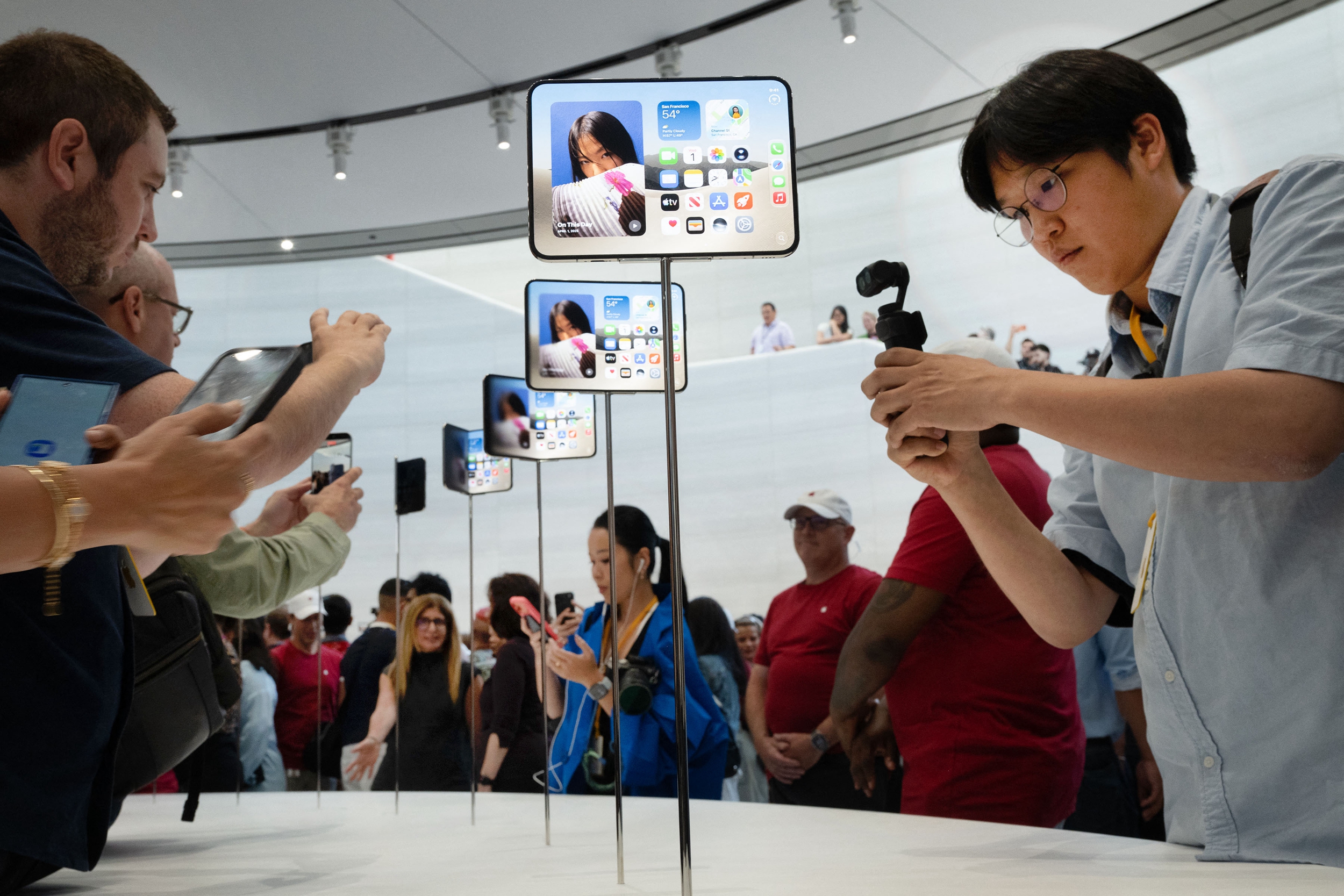
Apple’s foldable iPhone Duo, equipped with a 7.6-inch large screen, has raised concerns among many users about the durability of the screen and the creases that may appear after long-term use. The nano-texture technology on the screen has attracted attention as it may not provide the same smoothness and vibrancy as traditional screens, leaving users curious about why a high-end foldable iPhone would adopt such a disadvantageous design.
Technology media Tom’s Guide’s senior editor John Velasco pointed out that the nano-texture coating on the main screen of the iPhone Duo has recently sparked discussions, with many users noticing that when the viewing angle is slightly shifted, the screen may appear washed out or even difficult to see clearly. Videos depicting this effect have led to concerns that it could be considered a serious design flaw in a high-end phone.
After conducting tests and analysis, Velasco has a different perspective and summarized three major advantages that the iPhone Duo’s nano-texture screen brings to users.
Most high-end phones on the market currently use glossy screens, making a matte design particularly eye-catching. The main difference between the two lies in how they handle ambient light: glossy screens are prone to reflections, while matte screens can disperse light.
Velasco explained that Samsung phones, for example, have been using Super AMOLED panels for years, known for their excellent contrast, vivid colors, wide viewing angles, and deep blacks, making it hard to tell if the screen is on. However, the major drawback is the tendency to reflect light and create glare, like a mirror which reflects surrounding light sources and can produce a glary effect under direct sunlight or overhead lighting.
On the other hand, the matte screen on the iPhone Duo disperses light through special surface treatments, with the most direct advantage being reduced glare, making it easier to see clearly in bright light and reducing eye strain. However, there are trade-offs, with contrast possibly slightly decreasing and black screens appearing slightly gray in bright environments. Additionally, viewing angles from the side may result in reduced clarity and color vibrancy.
Velasco noted, “I completely understand why Apple made this choice. In bright light conditions, screen visibility is crucial, especially for foldable phones with larger screen areas that are more susceptible to glare.”
While the use of matte screens on flagship phones is uncommon, Apple has been using nano-texture technology for years and continues to improve it on different products like the high-end Studio Display and iPad Pro versions, addressing both glare issues and maintaining screen display quality.
According to Velasco, Apple’s nano-texture technology has proven to avoid common problems seen with cheap matte film applications like blurry screens and reduced contrast. Their test on the M1 MacBook Pro with a nano-texture screen demonstrated that this technology effectively reduces screen glare in direct sunlight, making it easier for users to see the content on the screen.
He also pointed out that during actual computer or phone operation, users primarily view the screen from the front, making front viewing angles the most critical consideration, with side viewing angles being less important.
Apple’s Vice President of Hardware Engineering Kate Bergeron mentioned that the nano-texture layer on the iPhone Duo can be replaced. If wear or creases appear after long-term use, users can simply peel off this nano-texture surface layer and replace it with a new one.
She explained, “The matte screen coating helps reduce creases, and there is an outer layer (nano-texture cover layer) on the screen. Apple has invested significant engineering efforts to extend the lifespan of this cover layer as much as possible while maintaining optimal display performance.”
Apple treats the nano-texture cover layer as a component that can be independently repaired or replaced. According to AppleCare repair cost data, the cost for replacing this cover layer is $19; whereas, if the inner screen is damaged, the repair cost can go up to $99.