
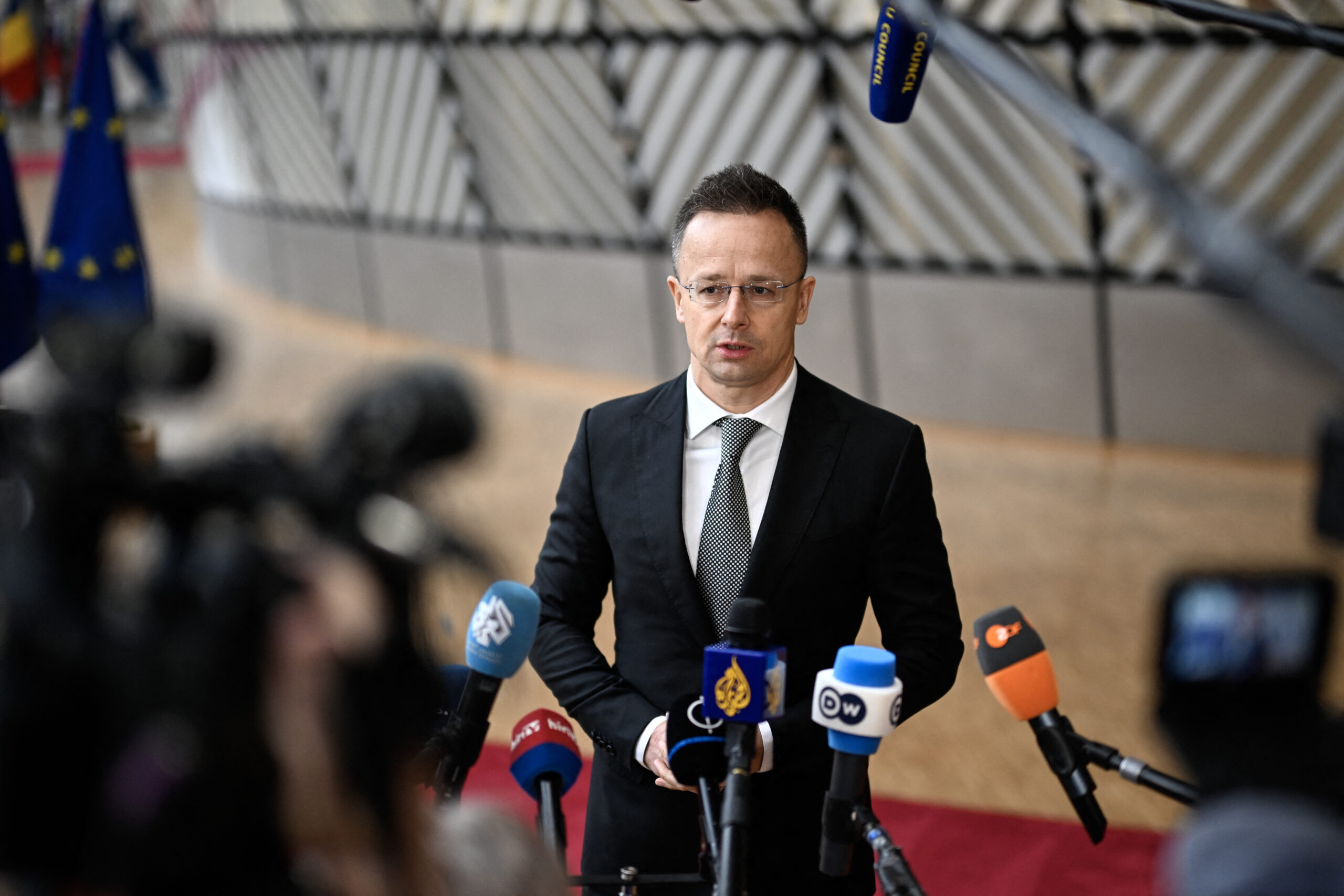
On Monday, October 5th, former Hungarian Foreign Minister Péter Szijjártó appeared at a closed-door hearing of the Parliament’s National Security Committee to face questioning regarding his dealings with the Chinese electric car manufacturer BYD during his tenure as foreign minister.
According to reports from Agence France-Presse, Szijjártó served as foreign minister in the government of former Prime Minister Viktor Orbán for a staggering 12 years. Following Orbán’s defeat in the April elections, Szijjártó announced in July that he was stepping down from his parliamentary position to take on a senior role at BYD, overseeing the group’s external relations and new business development.
This development immediately raised concerns from the public. During his time as foreign minister, Szijjártó reportedly secured substantial government subsidies for BYD, leading to speculation about potential conflicts of interest.
While serving as foreign minister, Szijjártó actively assisted BYD in expanding its investments in Hungary. Apart from facilitating the establishment of BYD’s first European factory near the southern Hungarian city of Szeged, in 2025, Szijjártó also announced that BYD would set up its European headquarters and research center in Budapest, with the company receiving 200 billion forints (approximately $637 million) in government aid.
In July, Hungarian Prime Minister Péter Magyar stated in parliament that Szijjártó had assisted BYD during his tenure with billions of forints in public funds, diplomatic support, and national infrastructure assistance.
The Magyar government has expressed its intention to launch an investigation to review the decisions, negotiations, and government commitments made by Szijjártó in the BYD investment case.
During Orbán’s administration, Szijjártó concluded investment agreements with several Chinese companies, attracting them to Hungary for manufacturing, with a significant portion of these agreements related to the electric car battery industry.
The Orbán government aimed to establish Hungary as a global hub for lithium-ion battery production through these investments. However, due to factors such as declining demand for electric cars and market conditions, the investments did not yield the anticipated economic returns for the government. Additionally, some factories experienced accidents, with pollution levels exceeding legal limits in a few facilities.
Since taking office in May of this year, the new Hungarian government has pledged to enhance oversight of the battery production industry.