
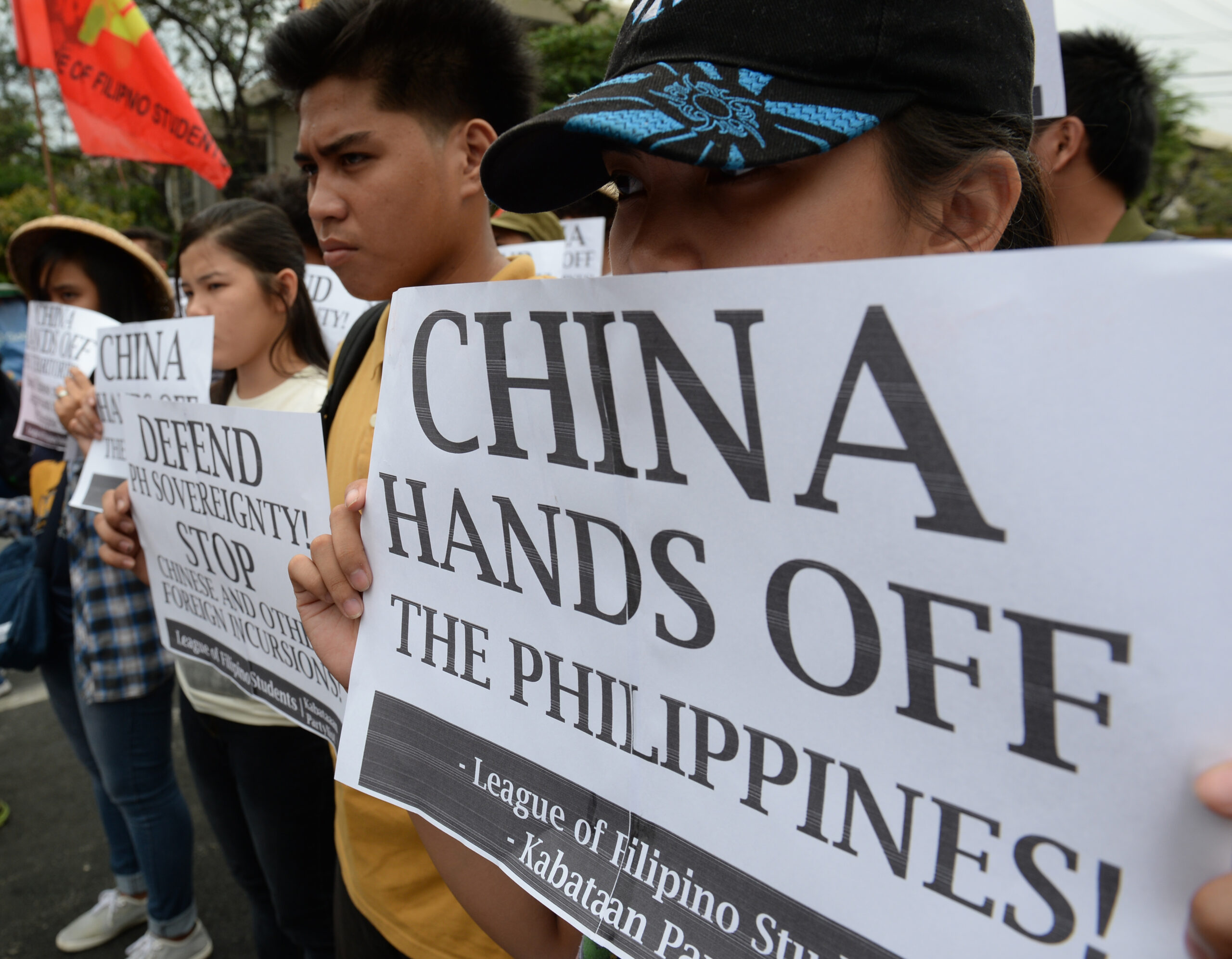
Amid escalating tensions in the midst of maritime disputes, approximately 150 Chinese teachers working in Filipino-Chinese schools have started leaving the Philippines and returning to China since the end of September 2026. This collective evacuation of teachers has further strained the already fragile relations between China and the Philippines.
According to reports from Filipino media, this evacuation has affected several well-known local Chinese schools. The decision for departure has been confirmed by the Chinese Embassy in Manila and the Federation of Filipino-Chinese Chambers of Commerce and Industry, Inc. (FFCCCII), with approvals from both sides and relevant departments.
The trigger for this wave of departure can be traced back to a report by Ray Powell, founder and director of the SeaLight project under the Gordian Knot Center for National Security Innovation at Stanford University. Powell’s investigations highlighted close connections between the “Philippine Chinese Education Research Center” (PCERC), responsible for coordinating over 100 Chinese schools in the Philippines, and the Chinese united front system.
The report revealed that the center has long been bringing Chinese teachers to the Philippines to teach and sending Filipino-Chinese students to be trained at Chinese universities such as Jinan University. In the past, a seminar organized by the Jinan University Philippines Research Center allegedly included claims by Chinese scholars that the Batanes Islands in the northernmost part of the Philippines are part of Taiwan and China, casting doubt on Philippine sovereignty.
Furthermore, the center collaborated with the “Philippine China Peace and Unity Promotion Association” in 2025 to organize a writing competition commemorating the 80th anniversary of the end of World War II, which was criticized for engaging in information warfare targeting Japan and Taiwan.
Following these allegations, Filipino Defense Secretary Gilberto Teodoro Jr. issued a warning, urging vigilance in cultural and educational exchanges related to China. Teodoro emphasized that united front work is a core strategy of the Chinese Communist Party, and foreign-funded academic exchanges could potentially be used as a guise for “establishing operational bases and collecting intelligence.”
While President Ferdinand Marcos Jr. has instructed intelligence and law enforcement agencies to take evidence-based actions against such malicious activities, Teodoro also cautioned against inciting xenophobia or prejudice against the Filipino-Chinese community domestically.
In response to Filipino accusations, the Chinese Embassy in Manila and the Chinese community released statements denying the allegations. The embassy spokesperson, Ji Lingpeng, dismissed the claims as malicious smears against educational exchanges between China and the Philippines.
The Federation of Filipino-Chinese Chambers of Commerce and Industry, Inc. and the Chinese Education Research Center stated that the recall of teachers was a decision made due to safety concerns raised by Chinese parents for their children and has received approvals from the Chinese Embassy and relevant departments.
Scrutiny of education projects funded by foreign governments is not limited to the Philippines. Chinese government-funded language and cultural programs, such as the Confucius Institutes, have faced strict reviews and widespread closures in recent years in the United States, Australia, and several Western countries.
Since 2018, the US Congress has restricted federal funding to colleges hosting Confucius Institutes, leading to a sharp decrease in the number of institutes in American universities from around 100 in 2019 to fewer than 5. In 2019, New South Wales in Australia closed public school Confucius Institute programs due to political and foreign influence concerns.
Amidst this educational exchange controversy, territorial and maritime disputes between China and the Philippines in the South China Sea continue to worsen. Since assuming the presidency, Manila has significantly strengthened its defense alliance with the United States, frequently encountering Chinese coast guard interference and water cannon attacks in disputed areas like Second Thomas Shoal and Scarborough Shoal.
China has long asserted sovereignty over approximately 90% of the South China Sea based on the “nine-dash line,” which overlaps with parts of the Philippines’ Exclusive Economic Zone (EEZ). Despite the Permanent Court of Arbitration ruling in 2016 that the “nine-dash line” has no legal basis, China has refused to acknowledge the decision to this day.