
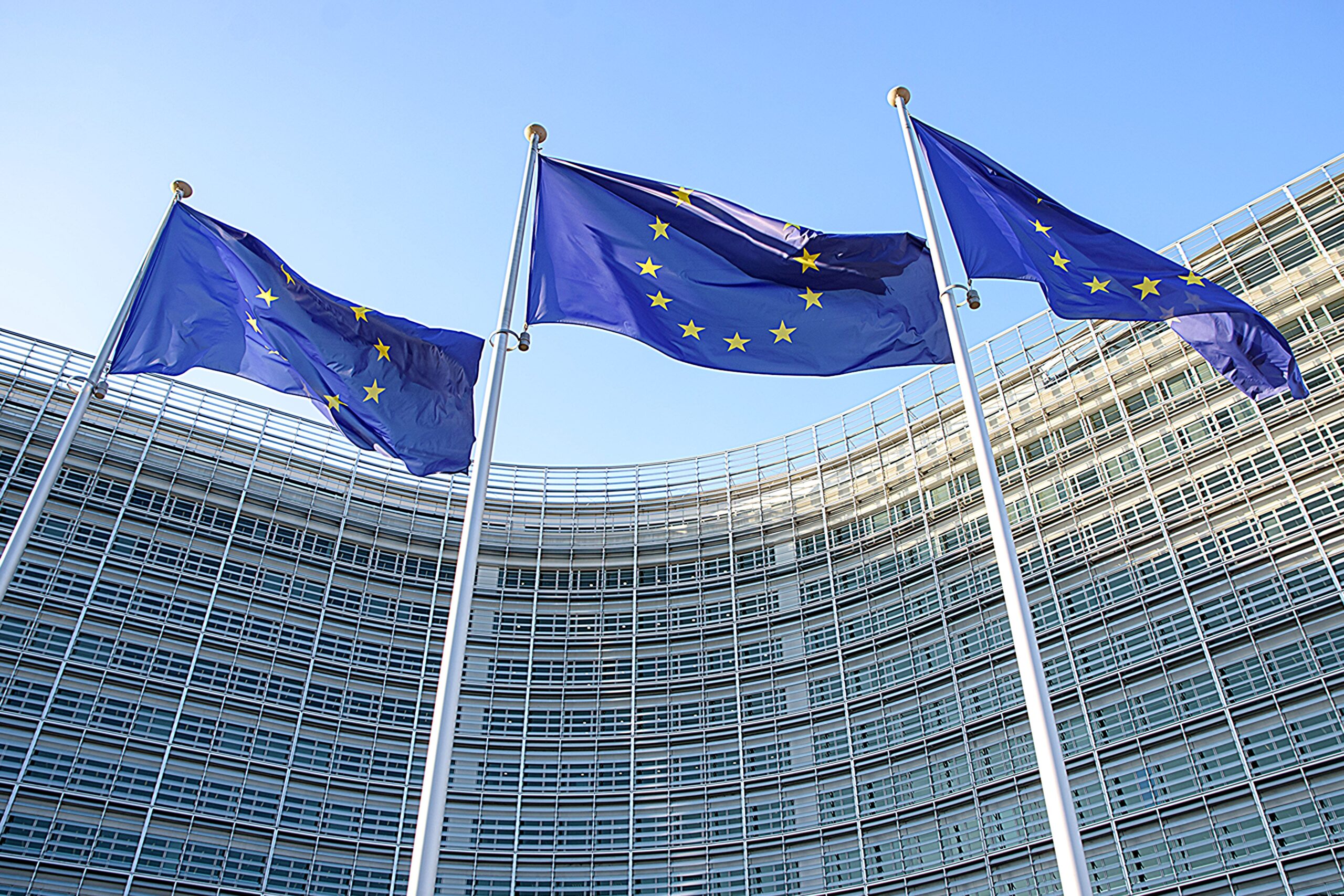
With the changing global economic environment and the increasing threat to supply chain security brought by the Chinese Communist Party, the two core European countries, France and Germany, officially submitted a strong trade policy proposal to the European Commission on Monday, October 5th.
The leaders of France and Germany jointly called on the European Union to expedite the establishment of a new “trade defense toolbox” that would allow Brussels to swiftly cut off the channel for specific countries to enter the EU single market when facing unfair market competition or political and economic threats.
Although the related documents adhere to the principle of being “country-agnostic” in wording, the content specifically names severe issues such as structural overcapacity, massive national subsidies, dumping, and currency manipulation, with the general view that this measure is tailored to comprehensively address the impact of China’s industrial policies on European manufacturing, known as “China Shock 2.0.”
On Monday, the governments of France and Germany submitted a joint letter to Ursula von der Leyen, President of the European Commission, along with a policy document on global economic imbalances. The letter was signed by French President Emmanuel Macron and German Chancellor Friedrich Merz.
In the letter, the two countries bluntly pointed out that the EU is facing unprecedented economic and geopolitical challenges, as some non-market economies are “weaponizing” international trade and severely distorting the global market. The letter emphasized the need for the European Commission to have a credible tool to make decisive and systematic responses, including taking strong measures when necessary, even including immediately cutting off a country’s access to the internal market.
The two countries warned that key core industries in Europe, including automotive, chemicals, plastics, pharmaceuticals, aerospace, and industrial machinery, are experiencing significant “industrial shocks.” Failure to timely take countermeasures could result in Europe facing a severe crisis of industrial base disintegration and mass unemployment.
The US government has repeatedly pointed out in its annual trade report that as a “non-market economy,” China’s state-led economic model, massive industrial subsidies, and overcapacity have thoroughly distorted global markets such as steel, aluminum, solar, and electric vehicles. The report explicitly warned that China is frequently “weaponizing” market access and supply chain dominance to pressure political opponents.
According to the disclosed documents, the new trade tool proposed by France and Germany has several breakthrough features, characterized as a “second strike weapon” in the trade war by German officials. When a third-party country attempts to disrupt fair competition through political or economic means or threatens the EU (such as blocking exports of crucial raw materials like rare earths), the EU can swiftly limit or completely prohibit the country’s goods or services from entering the EU single market.
The policy document attached to the letter specifically emphasizes that the new tool will precisely target all types of market distortion behaviors, covering “from individual production to entire industries, from national subsidies to currency manipulation, and limiting currency convertibility.”
The document points out that certain countries (implying China) currently have “structural overcapacity” and “widespread and comprehensive national subsidies,” combined with currency undervaluation and manipulation, dominating entire value chains in specific industries in Europe on a global scale, creating unfair suppression.
In order to avoid individual member countries delaying decisions due to self-interest or external interference, the new mechanism is proposed to use a “Reversed Qualified Majority.” This means that unless a qualified majority of member countries (usually representing 65% of the population and 55% of member states) explicitly vote against it, the counter-sanctions proposed by the European Commission will automatically take effect.
This will significantly lower the decision-making threshold and greatly enhance Brussels’ operational efficiency.
German government officials revealed that unlike past lengthy anti-dumping investigations taking months or even years, this new tool aims to enable the EU to launch a comprehensive counterattack within “a few days,” akin to the US’ “Section 301” or China’s control over key mineral exports.
The new tool breaks the limitations of traditional trade defenses that could only target specific products, authorizing the European Commission to conduct comprehensive investigations and penalties on the entire industry affected by subsidies or distortions (Sector-Wide Coverage, such as plug-in hybrid cars, chemicals, plastics, etc.).
The decision of France and Germany to demonstrate an unprecedented tough stance at this moment stems from the sharp increase in the EU’s trade deficit with China.
Official EU statistics show that the EU’s trade deficit with China reached nearly €361 billion in 2025 (equivalent to about €1 billion daily). As the imbalance continued to worsen in the first half of 2026, European leaders and industry analysts warned that Europe is undergoing a “Second China Shock” as Chinese authorities heavily subsidize high-tech manufacturing and redirect excess capacity to overseas markets, causing a devastating impact on local industrial chains in Europe, especially in electric vehicles, green energy equipment, chemicals, and basic materials.
EU leaders instructed the European Commission in June to renegotiate the EU’s trade deficit with China.
Furthermore, the proposal put forth by France and Germany also includes a mandatory “supply chain diversification tool,” requiring the EU to comprehensively evaluate the concentration of import sources and their global market share, including the nationalities of specific countries, companies, and stakeholders, and mandate companies to reduce reliance on a single source, guard against new risks, ensuring strategic autonomy for the EU on an economic security level.
The timing of the joint letter by France and Germany carries strategic intentions. A French presidential advisor told Reuters that urgent action by the EU is imperative as the imbalance with some trade partners has become unsustainable, and France and Germany fervently hope the EU quickly deploys existing anti-dumping measures.
EU leaders are set to convene the European Council summit in Brussels in 10 days. France and Germany have reached a high level of consensus before the summit, injecting strong political momentum into discussions on how to address China’s trade issues.
EU Trade Commissioner Maros Sefcovic is expected to visit Beijing this week for crucial talks with Chinese Minister of Commerce Wang Wentao. France and Germany’s move to present the “cut-off market access” card at this time significantly increases the EU’s bargaining power at the negotiation table.
European news outlets and analysts point out that the initiative launched by France and Germany signifies a fundamental shift in the EU’s trade policy towards China. Moving from a past of open doors and relatively mild compliance investigations, the focus has now shifted to establishing a potent “economic defense weapon” with strong deterrence.
While the legislation still requires final approval from the governments of EU countries and the European Parliament, the joint efforts of the two core European countries undoubtedly send a clear signal to Beijing: if the structural overcapacity, subsidies, and currency manipulation issues are not addressed, the door to entry into the EU single market may face the risk of being closed at any time.