
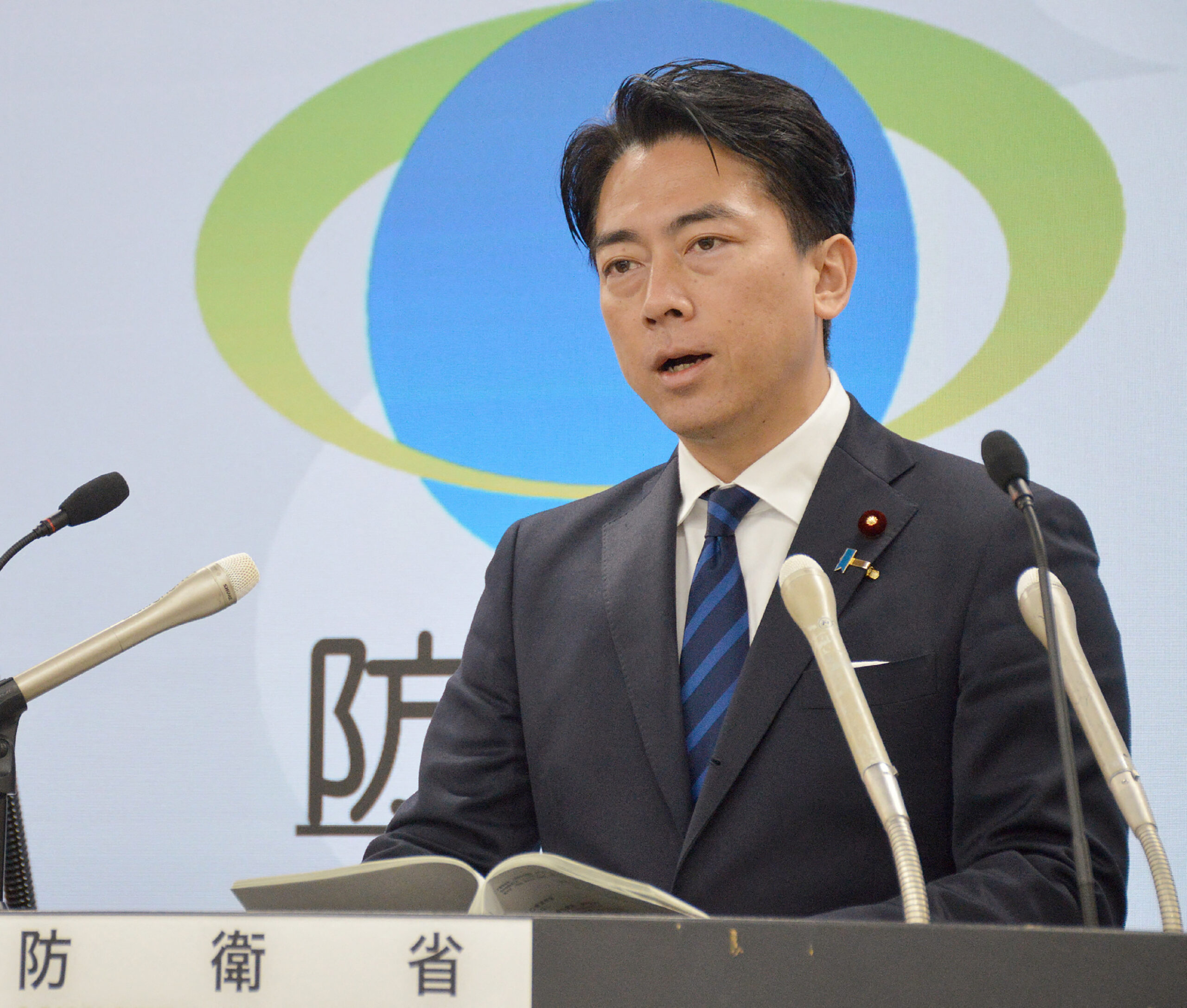
Recently, the Japanese Ministry of Defense has adjusted its strategy for external information dissemination, with senior officials opening social media accounts for the first time. This move aims to distribute official information more rapidly and accurately to combat China’s disinformation and cognitive warfare.
According to a report by “Current Affairs” on July 19, the Japanese Ministry of Defense and the Self-Defense Forces are strengthening their capabilities for external information dissemination. Recently, official spokesperson of the Ministry of Defense, Kimihito Aguin, and Chief of Staff (Chief of Joint Staff) Hiroaki Uchikura have opened accounts on X platform. This departure from the past practice of primarily holding routine press conferences to release information is now focused on providing information in a “real-time, reliable, and continuous” manner to counter China’s cognitive warfare.
In the past, senior officials of the Japanese Ministry of Defense were quite conservative about opening social media accounts. This exceptional move has attracted attention, and after about half a month of the two officials opening accounts, both have gained over 30,000 followers.
Following the opening of his account, Aguin promptly posted refutations in both Chinese and English to the Chinese Ministry of National Defense’s claim that “Japan is moving towards a new militarism.” On the other hand, Uchikura’s posts are more restrained, mainly reposting official posts with additional explanations and occasionally sharing videos of Self-Defense Force training and exchanges with other military forces.
Reportedly, this action by the Ministry of Defense was inspired by the Russia-Ukraine conflict, recognizing that disinformation and information manipulation can affect public judgment, leading to the manipulation of public opinion or even causing social division. Opening accounts on X platform is one of Japan’s important measures to address cognitive warfare.
The Japanese Ministry of Defense has specifically stated that this action is in response to China’s cognitive warfare. Previously, Japanese conservative commentator Ryouko Sakurai stated on the YouTube channel “Free Speech TV” that according to information from Japanese intelligence agencies, China has been launching a smear campaign against Sanae Takamichi, aiming to weaken her support since she ran for the Liberal Democratic Party leadership.
Sakurai revealed that according to intelligence agencies, one of China’s tactics is to portray Takamichi as a “Japanese militarist” and produce a large number of images and videos depicting her as such from the militaristic era, which are widely circulated on Chinese social media and some Japanese online community platforms.
Intelligence agencies indicated that creating internal dissent and division in the enemy’s camp is a tactic learned by China from the former Soviet Union, and it is one of the most widely used and skilled cognitive warfare tactics.
In response to China’s intensified cognitive warfare against Japan in recent years, Defense Minister Taro Kono emphasized on July 16 during a meeting of the House of Councillors Foreign Affairs and Defense Committee, “If we remain silent, lies can also become facts.”
Regarding the senior officials of the Ministry of Defense opening social media accounts, Takahiro Tsuchiya, professor at Kyoto University of Foreign Studies, stated that the key to dealing with cognitive warfare lies in immediate responses and continuous information dissemination in peacetime. “It is crucial to continuously build up the assessment that ‘the information from the Ministry of Defense and the Self-Defense Forces is trustworthy.'”