
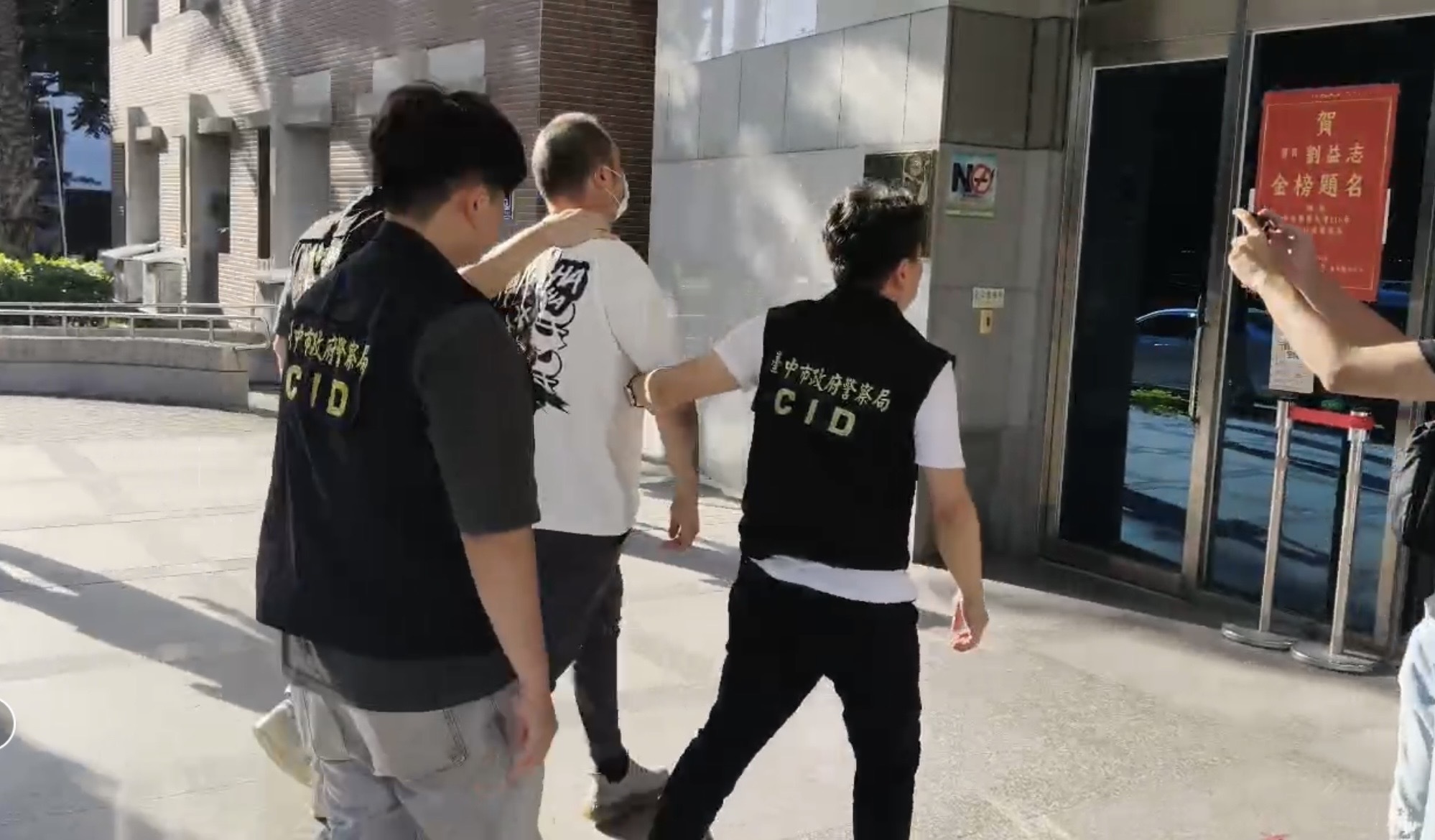
Following a speech in Taichung in July by the executive director of an Indo-Pacific think tank, Yasu-ita Akio was attacked by a Chinese man named Liao Gang, leading to injuries. The Taichung District Prosecutor’s Office has indicted Liao Gang on charges of organized crime for his involvement in a Hong Kong gang-related cross-border violence crime. Additionally, four accomplices who fled abroad have been put on a wanted list. The authorities are also investigating the mastermind behind the attack and whether there were any accomplices in Taiwan.
Yasu-ita Akio, a veteran Japanese media personality, was assaulted by Liao Gang, a member of a Hong Kong gang, after concluding his speech in Taichung on July 6. Liao Gang was later arrested at the airport, sparking concerns about cross-border suppression by the Chinese Communist Party and related national security legislation.
The Taichung District Prosecutor’s Office, in a press release today, stated that they have been investigating a case involving a violent group formed by Liao Gang and other members of a Hong Kong gang referred to as “He Sheng He.” The group was responsible for the assault on Yasu-ita Akio. The prosecutors have concluded their investigation and formally indicted Liao Gang, seeking the maximum statutory penalty of 5 years’ imprisonment, and requested continued detention by the court.
The investigation revealed that Liao Gang is a member of the “He Sheng He” gang in Hong Kong and has a history of carrying out violent acts on behalf of a sponsor for monetary gain. His accomplices, surnamed Wu, Feng, Kwong, and Wang, are also members of Hong Kong gang factions. There were no personal disputes between Liao Gang and Yasu-ita Akio.
According to the prosecutors, an individual who identified himself as “Chen Weihao” but whose true identity and nationality remain unknown, was also a member of the “He Sheng He” gang and masterminded the attack on Yasu-ita Akio. This person hired a cross-border violence group to intimidate Yasu-ita Akio, who is known for sharing political views on cross-strait affairs publicly. The attack was meant to suppress freedom of speech and serve the purpose of cross-border oppression.
The group, including Liao Gang, arrived in Taiwan in early July and planned to leave immediately after the mission was completed on July 5. They conducted reconnaissance at the venue where Yasu-ita Akio was scheduled to speak, but due to high risk, some members decided to withdraw. The planning involved financial incentives for carrying out the attack and coordination among the group members.
On July 6, Liao Gang and Wang carried out the assault on Yasu-ita Akio at the hotel where the event was taking place. The violent attack resulted in injuries to Yasu-ita Akio’s face, diminishing his social standing in a premeditated act of aggression.
The incident, widely reported by the media, triggered fear among the public that expressing different political views could lead to violence from such cross-border groups. Wang acted as a lookout during the assault and withdrew from the scene after the attack, pretending to show concern for the victim before leaving and reporting back on the crime.
After the attack, Liao Gang purchased clothing to disguise himself, headed to Taichung International Airport, and attempted to board a flight to Busan, South Korea. However, upon receiving information, the authorities swiftly located and detained him at the airport, preventing his escape.
Following the investigation conducted by the Taichung Prosecutor’s Office, Liao Gang has been charged with assault, public insult, intimidating the public, and engaging in organized crime. He attempted to evade capture by changing his appearance and fleeing the country, which indicated his intent to escape justice. The four other defendants have also fled the country, leading to the issuance of warrants for their arrest. Given the organized and planned nature of the crime and the need for continued detention to ensure the smooth progress of the trial, the court was requested to keep the defendants in custody.
The prosecution emphasized that Liao Gang’s motive was not only to harm a specific individual but also to instill fear through cross-border violence and media coverage, thereby undermining democracy and social order. The prosecution has requested a heavy sentence of 5 years’ imprisonment for Liao Gang.
The four other defendants, including Wu, fled the scene before and after the attack, and are now in hiding abroad. The authorities have issued warrants for their arrest. Furthermore, the investigation into the masterminds and potential accomplices in Taiwan is ongoing to uncover the full extent of the criminal network and prevent and counteract cross-border suppression crimes effectively.
The complex nature of this case involving cross-border and organized crimes with several fugitive accomplices fleeing abroad not only harmed Yasu-ita Akio but also challenged the effective exercise of judicial authority in the Republic of China. The deliberate violent intimidation targeting individuals engaged in public commentary had a chilling effect on freedom of expression, causing significant societal concerns beyond a typical assault case.