
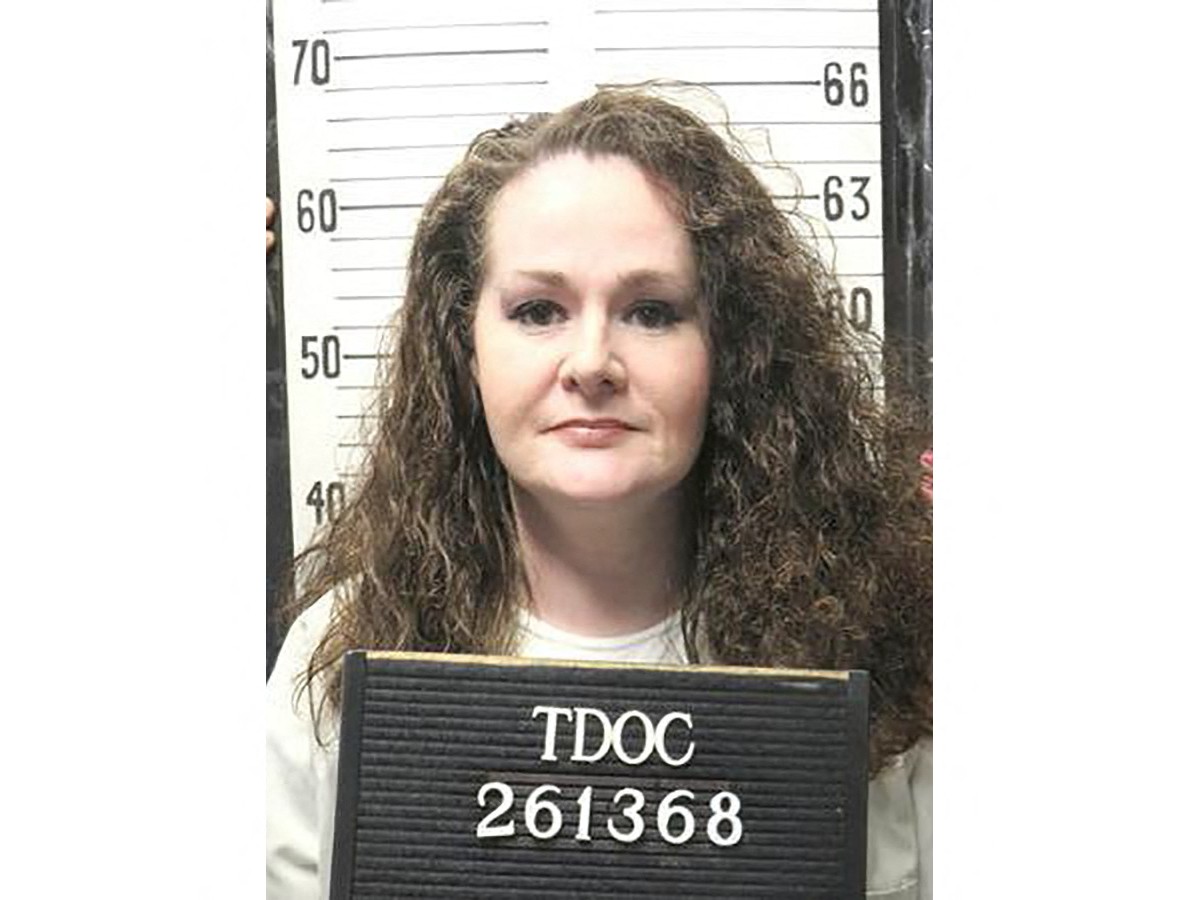
Some Republican leaders in Tennessee expressed on Monday (October 5) that they hope to explore more methods of carrying out executions, following the failed execution of a female death row inmate last week, which has raised widespread questioning and concerns about this method of execution.
Marsha Blackburn, a Republican federal senator from Tennessee and gubernatorial candidate, stated that Tennessee’s failure to successfully execute Christa Pike last week should “not be a reason to stop executing death penalties.” Instead, she emphasized the need for Tennessee to reassess its execution methods.
In an interview with the Associated Press, Blackburn stated, “Whether it’s through lethal injection or the electric chair, what we need to know is that we have to find a method of carrying out the death penalty – and carry it out successfully.”
High-ranking leaders in the Tennessee legislature have discussed with Blackburn the possibility of amending the state’s laws on executing death penalties during the 2027 legislative term.
State House Speaker Cameron Sexton expressed, “We want to broaden the legal provisions, including more methods.”
According to data from the Death Penalty Information Center, in most states in the United States where execution of death penalties is allowed, lethal injection is the primary method of execution. Some states allow death row inmates to choose their method of execution. The Death Penalty Information Center states that currently nine states authorize the use of the electric chair or gas chamber, with five states specifically stipulating the use of nitrogen gas. Additionally, five states authorize the use of firing squads.
Since last Wednesday, Tennessee’s death penalty execution procedures have been under national scrutiny. On that day, prison execution personnel administered a high dose of pentobarbital to Pike, which should have been lethal, but failed to cause her death. After the execution was forcibly halted, Pike was transported to a hospital for treatment. Pike remains in a coma state, relying on a ventilator to sustain her life. Pike’s lawyer stated that blisters and burns have appeared on her arms due to the medication.
At the age of 50, Pike, in January 1995, conspired with two others and brutally tortured and killed their 19-year-old classmate. Pike was sentenced to death the following year. After years of legal proceedings, Tennessee ultimately carried out the lethal injection execution on her last Wednesday, which failed.
Following the botched execution of Pike, Republican Governor Bill Lee decided to suspend the remaining death penalty executions in the state for this year and ordered an independent investigation into the state’s death penalty execution system.
Under current Tennessee law, if lethal injection cannot be carried out, the electric chair can be used. The state law also specifies that those convicted of crimes before 1999 can choose to undergo electrocution. Between 2018 and 2020, five death row inmates in Tennessee chose electrocution.
(Reference: The Associated Press)