
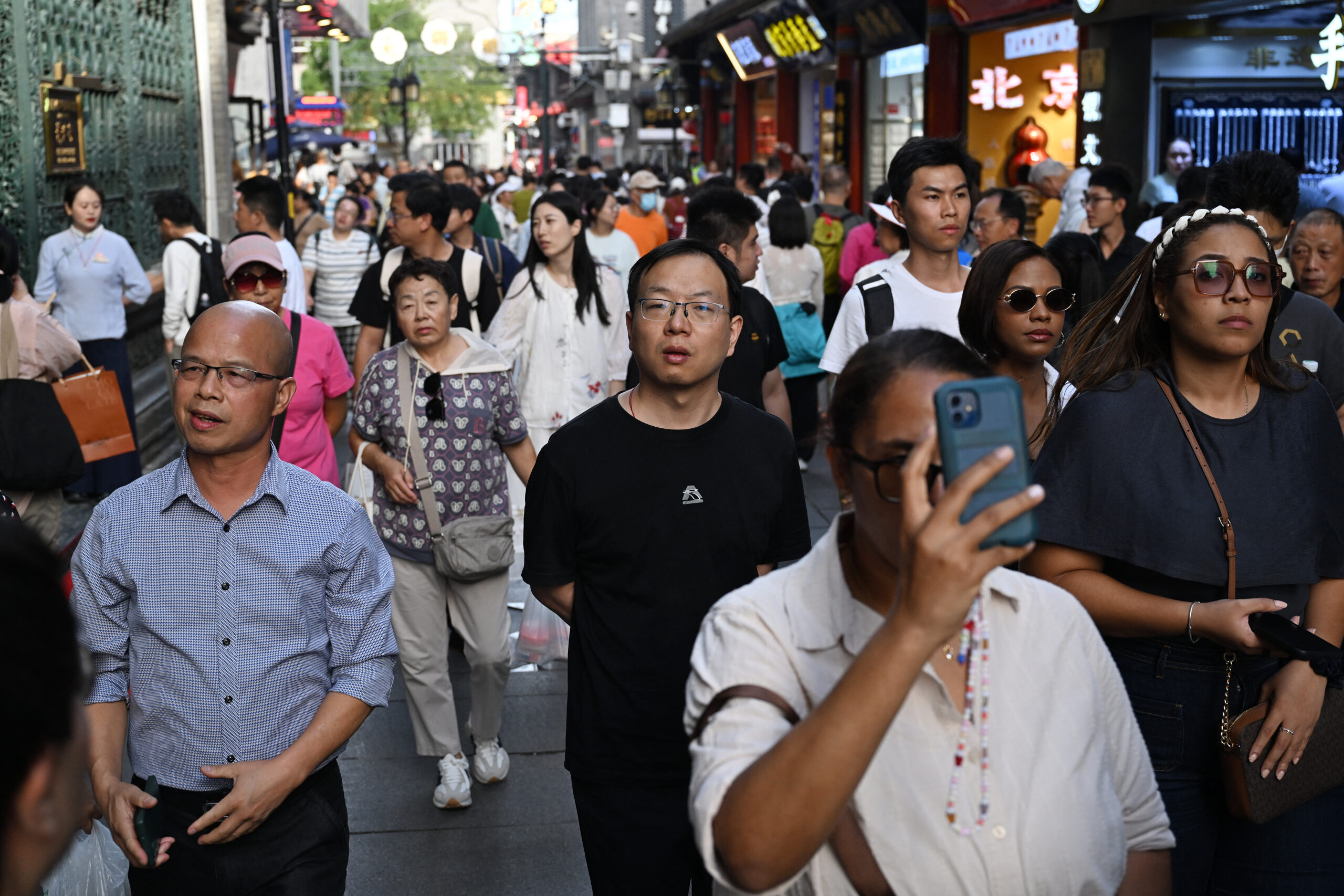
This year’s Mid-Autumn Festival and National Day holiday combined to create a 13-day super-long holiday, leading some people to choose to travel. However, amidst the bustling crowds at tourist attractions across the country, a trend is becoming increasingly apparent: being in the scenic area does not necessarily mean spending money.
In the past, when tourists visited scenic spots, buying a box of local specialties, getting a fridge magnet, and purchasing some creative ice cream seemed like standard practices. Nowadays, many young tourists wander around the attractions, take photos, check in, sample food, and even grab free gifts, steering clear of the overpriced “three-piece set” in the scenic area shops.
The “three-piece set” consisting of hand cream, city fridge magnet, and creative ice cream sold in mainland China’s tourist spots has been dubbed as “overpriced” by netizens due to their high level of homogenization.
On Chinese social media platform Weibo, discussions on the topic of “the severity of homogenization in tourist spots nowadays” have sparked fervent debates. Many young people have noticed that regardless of which city or tourist spot they visit, the merchandise in the street shops seems to be largely similar. The “three-piece set” appears repeatedly in various tourist spots, merely changing its packaging and slapping on a place name to transform into a so-called “exclusive product of the tourist spot.”
According to a report in “Southern Weekend” on October 4th, the most typical items dubbed as the “three-piece set” include hand cream, city fridge magnets, and creative ice cream. In addition, there are plenty of “souvenir NPCs” on the pedestrian streets in the tourist spots. The same box of pastries can be called “misty tea cake” in Mount Lu and “Red Army cake” in Jinggangshan. The so-called exclusive health flower tea in the tourist spots is also quite common: with a package redesign and a name change, it seems to possess a unique local identity. After a trip, what people may truly remember is not the local product but rather how much money they spent.
For tourists, the issue is no longer simply “overpaying”; it is about spending a high price without necessarily acquiring something genuinely reflective of local characteristics.
A survey indicates that 59.2% of respondents believe that souvenirs in tourist spots are “overpriced with low cost performance,” surpassing the issue of “serious homogenization” by nearly 10 percentage points. The same hand cream is cheaper at the city counter during promotions. The price of creative ice cream generally hovers around 25 yuan (Chinese Renminbi), with random flavors that melt quickly, seen by young people as “expensive, visually appealing, but taste…