
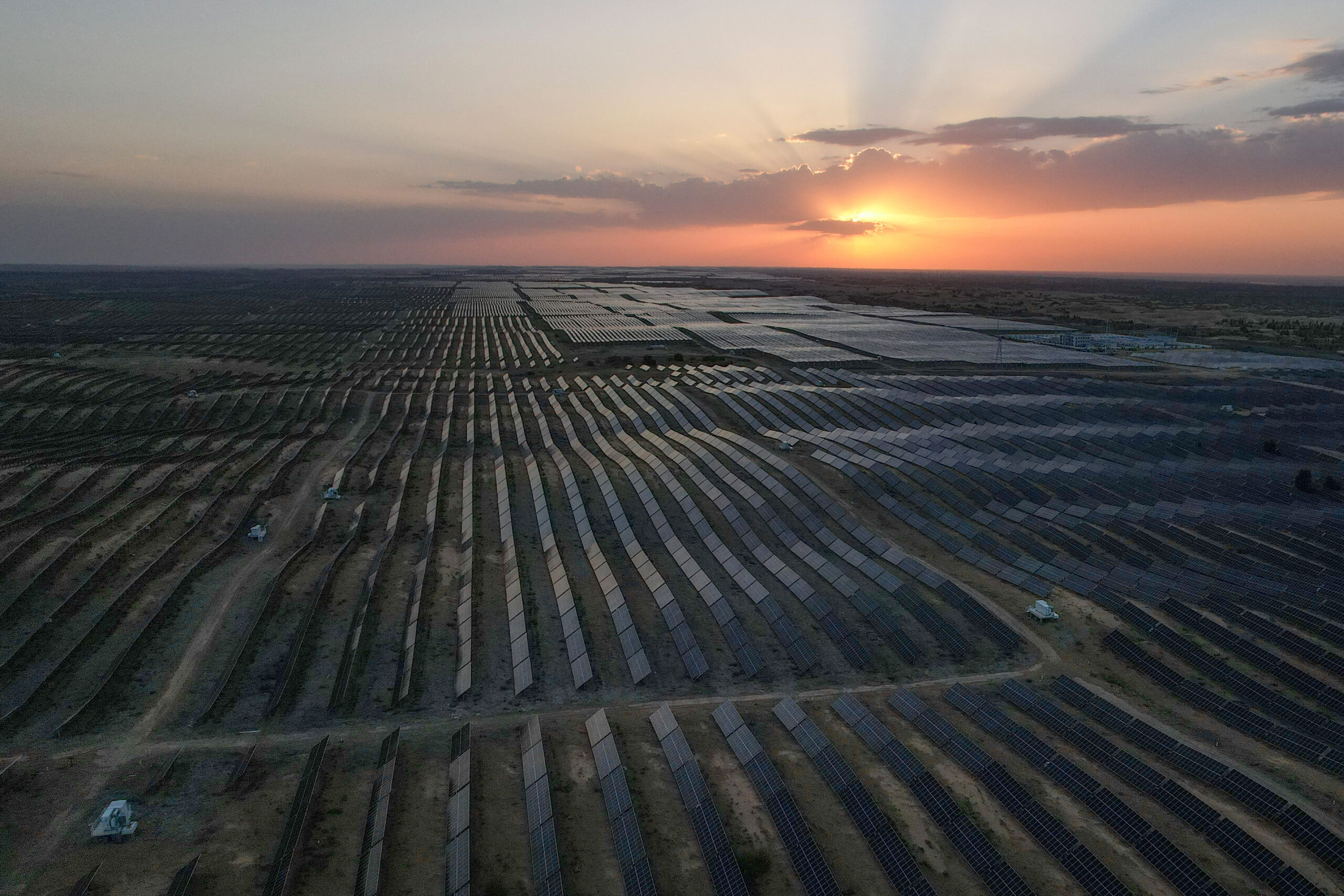
In the third quarter of this year, out of 99 individual stocks in the mainland China photovoltaic sector, 77 experienced a decline, accounting for 77.78% of the total. At the same time, the photovoltaic index dropped by 14.87%, underperforming the Shanghai and Shenzhen 300 index by 2.38 percentage points.
According to data from the Chinese service provider Wind, in the third quarter of 2026, the average decline among the 99 photovoltaic stocks surveyed was 12.89%. Of these, 22 showed gains while 77 experienced declines, with declining stocks representing 77.78% of the total. During the same period, the photovoltaic index fell by 14.87%, while the Shanghai and Shenzhen 300 index declined by 12.49%, resulting in the photovoltaic index trailing by 2.38 percentage points.
An article by “Time Weekly” on October 4th reported that there was a significant differentiation among photovoltaic company stocks in the third quarter. LiXin Energy saw an accumulated increase of 43.90%, while Ai Luo Energy suffered a drop of 51.09%, showcasing a difference of nearly a hundred percentage points in their performance. However, LiXin Energy is a state-owned new energy company engaged in wind power generation, photovoltaic project investment, development, construction, and operation. Its growth does not solely stem from the traditional photovoltaic manufacturing sector.
The Chinese photovoltaic industry has been facing a crisis since the second half of 2023, with prices of solar components (such as silicon materials, wafers, and cells) experiencing significant plunges, with some even dropping by over fifty percent. From 2024 to 2025, many billion-dollar industry giants as well as small and medium-sized enterprises found themselves in severe financial losses, plummeting stock prices, halted production lines, and massive layoffs.
An analysis by “China Energy Network” on October 2nd suggested that the imbalance between supply and demand is the primary cause of the photovoltaic industry’s downturn. The issue of overcapacity in the sector is evident, while market demand is insufficient. Some struggling companies at the back end are most susceptible to operational cash-flow disruptions. When assets’ residual value cannot cover debts, bankruptcy liquidation becomes a likely outcome.
Regarding the outlook for photovoltaic enterprises, Li Jindi, General Manager of Guangdong Maxsun International Certification Co., Ltd., anticipates that the integration of silicon materials could be completed by the first half of 2027, with the assembly process possibly taking longer and extending until 2028.