
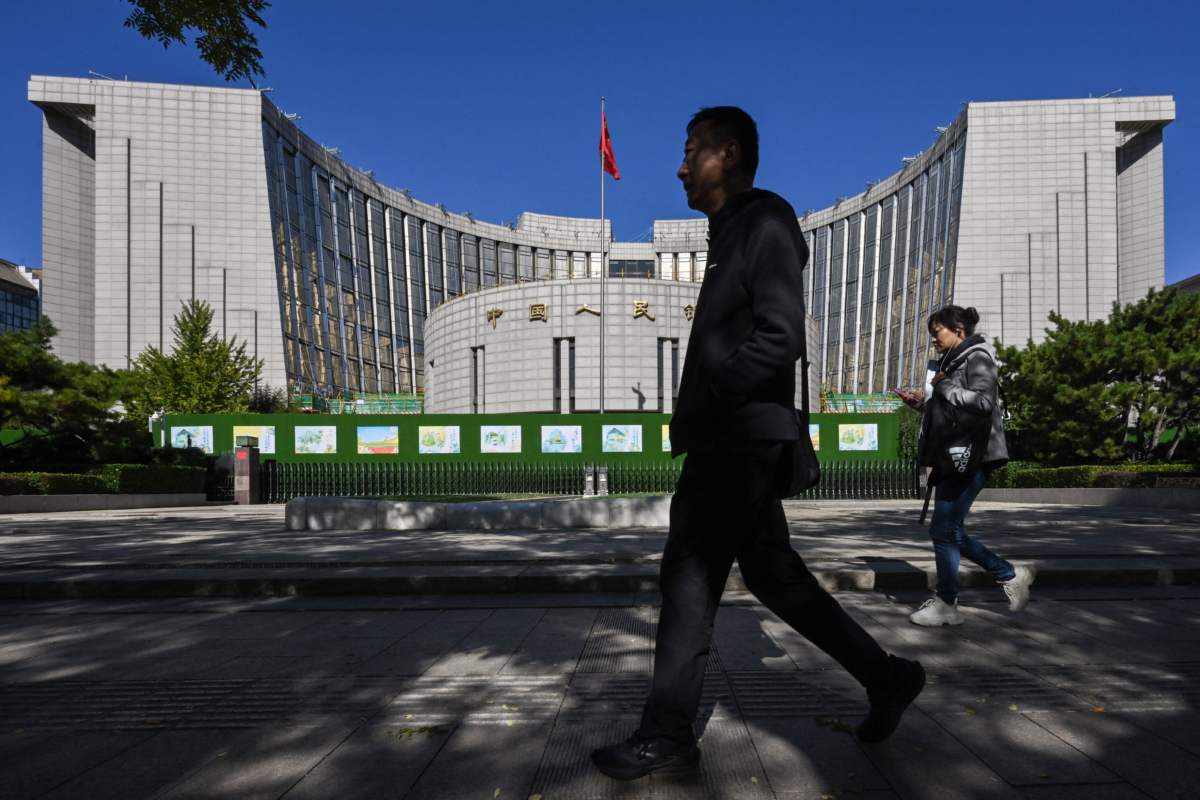
The Chinese Communist Party’s official newspaper, “People’s Daily,” has published a series of articles discussing the economy for ten consecutive days. However, analysis suggests that China’s economy is weak, with insufficient internal consumption power, making it unlikely to introduce larger-scale stimulus measures in the short term. The comprehensive set of stimulus policies rolled out by the CCP on September 29, known as “9.29”, has faced challenges in effectively boosting market expectations.
On October 4th, the “People’s Daily” continued to feature an article by “Jin Xuan” for the tenth consecutive day, addressing China’s economy. The article asserts that China faces challenges in expanding domestic demand and acknowledges issues such as weak internal consumption power and the difficulty of income growth impacting consumption power and willingness among the public.
In recent years, domestic demand in China has been sluggish, with this year’s growth in the consumer market partially attributed to external factors such as government subsidies distribution. According to official figures, the “trade-in-old-for-new” policy has led to a significant boost in related product sales, totaling up to 1.55 trillion yuan, with over 208 million user transactions.
The article also acknowledges the significant pressure on China’s current investment decline, the need to improve investment efficiency, and the weakening vitality of private investment. There are still inadequacies in areas such as water resources, energy, and municipal infrastructure.
Guo Lei, Chief Economist of the China Chief Economist Forum and Guangfa Securities, also conducted a research report analyzing the latest economic data in China. The September Manufacturing Purchasing Managers’ Index (PMI) stood at 50.1, showing some seasonal upward trends.
The report points out a concern that the growth is mainly driven by the supply side, through the acceleration of seasonal production. However, from the demand side, with declining order backlogs for businesses, new orders and new export orders below previous values indicate persistent demand insufficiency as a weak point in the economy.
The report notes that the Chinese economic data reflect a trend of strong production but weak demand. This context sets the backdrop for the rollout of the “9.29” comprehensive policy package.
On September 29, the People’s Bank of China implemented a targeted 25-basis-point interest rate cut, reducing the one-year increment of supplementary mortgage loans (PSL) from 1.75% to 1.5%. For the first time, the coverage of PSL support expanded significantly beyond traditional areas like shantytown renovation and underground pipe galleries to include infrastructure projects in water networks, new electricity networks, computing power networks, next-generation communication networks, urban underground pipe networks, and logistics networks.
BofA Global Research states that the “9.29” comprehensive policy primarily provides targeted support for the investment and real estate markets but falls short in driving significant policy shifts and effectively boosting market expectations. The scope of this plan is far less comprehensive compared to the package introduced at the end of 2024.
BofA notes that the newly introduced national housing mortgage subsidy from the central finance ministry has limited eligibility criteria, covering only first-time home buyers of new homes with an area not exceeding 120 square meters and a value not exceeding 1.5 million yuan. The proportion of qualified annual residential transactions does not exceed 20% to 25%, with an estimated initial fiscal cost of about 27 billion yuan, offering limited direct support. The subsidy’s more significant impact may be reflected in market sentiment, as it aims to reduce borrowing costs for eligible buyers.
BofA believes that unless there is a significant slowdown in export growth or a substantial deterioration in the fiscal situation, Beijing is unlikely to introduce larger-scale stimulus measures in the short term.