
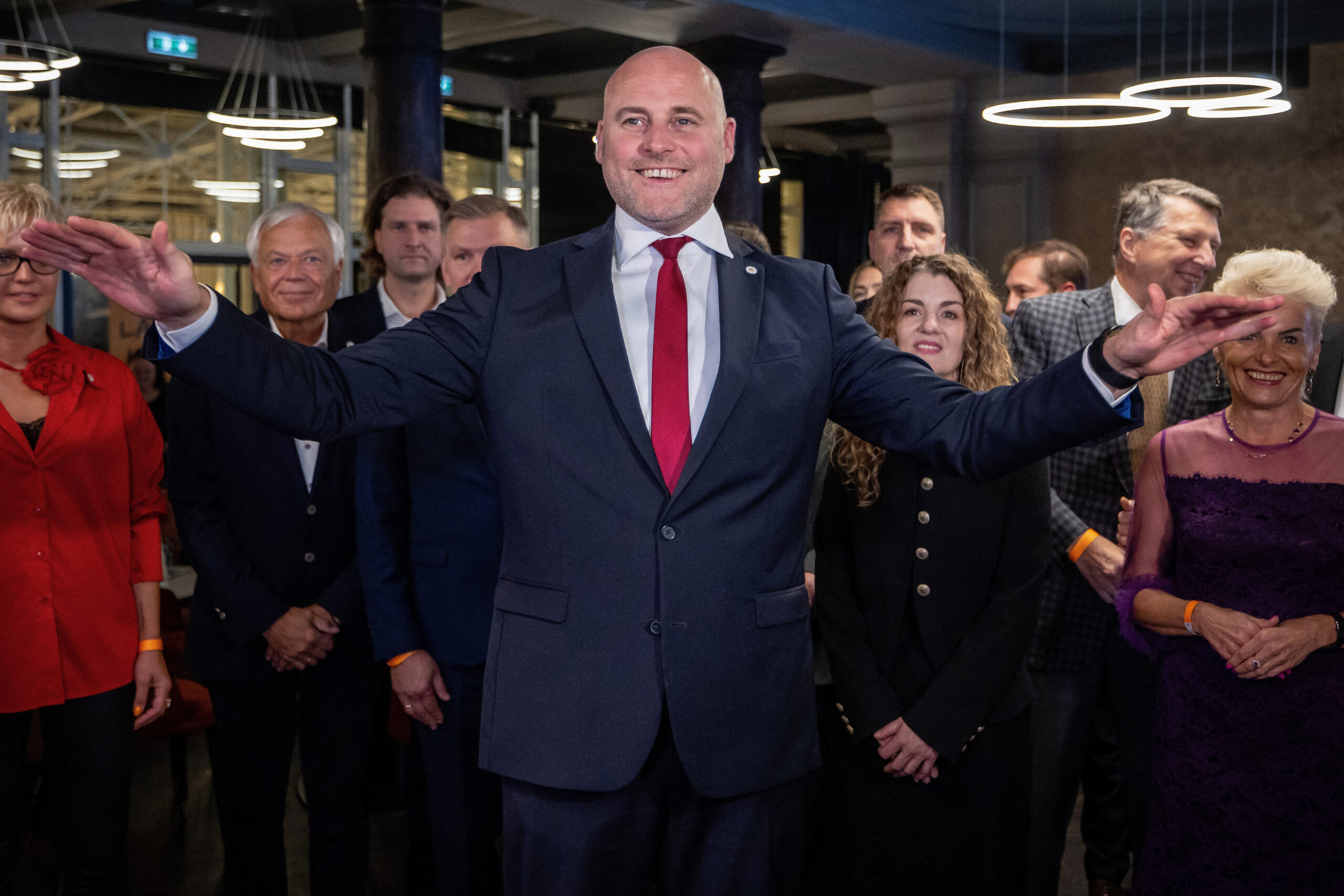
In Latvia, parliamentary elections were held on Saturday (October 3), with Prime Minister Andris Kulbergs’s “United List” emerging as the biggest winner. Preliminary results indicate that the “United List” is expected to form a new coalition government with other pro-European parties, with expectations high that Latvia will continue its current support for Ukraine.
With around 97% of the votes counted, the “United List” secured a vote share of 35.3%, projected to win 42 seats. This marks the highest number of seats won by a single party in parliamentary elections in Latvia since the restoration of independence in 1991.
The populist party “Latvia First” came in second place with about 13.1% of the votes, while the “Sovereign Power/New Latvians” party, seen by some observers as having a more moderate stance towards Russia, secured around 11.7% of the votes, ranking third.
According to election data, voter turnout for this election was approximately 51.8%. In this country with a population of over 1.8 million, around 1.558 million registered voters had the right to elect 100 members of parliament for a four-year term.
Following the election, Kulbergs will need to collaborate with other political parties to secure a majority in the 100-seat parliament. However, it is likely that the four-party ruling coalition led by him may not continue in its existing composition; one of the coalition members, the “Green Party and Farmers Union,” is expected to receive only 3.7% of the votes, falling short of the 5% threshold required to enter the Latvian parliament, necessitating a reconfiguration of the ruling coalition.
Kulbergs assumed office as Prime Minister in May of this year, taking over the government following a parliamentary vote. The former government faced a political crisis due to its handling of a suspected incursion by drones from the direction of Ukraine. At the time of the incident, Latvia’s air defense system failed to intercept the drones promptly, and authorities even issued a safety alert to the public via mobile phones only after the drones had crashed, sparking strong public dissatisfaction. This ultimately led then-Prime Minister Evika Siliņa to resign, with Kulbergs subsequently taking over as Prime Minister.