
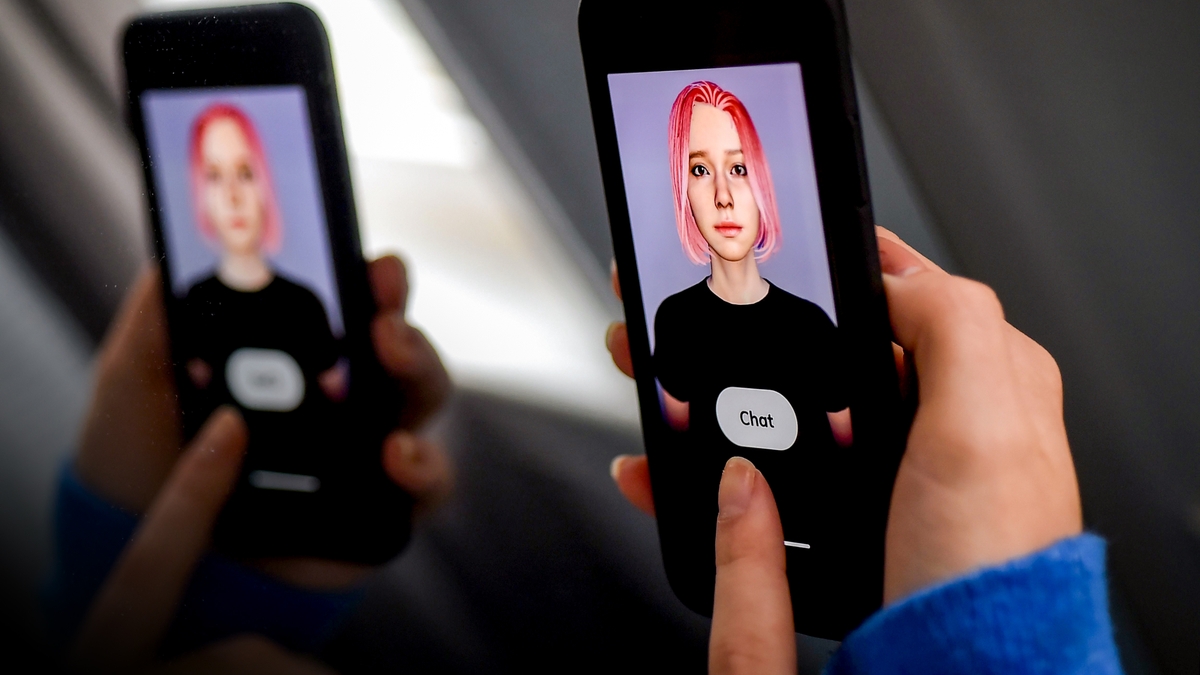
In many companies, chatbots have replaced humans, providing round-the-clock customer service. It may seem convenient, but when the chatbot can’t solve a problem and you cannot find a human to speak with, convenience goes out the window.
Last week, Jasmine Ault from Toronto had her Instagram and Facebook accounts shut down by Meta. She found herself in a battle with chatbots, becoming one of the many victims of chatbot customer service.
According to CBC News, Ault woke up in the middle of the night last Thursday to a notification from Meta stating that her Instagram and Facebook accounts had been permanently disabled.
Her accounts held 20 years worth of personal data and professional contacts, making them extremely precious to her. She tried reaching out to Meta’s customer service for help.
Over the next few days, the chatbots couldn’t solve her issue, and she couldn’t find a real person to talk to.
“It feels like being in an invisible inferno, where my digital albums and memories have all turned to ash,” Ault told CBC. “If I can only communicate with artificial intelligence, then who is protecting my things?”
Ault had created her Facebook account in 2006. Upon learning that her Instagram, Facebook, and the associated Instagram account she created for her dog were all deactivated, Ault went 26 hours without sleep, desperately trying to appeal and recover everything.
The notification she received stated that her Facebook account “violated their rules.” However, Ault couldn’t figure out which rules her Facebook account had violated.
Ault suspected her Facebook account had been hacked, leading to its closure. But after pressing the appeal button, she was told minutes later that her appeal had been closed, with no opportunity for further appeal or statement.
She created an alternate Instagram account and paid for Meta’s verification service, thinking this would enable her to contact real customer service.
Meta’s verification program offers various paid tiers with different customer support privileges. Ault chose the standard tier priced at $14.99 (approximately 21 Canadian dollars).
However, the enhanced support she received was just another chatbot. Soon, the bot informed Ault that her work order was about to be closed as she had reached the limit of support interactions.
Human customer service, once commonplace, has now become exceedingly rare. In Meta’s premium (Premium) and supreme (Max) levels priced at 150 dollars and 500 dollars per month respectively, features like “requesting customer service callback” are mentioned.
Ault stated that she used social media to provide marketing services for her side business to clients and is now losing these revenue opportunities and networking resources.
Jon Festinger, Director of the Technology, Law, and Society Program at Peter A. Allard School of Law, University of British Columbia, said Canadians can challenge the deletion of their social media accounts in court and seek compensation.
Canadian courts have set a precedent, such as Air Canada being held responsible in 2024 for misleading advice from its chatbot. However, in the realm of customer rights and artificial intelligence, there are still gaps in Canada’s consumer laws.
Shion Guha, Assistant Professor at the University of Toronto and Director of the Human-Centered Data Science Lab, stated, “Any technological solution will make mistakes.”
He emphasized the importance of having a way to correct errors. Companies should be required to provide clear avenues for customers to reach human support and establish fair appeal processes, especially when utilizing automated systems to manage social media.
Guha said that in various aspects of life, when faced with unfair decisions, people have the option to appeal and deal with humans.
“People expect this practice to extend to private social media platforms, but that is not the case,” he said. “They are not obligated to do so since there is currently no relevant regulatory framework.”
The existing model is the EU’s Digital Services Act. Implemented in 2024, the law aims to update rules for online services, including ensuring transparency when content is removed and providing a comprehensive appeals process.
Canada introduced new legislation regarding AI chatbots in June this year, focusing on increasing security requirements to protect children rather than consumer rights.
A global survey conducted by software company ServiceNow in April revealed that half of the 34,000 customers, service representatives, and executives surveyed expressed their biggest dissatisfaction with AI customer service was the lack of empathy.
While 87% of respondents listed phone calls as their preferred customer service channel, only 7% of business leaders plan to prioritize phone support.
Ela Veresiu, Associate Professor of Marketing at the Schulich School of Business, York University, said that despite strong opposition, companies continue to adopt AI products on a large scale due to their efficiency and cost reductions.
She mentioned that while AI chatbots can guide customers to existing information, they struggle with complex “why” questions, leading to significant issues.
“Customers may complain and express dissatisfaction with over-reliance on AI for customer service, but ultimately, they have no other choice in the market,” Veresiu said, especially for mega social media companies like Meta that offer unique services, they have no business incentive to change policies.