
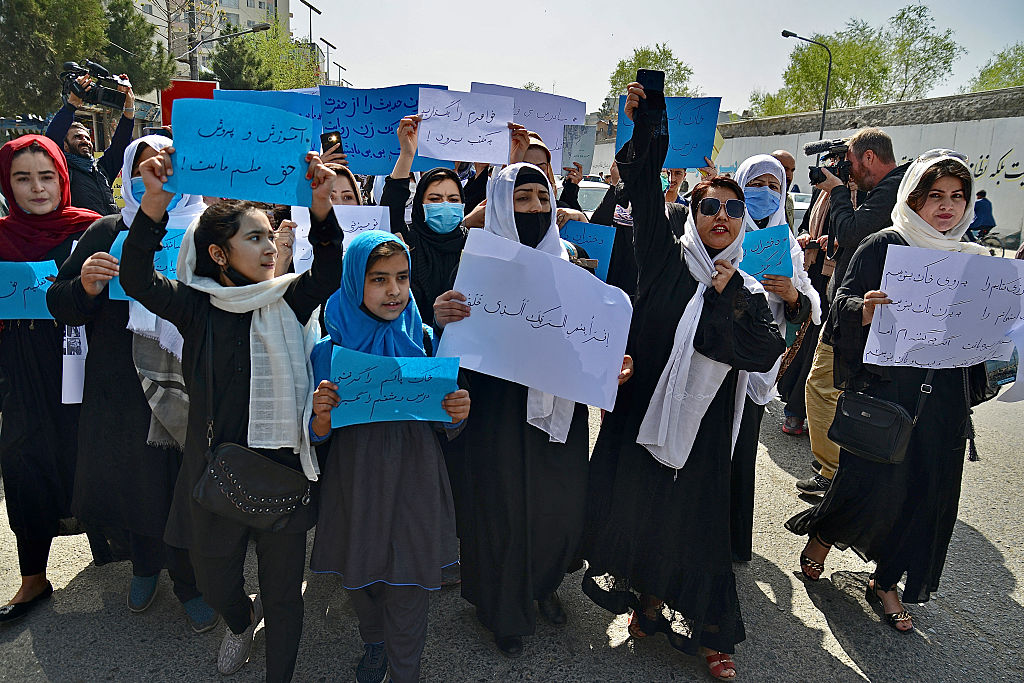
After five years of Taliban rule, Afghanistan remains the only country in the world that officially prohibits girls and women from receiving secondary and higher education. The United Nations Educational, Scientific and Cultural Organization (UNESCO) stated on August 11th that as of 2026, an estimated 2.4 million Afghan girls are unable to access secondary education.
UNESCO pointed out that these restrictions are reversing the progress made in expanding educational opportunities in Afghanistan over the past 20 years. In 2001, the educational opportunities for Afghan girls were extremely limited; by 2021, before the Taliban regained power, nearly one million girls were enrolled in secondary schools.
After regaining power in August 2021, the Taliban initially promised to ensure women’s right to education. However, in March 2022, they began to prohibit girls from receiving secondary education, and in December of the same year, they banned women from entering universities. These bans were initially called temporary measures but have not been lifted to this day. The Taliban has stated that their women’s policies are in line with their interpretation of Islamic law and Afghan culture.
The impact of restricting women’s access to education is not limited to female students alone. UNESCO has stated that the prohibition of female teachers from teaching male students further exacerbates the shortage of teachers and affects the overall quality of education. At the same time, over two million school-aged children in Afghanistan are out of school for various reasons.
According to Reuters, UNESCO predicts that by 2030, Afghanistan may face a shortage of over 11,000 qualified female teachers. The local basic education system itself is facing severe challenges, with over 90% of 10-year-old children unable to read simple texts, and a national literacy rate of only about 37%. Schools also face issues such as overcrowded classrooms, inadequate equipment, and a lack of basic facilities.
The ban on female education could also lead to long-term economic losses. Reuters quoted UNESCO estimates, warning that if current restrictions persist, by 2066, approximately 600,000 women could drop out of the labor market, resulting in accumulated income losses of around 9.6 billion dollars.
During the period of the ban, UNESCO and its partners have been providing alternative learning opportunities for Afghan women and girls through community education, literacy and skills training, as well as psychosocial support programs. Nearly 70,000 learners have participated in UNESCO’s initiatives, with 73% being women.
However, UNESCO emphasizes that these programs cannot replace formal school education. The organization once again urges the immediate and unconditional restoration of the right of Afghan girls and women to access education.