
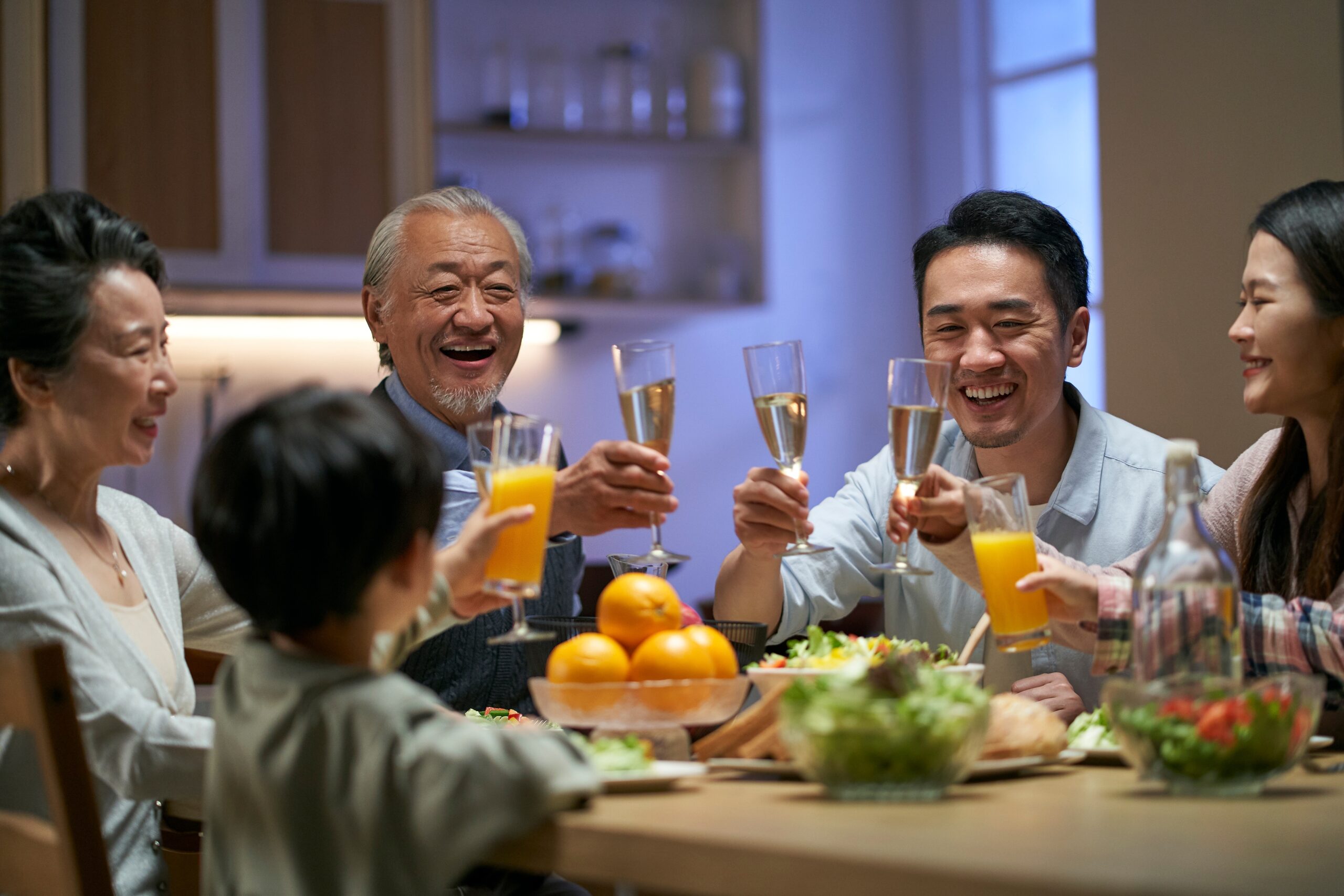
In addition to strengthening relationships, dining with others also has physiological significance. A recent study has found that eating alone can alter the way the body metabolizes glucose, while dining with others can improve this situation. The ancients said, “Happiness shared is double happiness” (the joy of enjoying music alone is not as delighted as enjoying music with others), and it seems the same applies to eating.
Researchers at the Hebrew University of Jerusalem in Israel conducted a study that showed that blood sugar levels were lower after dining with others compared to eating alone. In other words, after consuming the same carbohydrate meal, people experienced lower blood sugar peaks and faster blood sugar recovery in social contexts.
This phenomenon, termed “social physiology,” suggests that in the presence of social companions, the body can self-regulate more effectively.
In this study, 108 volunteers were recruited to participate in the experiment. These participants consumed slightly over 100 grams of white bread in two scenarios: eating alone and eating with an intimate partner.
The results showed that compared to eating alone, participants had lower blood sugar peaks and faster return to baseline levels in social situations with companions.
As blood sugar regulation increasingly becomes a global health concern, this study indicates that metabolic health may be influenced not only by the food on the plate but also by the people with whom we dine.
Researcher Shir Atzil explained, “Blood sugar regulation is not only related to what we eat but also to whom we eat with. Our interpersonal relationships play a positive biological role in our physical health.”
She noted that this study suggests that human physiological functions are inherently social. Being close to those we love can reduce the energy consumed in the self-regulation process, providing direct metabolic benefits. This reveals that our bodies operate more efficiently in the presence of companions.
The effects of this interaction extend beyond blood sugar regulation. In cold environments, social closeness can improve temperature regulation and reduce stress responses in both adults and infants. These benefits exist even without physical contact, indicating that “social physiology” is a universally applicable principle in human physiology.
Researchers emphasize that intimate relationships cannot replace medical care, nutrition, or exercise. However, this study highlights a powerful factor often overlooked in the health field – the people around us.
The research findings were published on September 23 in the journal “Science Advances.”
It is worth mentioning that in the “World Happiness Report” released by the United Nations in 2025, Taiwan ranked 27th among 147 countries and regions surveyed, maintaining its position as the happiest country in East Asia.
Experts say that compared to residents of other East Asian countries such as Japan and Korea, Taiwanese people tend to dine together more frequently, which is one of the reasons they feel happier.